
Aurora is the province most people reach for when they want Luzon’s east coast without the Baler weekend crush, and the question almost everyone asks first is how to get there. It is not hard, it is just slow, and knowing the real journey times before you book is the difference between a good trip and a wasted day on a bus. This Aurora travel guide covers the routes, the fares, the beaches beyond Baler, what a trip costs and when not to bother.
The province runs along a long, narrow strip of coast backed by the Sierra Madre. Baler is the capital and the surf town everyone has heard of, but Aurora stretches well north and south of it, and the quieter end is where the province gets interesting.
How to get to Aurora province
There is no airport with commercial flights serving Aurora, so everyone arrives by road, and the Sierra Madre crossing is the reason it takes as long as it does.
From Manila to Baler. Direct buses run overnight and through the day from Cubao, taking roughly 6 to 8 hours depending on traffic and stops. Fares run around 700 to 800 pesos for the aircon services. Overnight departures are popular because you arrive around dawn and get a full day.
From Pampanga or Clark to Aurora. This is the shorter approach and a common search for a reason. Via Cabanatuan and the Pantabangan route you are looking at roughly 5 to 6 hours of driving. There is no single direct bus, so it usually means a bus to Cabanatuan then a connection onward to Baler.
From Cabanatuan. Buses and vans run to Baler through the day, taking roughly 3 to 4 hours for around 300 to 400 pesos. If you are coming from anywhere in Central Luzon, routing through Cabanatuan is almost always the sensible move.
Driving yourself. The road through the mountains is paved and scenic but winding, with sections that suffer in heavy rain. Do it in daylight. The viewpoints along the Pantabangan stretch are worth the stops, and there is very little fuel available on the mountain section, so fill up before you start climbing.
Honest negative: whichever way you come, the last two hours are twisty. If anyone in your group gets carsick, this route will find out.
Getting around once you arrive
Tricycles handle everything within Baler, generally around 20 to 50 pesos for short hops and around 150 to 300 pesos for runs out to the falls or the further beaches. Agree the fare first.
For the day trip circuits, hiring a tricycle or van for a half day at around 800 to 1,500 pesos is usually better value than paying per leg, and the driver will wait for you at each stop. Motorbike rental runs around 500 to 800 pesos a day if you are confident on the roads.
To reach the northern towns like Dinadiawan and Casiguran you need either your own vehicle or a van, and journeys are long. Dipaculao is around an hour north of Baler. Dinadiawan is roughly two to two and a half hours. Casiguran is a serious half day.
What Aurora is known for
Three things, in the order most visitors encounter them. Surf, because Baler is where surfing in the Philippines started after a film crew left their boards behind in the 1970s. Waterfalls, because the Sierra Madre drops a lot of water down a short distance. And history, because Baler is the birthplace of Manuel Quezon and the site of the siege that ended Spanish rule in the Philippines.
What it is not known for, and should be: the coast north of Baler, which has better beaches than Baler itself and almost nobody on them.
Sabang Beach and the Baler surf
Sabang is the main beach in Baler town, a long grey sand curve with the surf schools clustered at the northern end. The wave here is forgiving and it is genuinely one of the better places in the country to take a first lesson.
Lessons run around 400 to 500 pesos an hour including board and instructor. Board rental on its own is around 200 to 300 pesos an hour. Most schools will do a package if you are staying a few days.
Surf season runs roughly October to March, when the northeast swell arrives. Outside that window the water is often flat, which is fine if you are learning and disappointing if you came to surf properly.
Honest negative: Sabang is grey sand, not white, and the town end can be scruffy with driftwood after storms. Come for the wave and the atmosphere, not for a postcard beach.
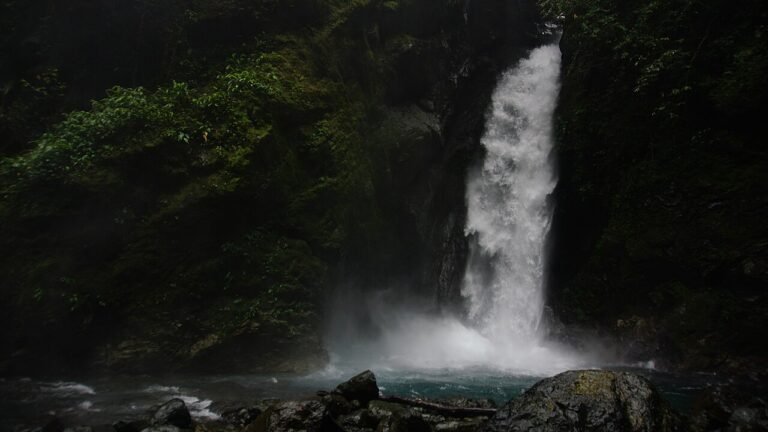
Ditumabo Falls, the Mother Falls
The best known waterfall in Aurora, around 30 minutes from Baler in San Luis. The entrance fee is around 50 pesos, plus a guide fee of around 300 pesos per group, which is compulsory and reasonable given the trail.
The walk in takes around 45 minutes to an hour along a river bed, involving several crossings, slippery rocks and a section along a pipeline. Wear shoes you do not mind soaking. Flip flops are a bad idea and people still turn up in them.
The falls themselves are tall and the plunge pool is very cold and deep. Go in the morning. By early afternoon the crowds arrive and the light is gone from the gorge.
Dicasalarin Cove and the lighthouse
A protected cove south of Baler with pale sand and clear water, reached over a rough headland road. Access is controlled and there is a fee of around 350 to 500 pesos per person, sometimes bundled into a tour. You cannot simply walk in.
The lighthouse above the cove has the best view in the province, back over the whole Baler bay. Most half day tours from Baler include this along with the Ermita Hill viewpoint and the Balete tree.
Honest negative: the access fee annoys a lot of visitors, and on a busy weekend the cove does not feel exclusive despite the price. Go on a weekday if you can.
The Balete tree and Baler’s history
The Millennium Balete in Maria Aurora is one of the largest of its kind in Asia, hollow enough to climb inside. Entrance is around 30 pesos. It takes twenty minutes and it is worth the stop if you are passing.
In Baler town itself, the Museo de Baler covers Quezon and the province, entrance around 30 pesos. Baler Church is where Spanish soldiers held out for 337 days after Spain had already lost the war, unaware it had ended. It is free to enter and the story is better told on the spot than in any summary.
Quezon’s ancestral house is a reconstruction rather than the original, which disappoints some visitors. It is free and takes ten minutes.
North to Dipaculao and Dinadiawan
This is the part of Aurora most visitors miss, and it is the reason to give the province more than a weekend.
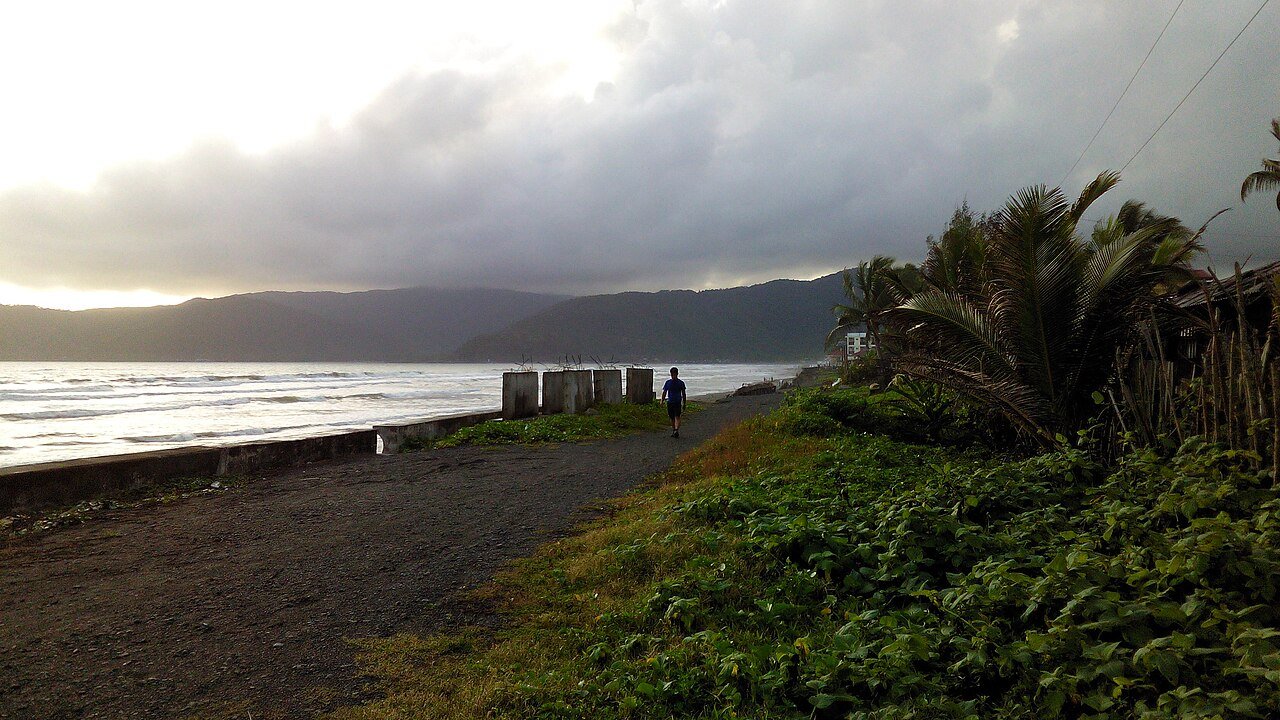
Dipaculao, around an hour north, has a series of quiet coves and the Lamao and Ampere beaches, the latter known for grey stones rather than sand and a dramatic look in overcast weather.
Dinadiawan, roughly two to two and a half hours north, is the best beach in the province. Pale sand, clear water, a handful of simple resorts and very few people midweek. If you have three days in Aurora, spend one of them here.
Further north again, Casiguran and Dilasag are remote, beautiful and genuinely hard to reach. Only worth it if you have a week and your own vehicle.
Where to stay in Aurora
Budget, roughly 700 to 1,200 pesos a night. Guesthouses and surf hostels a street back from Sabang Beach in Baler. Fan rooms at the lower end, aircon at the upper. Perfectly fine, and this is where most surfers stay.
Mid range, roughly 1,800 to 3,500 pesos a night. Beachfront places on Sabang with pools, and the better resorts at Costa Pacifica end of the strip. This bracket is comfortable and gets you a sea view.
Upper, roughly 4,500 pesos and up. A small number of full service resorts in Baler, plus the isolated places at Dinadiawan if you want quiet over facilities.
Book ahead for weekends and holidays. Baler fills up completely on long weekends and prices roughly double.
Where and what to eat
Baler has a decent small food scene built around the surf crowd. Expect around 150 to 300 pesos for a main at a tourist facing restaurant, and around 80 to 150 pesos at a local carinderia.
Try the pancit Cabagan, the local seafood, and the suman which Aurora does well. Coconut features heavily. There is good coffee in Baler now, which was not true a decade ago.
Honest negative: outside Baler town the food options thin out fast. If you head north, eat before you go or accept sari sari store snacks.
What a trip to Aurora really costs
A day in Baler, budget. Accommodation around 900 pesos, food around 500 pesos, tricycles around 200 pesos, one activity such as a surf lesson around 450 pesos. Roughly 2,050 pesos per person per day.
A weekend from Manila, mid range, per person. Bus both ways around 1,500 pesos, two nights at roughly 2,200 pesos a night shared works out around 2,200 pesos, food around 1,500 pesos, a half day tour with the falls and Dicasalarin around 1,200 pesos including fees, surf lesson around 450 pesos. Roughly 6,850 pesos for the weekend.
Aurora is cheaper than Siargao or Palawan for a similar mix of surf and scenery, and the saving is mostly in transport since you are not buying a flight.
Best time to visit Aurora
October to March for surf, with the cleanest conditions usually around November to February. This is also cooler and more comfortable for the inland trips.
March to May is hot and often flat, which suits swimming and waterfalls better than surfing. The sea is calm and the falls still run.
June to October is typhoon season on this coast, and Aurora sits directly in the path of storms coming off the Pacific. This is a real consideration, not a formality. Roads through the Sierra Madre close after landslides and the province gets cut off for a day or two at a time.
Avoid Holy Week and long weekends unless you enjoy queues.
Is Aurora safe for visitors?
Yes. Aurora is a quiet rural province and crime against visitors is rare. The genuine risks are environmental rather than criminal.
The surf at Sabang has rips, particularly at the southern end away from the schools. Learn where they are or stay near the instructors. The river crossings on the Ditumabo trail become dangerous after heavy rain and guides will turn you back, correctly. Mountain roads after dark are the single biggest hazard in the province.
Bring cash. There are ATMs in Baler but they run out on busy weekends, and there is essentially nothing north of Dipaculao.
What to skip in Aurora
Skip Baler on a long weekend if you want the quiet version, because you will not get it. Skip the Quezon house if you are short on time, since it is a reconstruction. Skip Ditumabo in flip flops or after heavy rain. And skip trying to do Aurora as a day trip from Manila, which people attempt and regret, since you would spend twelve hours travelling for four hours on the ground.
If you want white sand and calm turquoise water, Aurora is the wrong province and you should look at our Baler guide or head elsewhere entirely. Aurora is rugged Pacific coast, and that is its appeal.
Quick FAQ
How do you get to Aurora province? By road only, since there are no commercial flights. Direct buses from Cubao in Manila to Baler take roughly 6 to 8 hours and cost around 700 to 800 pesos. From Central Luzon, route through Cabanatuan, which is around 3 to 4 hours from Baler.
How long does it take from Pampanga to Aurora? Roughly 5 to 6 hours of driving via Cabanatuan and the Pantabangan mountain road. There is no direct bus, so expect one connection.
What is Aurora known for? Surfing at Baler, where the sport started in the Philippines, the Ditumabo Mother Falls, the 337 day siege of Baler church, and the quiet Pacific beaches north of town at Dipaculao and Dinadiawan.
Is Aurora dangerous? No. It is a quiet rural province with very little crime against visitors. The real hazards are rip currents at Sabang Beach, river crossings after heavy rain, and driving the mountain roads at night.
How many days do you need in Aurora? Two nights covers Baler and the main day trip circuit. Three nights lets you add Dinadiawan in the north, which is the better beach and the reason to stay longer.
When is the best time to visit Aurora for surfing? October to March, with the most consistent swell around November to February. Outside that window the water is frequently flat.
Staying longer in the region? See our guides to Aurora province beyond Baler and to Nueva Ecija, which most people pass through on the way in.