
Most people decide where to stay in Guimaras about twenty minutes before they board the ferry, which is roughly nineteen minutes too late. The island is small, but it is not small in the way people assume. Getting from the ferry wharf to the beach most visitors have in mind takes around forty five minutes on a road that does not reward improvisation, and the places you can actually sleep are clustered in four or five pockets that feel nothing alike. Pick wrong and you spend your weekend commuting past mango orchards instead of sitting in front of the water.
This guide breaks Guimaras accommodation down by area first and by price second, because on this island the area matters more. A 900 peso fan room on the right cove beats a 3,500 peso aircon room twenty kilometres from anything. Prices below are rough, in pesos, and worth confirming directly before you travel, since small island resorts change rates with the season and with how busy mango harvest has made everyone.
Where to Stay in Guimaras: The Short Answer
If you have one or two nights and you came for a beach, stay at Alubihod Beach in Nueva Valencia. It is the island’s default for good reason: a sheltered cove, swimmable water, a cluster of resorts at every price point, and boatmen on the sand who will take you island hopping without a booking. It is also the busiest and loudest option, which matters more than you would think.
If you want quiet and you will tolerate a rough road and thin facilities, stay around Guisi or Dolores, further down the same southwestern coast. If you are here for work, for a single night, or you are catching an early ferry back, stay in Jordan near the wharf and do not pretend otherwise. If someone has told you to stay in Buenavista, ask them why, because the answer is usually that they got a cheap room and spent the weekend in a tricycle.
Alubihod Beach: The Default Choice, and Why
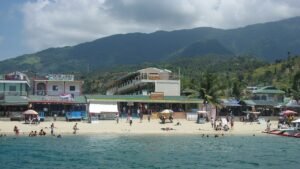
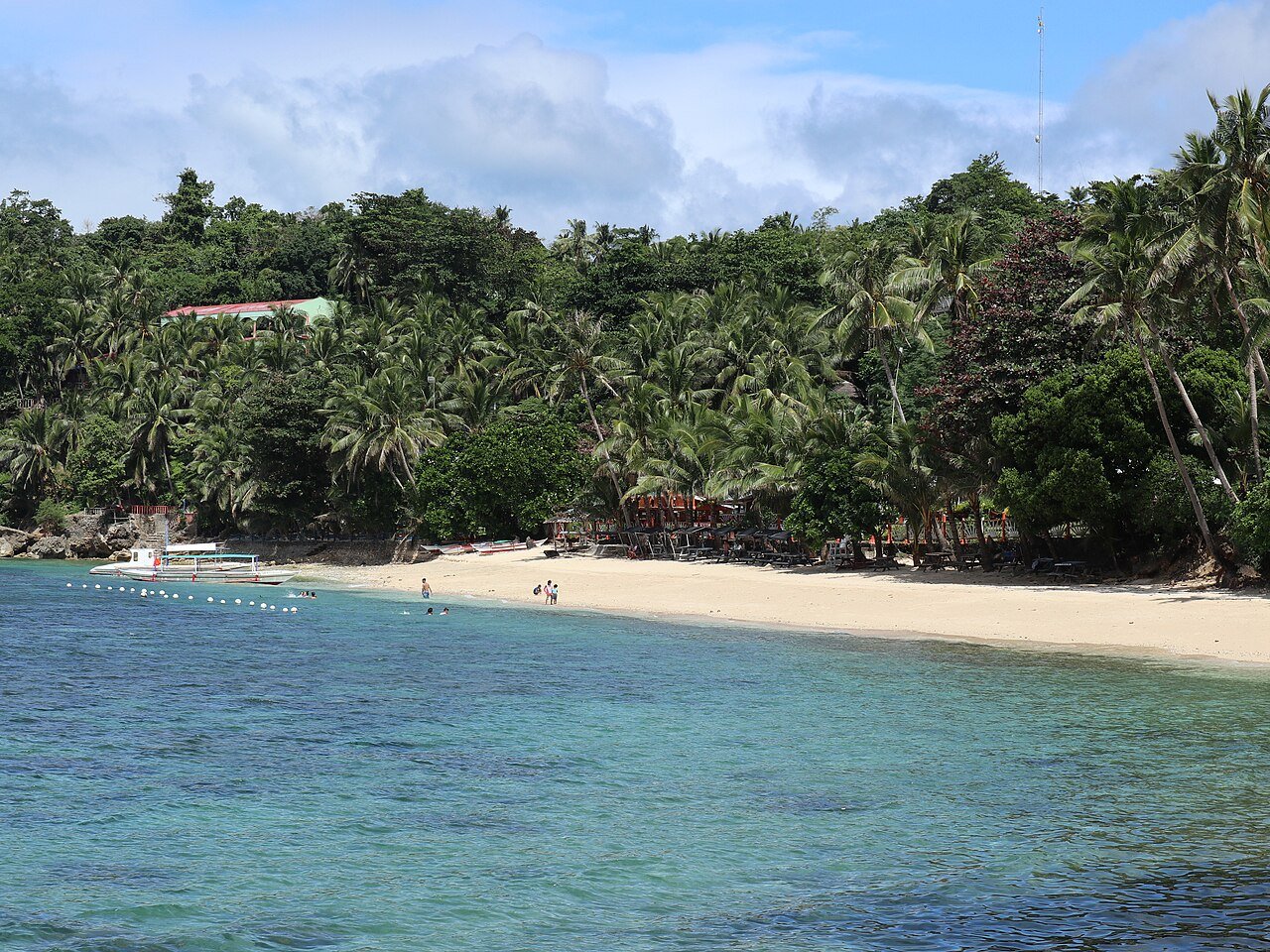
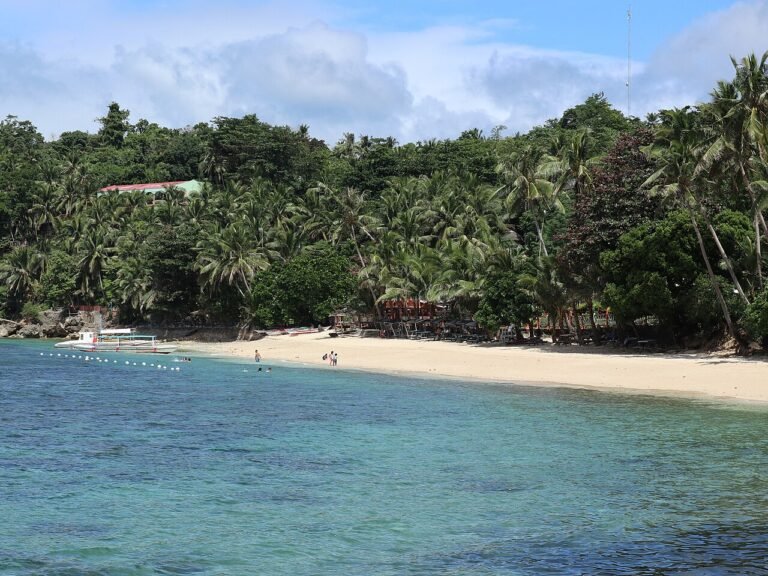
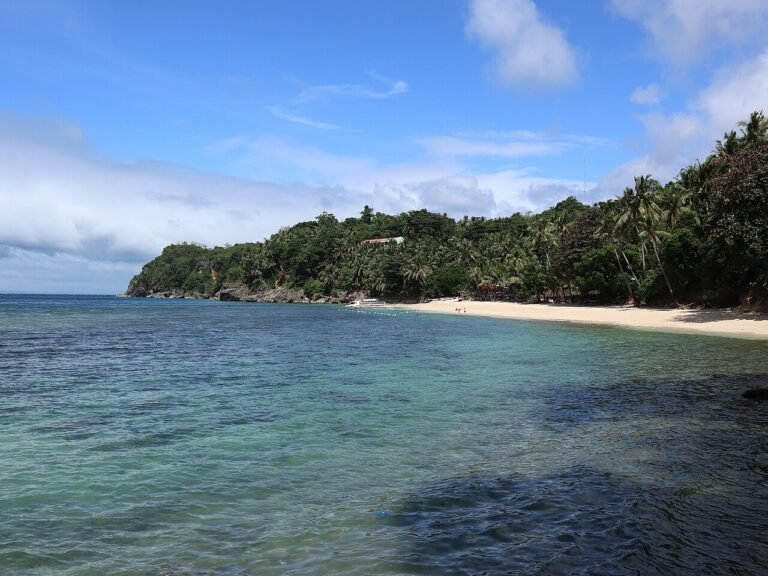
Alubihod, which you will also see spelled Alubijod on signs and in older blog posts, is a small horseshoe cove on the southwest coast in the municipality of Nueva Valencia. The water is shallow, calm and genuinely clear on a good day, and the sand is pale rather than postcard white. It is the one place on Guimaras where the accommodation, the boats, the food and the beach are all within walking distance of each other.
The long standing anchor here is Raymen Beach Resort, which has been the island’s budget institution for years. Rooms start at around 700 pesos and the cheapest ones genuinely do sleep up to four, which is why Filipino families fill the place on weekends. Do not expect design. Expect a clean concrete room, a fan, a bed, and a two minute walk to the water. If you are passing through and want the beach without paying for atmosphere, this is the answer.
Around and above Raymen sit a handful of mid range options. Andana Resort is roughly an eight minute walk back from the beach and trades beachfront for a pool and more comfortable rooms. Natures Eye Resort sits on the headland with better views and a steeper walk. California Coral Beach Resort works on a per group basis, in the region of 3,200 pesos for two people with a few hundred pesos for each extra head, which makes it reasonable for a family of five and poor value for a couple.
There is a beach access fee at Alubihod of around 25 pesos per person if you are walking in through a resort rather than staying in one, and a cove entrance charge of around 100 pesos is commonly quoted for day visitors arriving independently. If you are sleeping there, this is usually folded into your room.
The honest problem with Alubihod is noise. It is the island’s day trip destination, which means on Saturdays, Sundays and any Philippine holiday it fills with groups who have brought speakers, and the cove acoustics are unforgiving. Weekday nights are a completely different island. If your trip has any flexibility at all, use it here.
Guisi and Dolores: Quieter, Rougher, More Beautiful
Further southwest past Alubihod, the coast around Guisi and the barangay of Dolores gives you the island’s best scenery and its thinnest comfort. Guisi Beach has the ruins of a Spanish era lighthouse on the bluff above it, a rocky shoreline broken by sand, and a fraction of Alubihod’s crowd. A few small resorts operate along here, including places on the Tahi Beach side, generally in the 1,200 to 3,000 peso range for a double.
What you trade is convenience. The access roads are rough in patches, tricycles are harder to find after dark, and food options narrow to whatever your resort is cooking that evening. Power interruptions are more noticeable here simply because there is less around you with a generator. If you want to read a book in front of water for two days and you have brought your own entertainment, Guisi is the better island. If you want to be able to change your mind about dinner, it is not.
Jordan: The Practical Base Nobody Writes About
Jordan is the island’s main gateway, the municipality where the ferry from Iloilo’s Ortiz Wharf arrives, and it has more rooms than anywhere else on Guimaras by a wide margin. Almost none of them are on a beach. What they are is cheap, functional and five minutes from your boat.
Budget boarding houses and small inns here run from roughly 600 to 1,200 pesos, and there are branded budget options such as a RedDoorz property at Southern Suites in the 1,000 to 1,500 peso band. This is where to sleep if you are arriving late, leaving early, visiting on business, or using Guimaras as a base to day trip while actually being based in Iloilo’s orbit.
It is also the sensible choice for a particular kind of traveller: someone who wants to see the Trappist monastery, Balaan Bukid, the mango research centre and the island’s interior rather than its coastline. Those are all easier from Jordan than from a beach cove forty five minutes southwest.
Buenavista: Skip It Unless You Have a Reason
Buenavista sits on the north coast and takes the ferry from Iloilo’s Parola Wharf. It has around a dozen places to stay and they are mostly inexpensive. It also has the least to offer a visitor who came for beaches, because the good ones are an hour or more away on the opposite side of the island.
There are two real reasons to stay in Buenavista. One is Roca Encantada, the heritage rest house on the bluff, and the general quiet of that stretch of coast. The other is price, if you have found something genuinely cheap. Otherwise you will spend your savings on tricycle fares and your weekend looking at the inside of one.
San Lorenzo and the Far Side
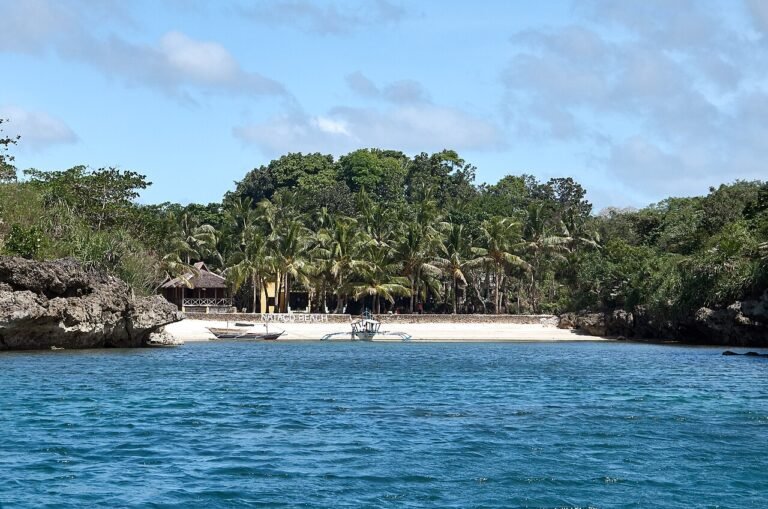
San Lorenzo, on the eastern side, is best known for its wind farm and for being pleasantly empty. Formal accommodation is limited, mostly homestays and a few small inns, and you are unlikely to find much online. If you are the kind of traveller who turns up and asks, there are rooms here in the 500 to 1,000 peso range and a version of Guimaras that very few visitors see. If you need a confirmed booking before you leave home, look elsewhere.
The same applies to Sibunag and the stretch toward Taklong Island National Marine Reserve. The reserve is a genuine draw for anyone interested in mangroves and marine protection, but you will almost certainly visit it on a boat from Alubihod rather than sleep nearby.
Budget Stays Under Around 1,500 Pesos
This is the band most visitors to Guimaras actually book, and the island is well supplied. At Alubihod, Raymen’s cheapest rooms sit around 700 pesos and sleep several people. Small beach houses and guesthouses in the same area, places with names like Jannah Glycel and various Czech or family run beach houses, operate in the 800 to 1,500 peso range. In Jordan, boarding houses start lower, from around 600 pesos.
What you get for this money: a fan or a struggling aircon unit, a private bathroom with a bucket or a weak shower, clean sheets, and a plastic chair. What you do not get: reliable hot water, consistent wifi, a restaurant menu beyond rice and fried fish, or anyone to call if something breaks at nine in the evening. None of that is a complaint. It is the honest shape of budget accommodation on a small Philippine island and most people are perfectly happy in it.
One practical note. Many of the cheapest places are cash only and do not appear on booking platforms at all. If your plan depends on paying by card, confirm before you commit to the trip, not after.
Mid Range: Around 1,500 to 4,000 Pesos
This is where Guimaras becomes comfortable rather than merely adequate. Expect working aircon, hot water more often than not, a pool at some properties, a resort restaurant that can cook something other than the day’s catch, and staff who will arrange your boat and your tricycle.
Andana Resort near Alubihod, the better rooms at the larger Alubihod resorts, the Guisi area properties and a scattering of newer places around Nueva Valencia all land here. Per group pricing is common, so a family or a group of four often finds this band cheaper per head than two people do. Ask directly whether the rate is per room or per person, because both exist on this island and the difference is substantial.
The Upper End: Around 4,000 Pesos and Up
Guimaras does not really have a luxury tier, and this is worth saying plainly because the word resort does a lot of misleading work in Philippine accommodation listings. The island’s most expensive options, places like La Puerta Al Paraizo and Manggadiwa Resort and Spa, are comfortable, attractive and well run, and they are not Boracay or Panglao. There is no five star hotel, no international chain, no spa culture beyond a massage on request, and no fine dining.
If you are paying at the top of the Guimaras market, you are paying for space, privacy, a garden, a decent pool and a view, usually on a property with fewer than twenty rooms. That is a real thing to want. Just do not arrive expecting the service standards that the price would buy you in a bigger destination, because the honest answer is that it will not.
Private Villas and Group Buyouts
An underused option on Guimaras: several small properties will effectively rent you the whole place. For a group of eight to fifteen, taking over a small beach house compound often costs less per person than individual rooms and gives you the cove to yourselves in the evening once the day trippers have gone. This is negotiated directly, by phone or messenger, and almost never advertised. If you are travelling as a group, it is worth the three messages it takes to ask.
Getting from the Ferry to Your Resort
This is the part that catches people out, and it belongs in an accommodation guide because it determines what your stay actually feels like.
Ferries from Iloilo City run frequently. From Ortiz Wharf to Jordan Wharf is roughly fifteen to twenty minutes and costs around 50 pesos, with boats leaving every fifteen to thirty minutes from early morning until around six in the evening. Parola Wharf to Buenavista is similar. There is no advance booking; you buy at the terminal and wait for the boat to fill.
From Jordan Wharf to Alubihod is where the money goes. A tricycle for four or five people runs roughly 250 to 500 pesos one way depending on your negotiation and the hour, and a multicab for eight to ten costs about the same per vehicle. Hiring a tricycle for a full day of island sightseeing is commonly around 1,200 to 1,500 pesos for up to three passengers. Most resorts will arrange a pickup if you ask in advance, often at a slightly better rate than you will get standing at the wharf with a bag.
The crucial detail: the last ferries leave in the early evening and transport within the island thins out sharply after dark. If you land in Iloilo at eight in the evening, you are not reaching an Alubihod resort that night. Stay in Iloilo City and cross in the morning.
When to Book and When You Can Turn Up
For most of the year, on a weekday, you can arrive at Alubihod without a reservation and find a room. The island is not oversubscribed.
The exceptions are firm. Book ahead for weekends, for Holy Week, for the Christmas and New Year stretch, and above all for the Manggahan Festival in May, when Guimaras celebrates its mango harvest and the island’s rooms genuinely do sell out. Mango season runs roughly March to June, which is also the dry season and the island at its best, so this is the busy window in general.
June through November brings the wet season and typhoon risk. Rooms are cheaper and the island is empty, but boat crossings get cancelled in bad weather and a cancelled crossing is not a minor inconvenience when it is the only way off. Build a spare day into any trip in that window.
What a Night and a Weekend Actually Cost
A realistic budget weekend for two, arriving from Iloilo on a Saturday morning and leaving Sunday afternoon: around 100 pesos for the two ferry crossings each way, roughly 600 pesos in tricycle fares, around 900 pesos for one night in a fan room, somewhere near 1,200 pesos for food across two days, and about 800 pesos split between you for an island hopping boat. That lands around 3,600 pesos for two people, or a little under 1,800 each.
The same weekend done comfortably, in a mid range aircon room with a pool and meals at the resort, comes closer to 7,000 to 9,000 pesos for two. At the top of the market, with a two night stay at the island’s nicest properties, budget somewhere between 12,000 and 18,000 pesos for a couple including transport and food.
Island hopping from Alubihod is one of the better value things you can spend money on here: roughly 500 pesos for the first hour and about 150 pesos for each hour after that for a boat taking up to ten people, which splits to very little across a group.
What to Skip
A few honest subtractions.
Skip staying in Buenavista unless you have a specific reason, as covered above. Skip booking the cheapest room at the most expensive resort. On Guimaras this usually gets you a windowless back room at a property whose charm is entirely in its beachfront, which you are now paying for and not using. Either commit to the good room or book somewhere cheaper and enjoy the beach for free.
Skip the weekend if you can. This is the single biggest lever on how much you enjoy Alubihod. Skip relying on wifi. Buy a local SIM with data in Iloilo before you cross. Resort wifi here ranges from slow to decorative. And skip the assumption that there will be an ATM nearby. Cash machines cluster in Jordan and San Miguel. Draw what you need before you head for the coast.
Who Each Area Suits
Couples on a short trip who want a beach and do not mind company: Alubihod, midweek, mid range room. Families with children: Alubihod, in one of the per group properties where the maths works in your favour, close to shallow water. Solo travellers and readers: Guisi or Dolores, lower expectations, better views. Anyone on one night, arriving late or leaving early: Jordan, no argument. Groups of eight or more: ask three small properties about taking the whole place and compare.
Anyone whose idea of a holiday involves restaurants, bars, shops or reliable connectivity: stay in Iloilo City and visit Guimaras as a day trip. That is not a failure of planning. For a decent number of travellers it is the right call, and the ferry makes it easy.
Guimaras Accommodation at a Glance
Alubihod Beach, Nueva Valencia. Best overall. Roughly 700 to 5,000 pesos. Busy at weekends.
Guisi and Dolores. Quietest with the best scenery. Roughly 1,200 to 3,000 pesos. Rough roads, thin facilities.
Jordan. Most rooms, no beach, closest to the ferry. Roughly 600 to 1,500 pesos.
Buenavista. Cheap and far from the good beaches. Roughly 600 to 1,500 pesos.
San Lorenzo and Sibunag. Homestays, little online presence. Roughly 500 to 1,000 pesos.
More Guimaras and Iloilo Guides
Once you have your room sorted, our guide to the top things to do in Guimaras covers the beaches, the lighthouse and the island hopping in detail, and the broader Guimaras travel guide handles timing, customs and what the island is actually like. Most visitors pair the island with the mainland, so things to do in Iloilo is worth a look for the batchoy and the heritage churches. If you have an extra afternoon in the city, a cooking class in Iloilo is one of the better uses of it.
Quick FAQ
Where should I stay in Guimaras for the first time? Alubihod Beach in Nueva Valencia. It has the widest range of resorts, the most swimmable water, and boats for island hopping leaving straight off the sand. Go midweek if you can.
How much does accommodation in Guimaras cost per night? Budget fan rooms start around 600 to 900 pesos, mid range aircon rooms run roughly 1,500 to 4,000 pesos, and the island’s most expensive properties sit around 4,000 to 8,000 pesos. There is no luxury tier above that.
Is it better to stay in Guimaras or day trip from Iloilo? If you want beach time, stay at least one night, because the good coast is around forty five minutes from the wharf and day trips get rushed. If you mainly want to see the monastery and the viewpoints, a day trip from Iloilo works fine.
Do I need to book a Guimaras resort in advance? Usually no, on weekdays outside peak season. Yes for weekends, Holy Week, Christmas and New Year, and definitely for the Manggahan Festival in May, when the island fills up.
How do I get from the ferry to my resort? Tricycle or multicab from Jordan Wharf, roughly 250 to 500 pesos per vehicle to Alubihod. Ask your resort to arrange a pickup in advance, which is usually cheaper and much easier with luggage.
Are there ATMs and will resorts take my card? ATMs are concentrated in Jordan and San Miguel, not near the beaches, and many smaller resorts are cash only. Withdraw what you need before heading to the coast.