
Working out where to stay in Batanes is a bigger decision than it looks. This is not a place where you pick a hotel, drop your bag and wander out to find dinner. The province is four inhabited islands scattered across the Luzon Strait, the roads between villages are long and mostly empty, and almost nothing stays open late. Where you sleep decides what you can reach, what you eat, and how much of your short trip you spend sitting in a tricycle.
The honest summary: nearly everyone should base themselves in Basco, and nearly everyone should book earlier than feels necessary. Below is the detail behind that, broken down by area and by budget, with the fares and fees you will actually be paying.
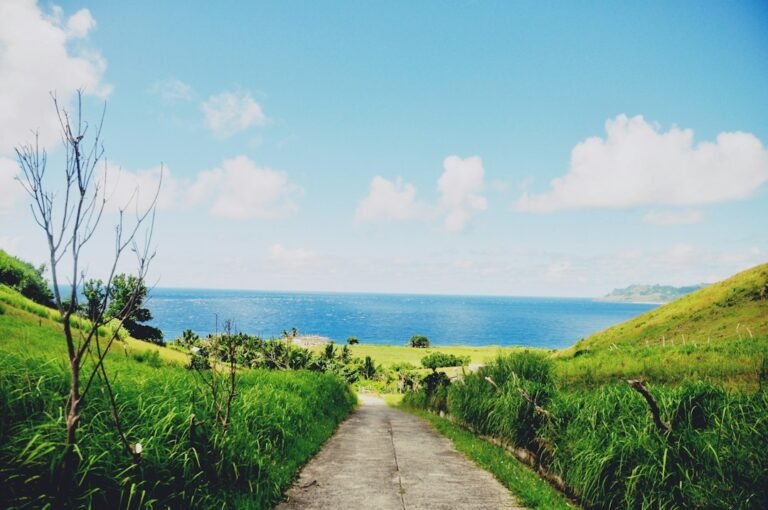
Why where you stay in Batanes matters more than it does elsewhere
In most Philippine destinations you can fix a bad accommodation choice by moving, or by just taking a cheap ride somewhere better. Batanes does not really allow that. There are only a few dozen registered places to sleep in the whole province, most of them in one small town, and in high season they genuinely fill. If you arrive without a booking in April you may find yourself taking whatever is left at whatever it costs.
The second reason is food. Batanes has no real restaurant scene outside Basco. Most guesthouses in the outer villages either serve set meals or they do not feed you at all, and there is no alternative within walking distance. If you book a pretty place in a village 40 minutes from town without checking whether meals are included, you have accidentally booked a problem.
The third is weather. Flights to Basco cancel often, and they cancel at short notice. A booking you cannot move, or a host who does not answer messages, turns a cancelled flight into lost money. The places that handle this well are usually the small family run ones who will simply shift your nights, which is one of the better arguments for a hometel over a resort.
The short answer: base yourself in Basco
Basco is the provincial capital, the airport town, and the only settlement in Batanes with a cluster of places to eat, a market, pharmacies, ATMs and tour operators. It holds the large majority of the province’s accommodation. Unless you have a specific reason not to, stay here for your whole trip.
The practical case is simple. Both standard island tours, North Batan and South Batan, start and end in Basco. The boat to Sabtang leaves from Ivana port, and the tricycle transfer to Ivana from Basco runs around PHP 440 return, which is a cost you pay once from Basco rather than rearranging your whole trip around. Basco is also where you can eat something other than what your host cooked, which matters more on night four than it does on night one.
The case against is that Basco is not beautiful. It is a functional small town of concrete and corrugated roofing, and the postcard Batanes of stone houses and cliff pastures is somewhere else. If you came for the scenery you will spend your days out of town regardless, so this matters less than you would think, but it is worth knowing before you arrive expecting a village.
Basco town centre: the default, and the right one for most people
Staying in the town proper puts you within walking distance of dinner, which is the single biggest quality of life factor in Batanes. You can eat at a different place each night, pick up water and snacks, and arrange tours by walking into an office rather than messaging someone and hoping.
Rooms in the centre skew towards the small, simple and clean end of things. Expect a fan or split type air conditioner, a private bathroom in most cases, tiled floors, and very little in the way of design. Amboy Hometel and Troy Lodge are the two names that come up most often at the affordable end and both are walkable to food. Bernardo’s Hotel sits slightly out from the centre, roughly 3 to 4 km from the airport, and is a reasonable middle option.
What you give up is views. Almost nothing in central Basco has one. If a sea view or a hillside is important to you, look at the coastal options below and accept that you will be eating what your host serves.
Chanarian and the coast just south of Basco
A short ride south of town, around Chanarian and the stretch towards Mahatao, you start getting places with actual outlooks: sea on one side, the Iraya volcano behind you, and far less noise. Journey time into Basco is short, roughly 10 to 15 minutes by tricycle, and a point to point tricycle hop around the Basco area runs around PHP 20 to 30, so going into town for dinner is genuinely viable rather than theoretical.
This is the sweet spot for a lot of travellers, and it is where several of the nicer mid range guesthouses have ended up. You get the view without committing to being stranded. The catch is that tricycles thin out after dark, and after around 8pm you may be waiting a while or calling your host for a lift. Ask about evening transport before you book.
Mahatao, Ivana and the quieter side of South Batan
South Batan is the prettier half of the main island and it has a handful of guesthouses and bed and breakfasts scattered through Mahatao, Ivana and the villages along the coast road. Ivana in particular has grown a small accommodation scene, helped by being the jumping off point for Sabtang.
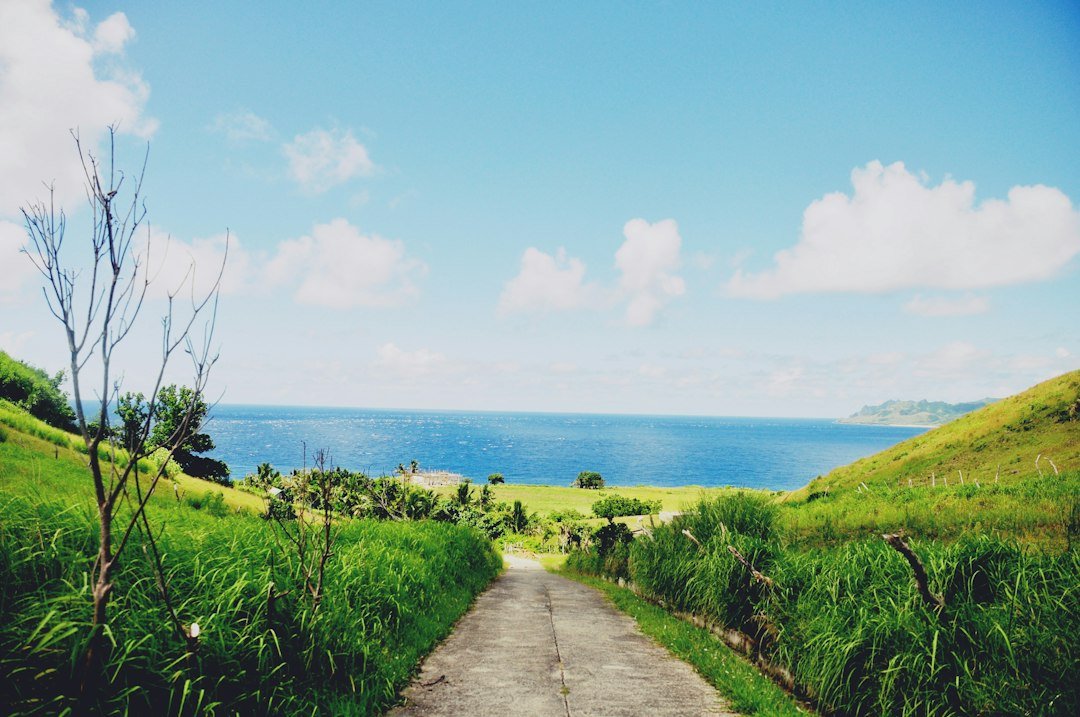
The appeal is real. You wake up in farmland with the sea below you, you are near the Ivana church and the old Spanish era landmarks, and the cliff roads that everyone photographs are on your doorstep. Rates also tend to run a little under Basco for equivalent comfort.
The cost is time and food. You are roughly 30 to 45 minutes from Basco depending on exactly where, so an evening in town means a round trip that eats your night. Most places out here include breakfast and will cook dinner if you ask in advance, and you should ask in advance, because the alternative is a very long ride on an empty stomach. If you are the kind of traveller who is happy eating the same good home cooked Ivatan food three nights running, South Batan is lovely. If you are not, stay in Basco.
Uyugan and the far south: beautiful, and a commitment
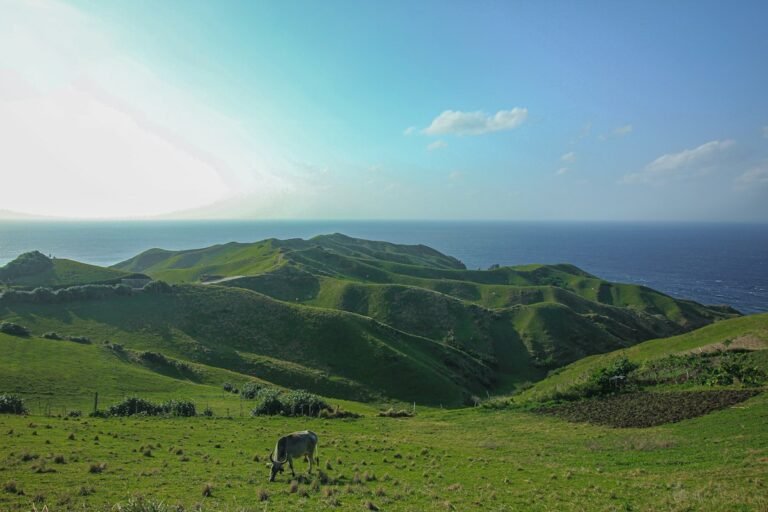
Uyugan is the least developed municipality on Batan and the views from the ridge above it are among the best in the province. There are a small number of homestays and one or two more designed places here. It is genuinely quiet in a way that Basco never is.
Be clear eyed about it though. You are about 45 minutes to an hour from the airport, transport after dark is close to nonexistent, mobile signal is patchy in places, and if something goes wrong you are a long way from a pharmacy. This is a second visit choice, or a choice for people travelling with their own rented motorbike. On a first three day trip it will cost you more in transit than it gives you in atmosphere.
Sabtang Island: should you actually sleep there?
Sabtang is the one most people fall in love with. The stone house villages of Savidug and Chavayan, the vakul headdresses, the empty beaches. There are a few homestays and a small lodge, and staying overnight means seeing the villages without the day trip crowd and catching the light at both ends of the day.
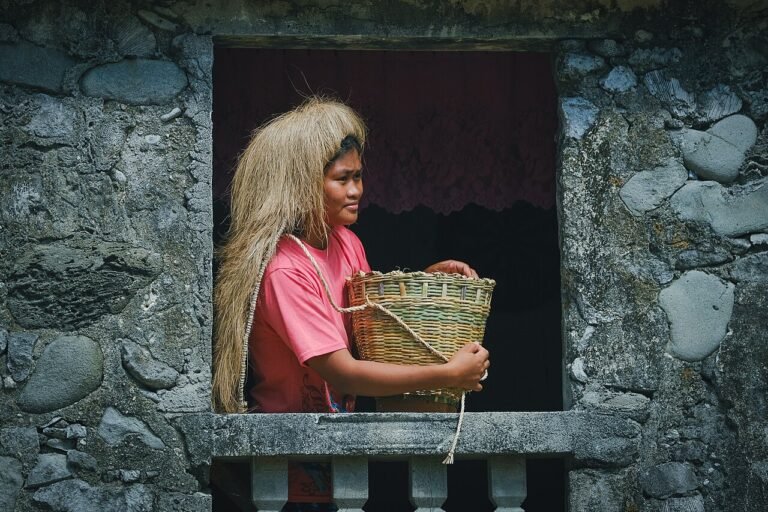
Here is the honest assessment. Most people should not stay on Sabtang, and the reason is the boat. The crossing from Ivana runs around PHP 100 each way and takes roughly 30 to 45 minutes in a falowa, the traditional wooden boat, and it is genuinely at the mercy of the sea. Crossings are cancelled regularly, and they are cancelled in both directions. Being stuck on Batan means missing a day on Sabtang. Being stuck on Sabtang means possibly missing your flight home.
If your trip is three or four nights, do Sabtang as a day tour and sleep on Batan. Sabtang tricycle tours run from around PHP 800, the Sabtang environmental fee is around PHP 200, and a day is enough to see Savidug, Chavayan and Nakabuang beach properly. Stay over only if you have a genuinely flexible schedule and at least five nights, and even then build in a buffer day.
Itbayat: only if you have really committed
Itbayat is the northernmost inhabited island in the Philippines and it is hard to reach. The boat runs around PHP 450 each way and takes roughly 3 to 4 hours across open water that is frequently too rough to attempt, and there is no sheltered harbour, so landing involves timing a jump onto rock steps. Accommodation is a small number of basic homestays.
It is a remarkable place and almost nobody goes. It is also the single easiest way to lose three days of your trip and possibly your flight. Do not attempt Itbayat on a trip shorter than a week, and do not attempt it at all between roughly June and October.
Budget stays: roughly PHP 800 to 1,500 a night
The bottom of the Batanes market is homestays and small lodges, mostly in Basco, mostly run by a family in part of their own house or an extension of it. At this level expect a fan room or a basic air conditioned one, a shared or simple private bathroom, a firm bed, and a host who is genuinely helpful. Rooms at Troy Lodge and Amboy Hometel have historically sat around here and both are frequently the cheapest thing available in the province.
What you are not getting is soundproofing, hot water in every case, reliable wifi, or anything resembling a front desk. That is fine. What you are getting, at this price in this province, is good value, and the hosts at this level are often the best source of practical information you will find.
One note on solo travellers. Batanes pricing is generally per room rather than per head, and very few places have genuine single rates, so a solo trip carries a real penalty here. Budget closer to the couple’s rate than half of it.
Mid range hometels: roughly PHP 1,800 to 3,500 a night
This is where most visitors end up and where the province is strongest. The local term is hometel, somewhere between a guesthouse and a small hotel, and the good ones are very good: proper private bathrooms with hot water, reliable air conditioning, decent breakfast included, a common area worth sitting in, and staff who will organise your tours and your airport transfer without being asked twice.
Bernardo’s Hotel, Villa Ferrer and Marfel’s Lodge are names that recur at this level, along with a growing number of newer places in and around Basco. Book any of these well ahead for the March to May window.
If you are choosing between a cheaper room in town and a mid range place slightly outside it, ask one question: are meals included and can they get you into Basco after dark? A yes to both makes the out of town option clearly better. A no to either makes it worse than a plain room in the centre.
The top end: roughly PHP 4,500 to 12,000 a night
Batanes has a genuine luxury option in Fundacion Pacita, the former home and studio of the painter Pacita Abad, set on a cliff north of Basco with what is probably the best view of any hotel in the Philippines. It is expensive by local standards, it is small, and it books out months ahead in high season. If you are coming for an anniversary or you simply want the view, it is the one splurge in the province that people rarely regret.
Beyond that there are a handful of newer boutique places and a few well finished villas aimed at families or groups. Per head, a villa split between four or six people often works out at mid range money, which is worth checking before you dismiss the category.
Be aware that top end in Batanes still means small scale. There is no resort with a spa, a pool complex and three restaurants. The premium buys you a view, good design and better service, not facilities.
What Batanes accommodation does not include
A few things catch people out, so they are worth stating plainly.
Almost nowhere has a swimming pool, and the sea around most of Batanes is not for casual swimming. The coasts are boulder beaches and strong currents, and Nakabuang on Sabtang is one of the few genuinely safe swimming spots. Do not book on the assumption of beach days.
Wifi is weak almost everywhere and will not reliably carry a video call. Mobile data is better but patchy outside Basco. Treat Batanes as a place where you will be partly offline, and tell anyone who might need you.
Tours are almost never included in the room rate. Budget separately: the North Batan tricycle tour runs around PHP 1,000 and South Batan around PHP 1,500, or roughly PHP 500 and PHP 750 respectively if you are splitting a tour between two, plus environmental fees of around PHP 350 for the Batan tours and around PHP 200 for Sabtang.
Finally, most places do not take cards. There are ATMs in Basco but they run out of cash, particularly at weekends and in high season. Bring what you need for the trip with you.
How to actually book a room in Batanes
A decent share of Batanes accommodation is on the usual booking platforms now, and for mid range and top end places that is the easiest route. Rates on the platforms are broadly in line with direct rates, and you get a written confirmation, which matters when flights start moving.
For homestays and the cheaper lodges, though, a lot of the inventory is not online at all, or is listed at a worse rate than you would get by messaging directly. Many operate almost entirely through Facebook pages and mobile numbers. If a place looks promising and you cannot find it on a platform, search for it on Facebook and send a message. Expect a slow reply and do not read that as a bad sign.
Whichever route you take, confirm three things in writing before you pay anything: the total for all nights, whether breakfast and dinner are included, and the cancellation and rebooking policy if your flight is cancelled. That third one is the important one, and small operators are usually more flexible about it than big ones.
When to book, and the flight problem you have to plan around
Book as early as you can, and book your accommodation at the same time as your flight rather than after it. The province’s total room stock is small enough that the March to May peak genuinely sells out, and Holy Week is the worst of it.
The bigger planning issue is that only small aircraft serve Basco, and flights are cancelled frequently for weather, often at 24 to 48 hours notice. This is not an occasional inconvenience, it is a normal feature of travel here. Two rules follow from it. First, never book a connecting international flight out of Manila for the same day you are due to fly back from Basco, and ideally leave a full day’s buffer. Second, ask your accommodation directly how they handle weather cancellations before you book, because you will be relying on that answer at some point.
On timing, February to April is the settled window: low rain, calmer seas, and the best chance the Sabtang crossing actually runs. April is the driest month. July to October is typhoon season and Batanes takes the first hit from storms crossing the Luzon Strait towards Taiwan, with August the worst of it. December to February is cool and windy, which is atmospheric and genuinely cold by Philippine standards, so bring a jacket. If you want the hills at their greenest with fewer people, late September through November can work, but you are gambling on the weather.
What a day and a weekend really cost
Rough numbers for two people sharing, excluding the Manila flight, which is usually the single largest cost of a Batanes trip.
A day, staying mid range: around PHP 2,200 for the room, around PHP 900 for the two of you to eat if you are mixing carinderia lunches at roughly PHP 50 to 150 with a proper Ivatan dinner at roughly PHP 200 to 400 a head, and around PHP 500 to 900 for your share of a tricycle tour plus fees. Call it roughly PHP 3,600 to 4,000 for the pair, so around PHP 1,800 to 2,000 each.
A three night weekend covering North Batan, South Batan and a Sabtang day trip: around PHP 6,600 for three mid range nights, roughly PHP 2,700 on food, around PHP 2,500 on the two Batan tours and environmental fees, and around PHP 1,700 for the Sabtang day including the boat at roughly PHP 100 each way, the tricycle transfer to Ivana port at around PHP 440 return, the island tour from around PHP 800 and the roughly PHP 200 fee. That lands near PHP 13,500 for two, so roughly PHP 6,750 each before flights.
Doing it cheaply is possible. Staying in a homestay at around PHP 1,000, eating mostly at carinderias and the SDC canteen where a meat dish runs around PHP 70 and rice around PHP 20, and renting a motorbike at around PHP 500 a day instead of taking tours, a determined pair can get a three night trip well under PHP 8,000 between them. Batanes has a reputation as the most expensive province in the Philippines, and for flights and rooms that is fair, but the on the ground costs are ordinary.
What to skip
Skip the outer island overnight on a short trip. It is the single most common way people lose a day of a three night Batanes visit, and the scenery on Batan is not meaningfully worse.
Skip booking somewhere remote for your last night. Put your final night in or near Basco so a dawn flight does not require a dark 45 minute ride on a cliff road.
Skip the assumption that you need a car or a van. Batanes is small, the tricycle tours are good and the drivers are effectively guides. A rented motorbike at around PHP 500 a day is the better upgrade if you want independence, though the roads have real drops and no barriers in places, so decline if you are not a confident rider.
And skip July to September if you have any flexibility at all. A cancelled flight into Basco does not just cost you a day, it can cost you the trip, and no amount of choosing the right guesthouse fixes that.
Where this fits with the rest of your trip
Most people reach Batanes on a direct flight from Manila, and it works best as its own trip rather than as a stop on a northern Luzon loop, simply because the flight risk makes it a bad thing to sandwich between fixed commitments. If you are building a longer northern itinerary, our guide to the top things to do in Batanes covers what to fill those days with, and pairs naturally with Vigan and Pagudpud on the mainland, both of which you can reach overland. For a different and much less visited corner of the north, Apayao and Tuguegarao are worth a look, and Tuguegarao is the usual gateway to the Cagayan Valley.
Quick FAQ
Where should I stay in Batanes for the first time? Basco, and specifically in or close to the town centre. It has the food, the tour operators, the ATMs and the shortest transfers, and both island tours start there. Save the remote and scenic options for a second visit or a longer trip.
How much does accommodation in Batanes cost per night? Roughly PHP 800 to 1,500 for a homestay or basic lodge, around PHP 1,800 to 3,500 for a good hometel with breakfast and hot water, and around PHP 4,500 to 12,000 at the top end. Rates are generally per room, so solo travellers pay close to what a couple would.
Is it better to stay in Basco or Sabtang? Basco for almost everyone. Sabtang is the more beautiful place but the boat from Ivana is cancelled often, and being stranded there can cost you your flight home. Visit Sabtang on a day tour and sleep on Batan unless you have five nights and a flexible schedule.
Do I need to book Batanes accommodation in advance? Yes. The province has only a few dozen places to stay and the March to May peak genuinely sells out, with Holy Week the tightest. Book your room at the same time as your flight, and confirm the rebooking policy in writing in case the flight is cancelled.
Are there hotels with pools or beaches in Batanes? Essentially no. Pools are very rare and most of the coast is boulder beach with strong currents, so casual swimming is limited to a few spots such as Nakabuang on Sabtang. Come for the cliffs and the villages, not for beach days.
What is the best time to visit Batanes? February to April, with April the driest month. You get the calmest seas, the best odds that the Sabtang crossing runs, and the lowest chance of a cancelled flight. Avoid July to October, which is typhoon season, and expect genuinely cool windy weather from December to February.