
The Eighth Wonder of the World? It’s More Complicated Than That.
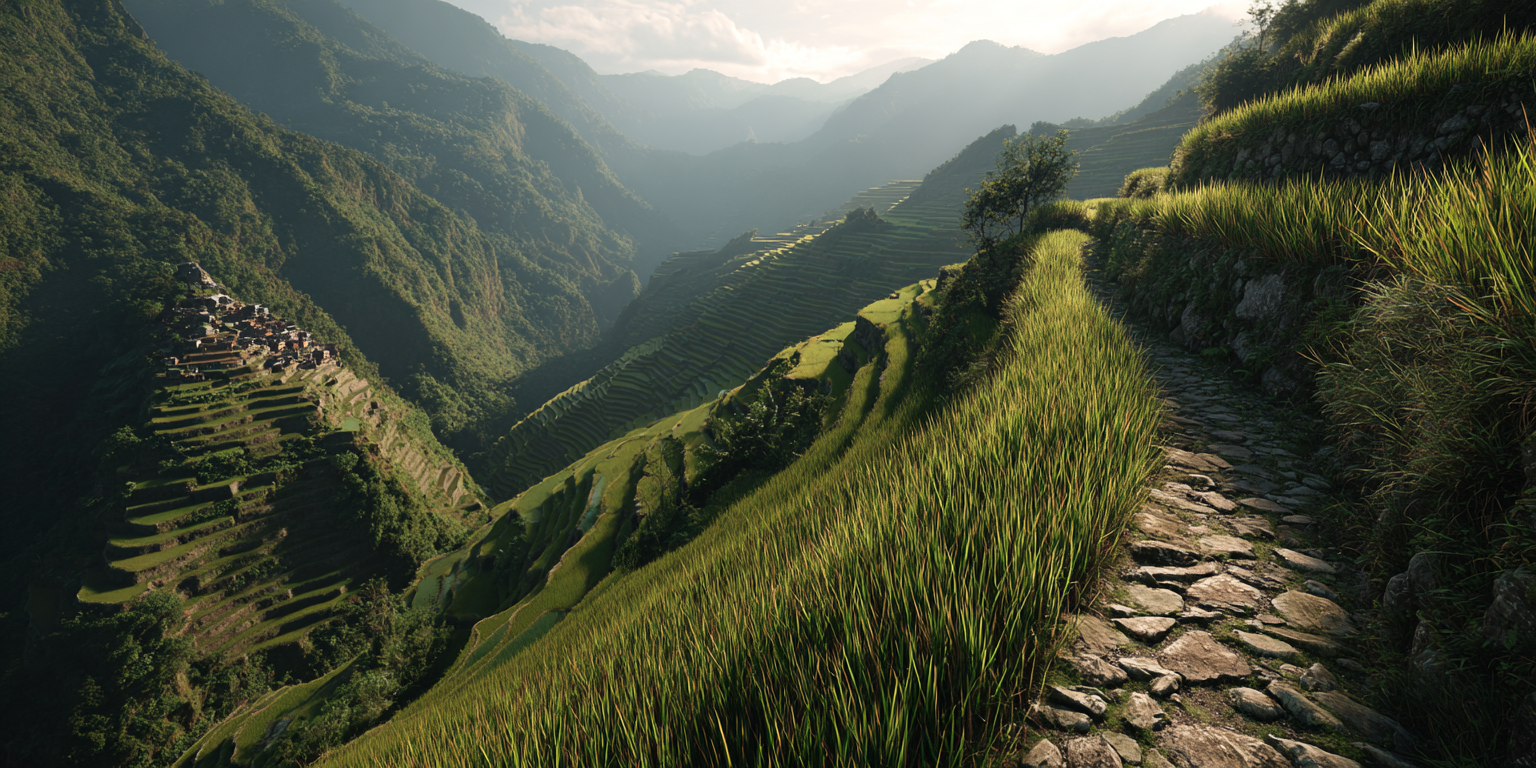
Did you know the Ifugao Rice Terraces, often called the world’s eighth wonder, aren’t a single spot on a map? They are a collection of five distinct, inscribed UNESCO World Heritage sites spread across the Cordillera mountains. Many travelers see a photo of the iconic amphitheater-style terraces and think, “That’s Banaue.” But that specific view is actually from Batad, a nearby village accessible only by a further hike. Understanding this distinction is the first step to truly appreciating the monumental experience of hiking the Banaue Rice Terraces, it’s not about seeing one viewpoint, but about immersing yourself in a living, breathing cultural landscape carved by hand over 2,000 years.
Getting There Without the Headache
The journey to the Cordilleras is a commitment, but it’s part of the adventure. There are no airports in Banaue, so the only way in is by a long road trip from Manila. The traveler’s rite of passage here is the overnight bus. Companies like Ohayami Trans and Coda Lines run nightly trips, and it’s worth booking online at least a week in advance, especially during peak seasons (like Holy Week or December).
The nine-hour ride costs around ₱800 PHP. A word of advice: the air conditioning is notoriously powerful. Bring a jacket, socks, and maybe even a beanie. You’ll be glad you packed one. Arriving in Banaue town proper as the sun rises over the mountains is a reward in itself. Before you can go anywhere, you’ll be directed to the tourism office to pay a mandatory environmental fee of ₱50 PHP, which contributes to the preservation of the terraces. Here, you can also get reliable information and arrange for accredited local guides.
More Than Just a Walk: The Batad Experience
The famous amphitheater terraces are the main draw, and most visitors arrange a tricycle and a guide to get to Batad. The tricycle ride to the Batad “saddle” point is a bumpy, hour-long journey (around ₱500 PHP round trip). From there, the real work begins.
Hiring an accredited Ifugao guide is non-negotiable. It’s not just for safety; it’s for context. A good guide, someone who has walked these paths their entire life, is the key to unlocking the story of the landscape. A guide for a day trek to Batad and Tappiya Falls costs around ₱1,500 PHP for a small group. A knowledgeable guide won’t just point the way; they’ll explain how the walls are maintained without mortar, which families own which plots, and the intricate irrigation systems that channel water from the mountaintops. This is what transforms a simple hike into a profound session of cultural immersion philippines.
The trek itself is less of a trail and more of a stone staircase. The trail follows the narrow mud-and-stone walls of the terraces, known as pilapil. The descent into Batad village is steep, demanding focus and steady footing. After about 45 minutes, the view opens up completely. You see it: the perfect, cascading amphitheater of rice paddies filling the entire valley. It’s breathtaking and feels completely disconnected from the modern world.
From the village, the trail continues on to Tappiya Falls, another hour of rigorous hiking. The trail descends sharply before culminating in a powerful, 70-meter waterfall crashing into a chilly, emerald pool. The cold water is a welcome shock to tired muscles, a perfect reward for the effort.
Local Rhythms and Real Connections
One of the most memorable parts of the day was lunch. Guides often lead visitors to a small, family-run eatery in Batad village, where a simple plate of chicken adobo with locally grown mountain rice is a popular choice. The rice itself has a nuttier, heartier flavor than most rice found elsewhere. Eating a meal harvested just meters away, while overlooking the terraces, is one of those perfect, grounding travel moments. The cost is minimal, around ₱300 PHP, but the value is immense.
Throughout the hike, you’ll pass local villagers, some carrying heavy loads of supplies on their heads, others quietly tending to their terrace plot. A simple smile and a nod were always returned in kind. This isn’t a performance for tourists; it’s their home, their workplace, and their legacy. This authentic glimpse into daily life is one of the most rewarding parts of hiking the banaue rice terraces philippines.
Challenges and Highlights
The biggest challenge is the physical demand. The paths are uneven, and the ascents and descents are relentless on the knees. One tip: don’t rush. Use a walking stick, your guide will likely have one fashioned from bamboo, and wear shoes with excellent grip. Forget the fashion sneakers.
Another challenge is the unpredictable weather. A sunny morning can turn into a misty, rainy afternoon in minutes, making the stone paths slick. A lightweight waterproof jacket is an absolute essential, no matter the forecast.
But the highlights far outweigh any difficulty. The absolute silence of the valley, broken only by birdsong and the sound of rushing water, is a powerful antidote to city life. The sheer architectural genius of the Ifugao people is humbling. Standing in the middle of the Batad amphitheater, you realize this isn’t just a pretty view; it’s one of the most brilliant and sustainable engineering feats in human history.
Essential Tips for Your Trip
- When to Go: For the greenest paddies, visit between April and June. For a golden, pre-harvest landscape, aim for August and September. Be mindful that July to October is typhoon season, though storms are unpredictable.
- Cash is King: ATMs in Banaue are few and often unreliable. Bring enough cash from Manila or another major city to cover your accommodation, food, and guide fees for your entire stay.
- Stay Connected (or Don’t): Cell service and Wi-Fi are extremely limited, especially in remote villages like Batad. Inform your family of your itinerary beforehand and embrace the opportunity to disconnect.
- Pack Smart: Prioritize function over fashion. You’ll need sturdy hiking shoes, a rain jacket, sunscreen, insect repellent, a reusable water bottle to stay hydrated, and a power bank.
Hiking the Banaue Rice Terraces is more than just a trek; it’s a lesson in history, agriculture, and human resilience. It’s one of those rare, unique travel experiences that stays with you long after the muscle soreness fades.
The terraces aren’t a static relic of the past; they are a dynamic landscape that requires constant, back-breaking work to maintain. They don’t just ask for your admiration; they ask for your respect and understanding. And the best way to give it is to walk these ancient paths yourself, one carefully placed step at a time.
More Philippines Destinations to Explore
Worth adding to a longer Philippines trip:
- Living in Cebu as a Digital Nomad: Costs, Wifi and Neighbourhoods
- Canyoneering at Kawasan Falls: Routes, Costs and Safety
- Top Things to Do in Baler
Guide Fees and Costs in Detail
Guides at Banaue are organised through the tourism office and the rates are broadly standardised, which removes most of the haggling.
A day hike guide runs roughly 1,500 to 2,500 PHP for the group rather than per person, depending on the route and duration. The Batad loop sits at the upper end, shorter viewpoint walks at the lower.
Banaue environmental fee is around 50 PHP, with a separate Batad fee of roughly 50 PHP if you go there. Tricycle or jeepney to the Batad saddle costs around 1,500 to 2,500 PHP return for the vehicle, again split across your group.
Porters, if you want one, run roughly 500 to 800 PHP for a day.
A realistic day: around 1,200 to 2,000 PHP per person for two people, dropping to 700 to 1,000 PHP each in a group of four.
Do You Need a Guide?
For the main viewpoints along the road, no. They are signposted and a tricycle will take you round.
For anything on the terraces themselves, yes, and this is not merely a revenue arrangement. The paths are unmarked stone walls between paddies, they are slippery, they cross private land, and people get lost or injured every season. A guide also gets you the context that turns a nice view into an understandable landscape.
Hire through the tourism office rather than someone approaching you at the bus stop, so there is accountability if something goes wrong.
Batad Versus Banaue
Worth being clear, since people conflate them.
Banaue is the town and the road viewpoints, easy to reach and the postcard image most people know. You can see it in an afternoon without walking far.
Batad is a separate village about an hour away plus a walk in, with the amphitheatre shaped terraces that most photographers are actually after. It takes a full day minimum and an overnight is better.
If you have one day, Banaue viewpoints plus a short terrace walk. If you have two, go to Batad and stay the night, because the terraces at dawn are the thing worth the journey.
Quick FAQ
How much does it cost to hike the Banaue Rice Terraces? Guide fees run roughly 1,500 to 2,500 PHP per group for a day hike, plus environmental fees of around 50 PHP each and transport to the trailhead. Per person that lands near 1,200 to 2,000 PHP for a pair.
Do you need a guide for the Banaue Rice Terraces? Not for the roadside viewpoints, but yes for walking on the terraces themselves. The paths are unmarked, slippery and cross private land. Book through the tourism office rather than an informal offer.
How difficult is the hike? Moderate to hard depending on the route. The Batad loop involves steep descents and a long climb back, on narrow stone walls that are slippery when wet. Reasonable fitness and decent footwear are needed.
What is the best time to visit the rice terraces? Around March to May when the terraces are green, or June to July before harvest. The terraces are brown and bare after harvest, roughly August onward, which surprises visitors who arrive expecting the postcard image.
Should you visit Banaue or Batad? Banaue for the accessible roadside viewpoints in an afternoon. Batad for the amphitheatre terraces most photographs show, which needs a full day and is much better with an overnight stay.