
Cagayan de Oro, often shortened to CDO, is the main gateway city to northern Mindanao and one of the most visited urban centers in the region, known nationally as the whitewater rafting capital of the Philippines. The Cagayan River cuts straight through the city, and the rapids upstream have turned CDO into a genuine adventure sports destination, while the city itself offers a solid mix of parks, food and religious landmarks for a slower paced day.
This guide covers the best things to do in Cagayan de Oro, how to get there, when to visit, and what to budget, whether adventure sports or a relaxed city visit is the priority.
Why Cagayan de Oro Is Worth the Trip
CDO earns its reputation almost entirely on the strength of its whitewater rafting, with 26 rapids along the Cagayan River offering everything from beginner-friendly runs to genuinely extreme sections for experienced paddlers. Beyond the river, the city serves as a natural jump-off point for the highland attractions of Bukidnon, and its own city center offers enough parks, historic sites and food options to fill out a longer stay. Combined with its role as a major transport hub for northern Mindanao, CDO works equally well as a standalone destination or a base for a broader regional trip.
Getting to Cagayan de Oro
- By air: Laguindingan International Airport serves CDO with nonstop flights from Manila, roughly 1 hour 45 minutes, operated by Cebu Pacific, Philippine Airlines and Philippines AirAsia, plus connections from Cebu.
- By sea: A direct ferry connects Cagayan de Oro to Manila several times a week, though the journey takes roughly 33 hours, making it a slower option generally chosen for cargo or budget travel rather than speed.
- By land: CDO connects by road to other parts of Mindanao, including a roughly 3.8 hour drive from Butuan, useful if you are combining CDO with a broader northern Mindanao itinerary.
Top Things to Do in Cagayan de Oro
1. Go Whitewater Rafting on the Cagayan River
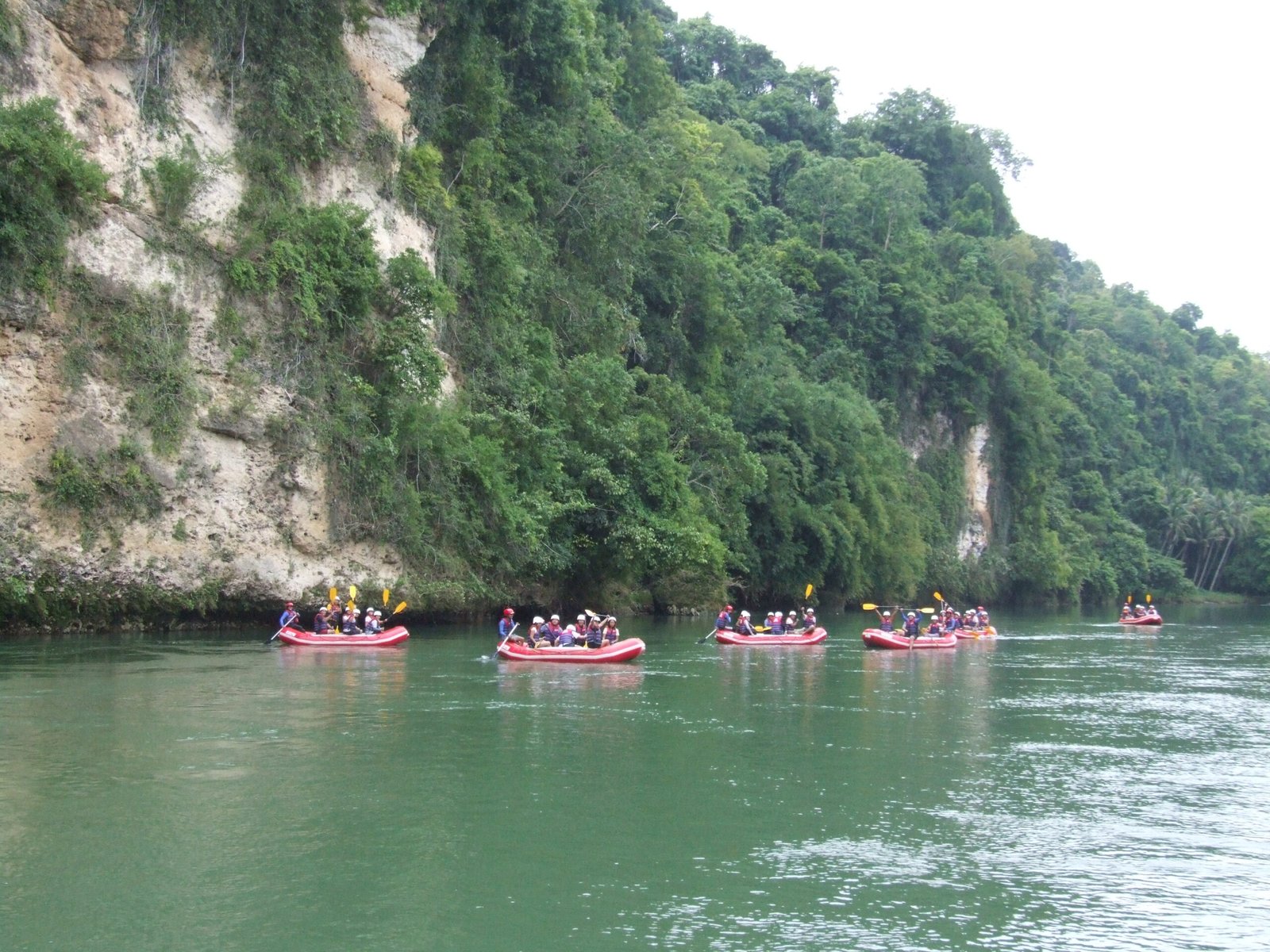
Whitewater rafting is the defining activity in CDO, with rafting routes running through 26 named rapids across a stretch of the Cagayan River that winds through mangrove forest and past large rock formations. Operators offer beginner, advanced and extreme difficulty courses, so both first timers and experienced rafters can find a suitable run, with most trips lasting roughly 3 to 4 hours including safety briefing and transport. Hotel pickup within downtown CDO is commonly included in half day packages, making logistics simple even without a car.
2. Explore Macahambus Adventure Park and Cave
Macahambus Cave and Adventure Park, in Barangay Lumbia roughly 25 minutes from the city center and just 10 minutes from the airport, combines a historically significant cave with a modern adventure park offering ziplining, rappelling and a sky bridge alongside the cave exploration itself. The cave holds local historical significance connected to a World War II ambush, adding some context to what is otherwise primarily a nature and adventure stop.
3. Visit the Divine Mercy Shrine
Perched on a hill in nearby El Salvador City, a short drive from CDO, the Divine Mercy Shrine features a 50 foot statue of Jesus Christ, said to be the tallest depiction of the Divine Mercy image in Asia. The shrine draws large crowds for its annual feast each April, and even outside that period offers a worthwhile stop for the hilltop views over the surrounding region as much as the religious significance.
4. Relax at Gaston Park
Gaston Park, named after a former mayor, is the central gathering spot of CDO, offering a quieter counterpoint to the adventure sports elsewhere on this list. It is a good stop for a slower afternoon, people watching, or simply a break between more active parts of your itinerary.
5. Combine a Trip With the Highlands of Bukidnon
The proximity of CDO to Bukidnon makes it a natural jump-off point for highland attractions like Dahilayan Forest Park, roughly an hour or so away, known for ziplining and cooler mountain air. Several tour operators package a CDO rafting morning with a Bukidnon afternoon, letting you combine river adventure with a change of scenery and temperature in a single day trip.
Best Time to Visit Cagayan de Oro: Month by Month
The short answer to the best time to visit Cagayan de Oro is February through May, with March and April the sweet spot. Those months give you the most reliable rafting conditions, the least rain, and the Kagay an Festival in late August as the one strong reason to break the rule.
The longer answer is that CDO sits on the north coast of Mindanao, well outside the typhoon belt that batters Luzon and the Visayas. That is the single most useful thing to know about timing a trip here. While Manila and Cebu are cancelling flights in September, Cagayan de Oro is usually fine. It is one of the few places in the Philippines where the traditional rainy season is a soft constraint rather than a hard one.
December to February. Cool by Philippine standards, with evening temperatures dropping to around 23 degrees. Rain is occasional rather than constant. This is comfortable sightseeing weather and the rafting runs, though river levels can be lower and the rapids correspondingly tamer. Good for beginners, slightly underwhelming for experienced paddlers.
March to May. The driest and hottest stretch, with daytime highs around 33 to 34 degrees. River conditions are at their most predictable, operators run full schedules, and the highland day trips into Bukidnon are at their best because the roads are dry. This is the best overall window. It is also when domestic tourism picks up, so book rafting a few days ahead over Holy Week.
June to September. Wetter, but rarely a washout. Rain here tends to arrive as heavy afternoon downpours that clear, not multi day systems. River levels rise, which makes the rapids genuinely more exciting and occasionally pushes operators to suspend the extreme sections for safety. Late August brings the Kagay an Festival, the city fiesta honouring Saint Augustine, with street dancing, a fluvial parade on the river and a lot of food. If you want atmosphere over certainty, this is your month.
October to November. The transition. Rain eases through November and crowds are thin. November in particular is quietly one of the better months, with settled weather and low season pricing.
What to avoid. Nothing outright, but be aware that the shear line, a weather feature that affects northern Mindanao in December and January, can bring several consecutive days of grey drizzle. It will not ruin a trip but it will flatten the photographs. If your schedule is fixed and rafting is the whole point, pick March or April and stop overthinking it.
What to Budget
- Flight from Manila: pricing varies with how far ahead you book, generally moderate for a domestic Mindanao route
- Whitewater rafting: half day packages including guide and safety gear run from moderate for beginner courses up to higher pricing for extreme routes and private group bookings
- Macahambus Adventure Park: entrance and activity fees vary by which combination of ziplining, rappelling and cave exploration you choose
- Food: CDO has a wide range of dining from casual local spots to more established restaurants, generally reasonable compared to Manila prices
Sample Itinerary
2 Days, 1 Night
Day one for whitewater rafting in the morning, Macahambus Adventure Park in the afternoon if energy allows. Day two for a relaxed city day covering Gaston Park and the Divine Mercy Shrine, or a half day trip into Bukidnon if you want to extend the adventure theme.
A Closer Look at the Rafting Experience
Rafting operators in CDO have organized the Cagayan River into three general difficulty tiers, letting groups with mixed experience levels choose a course that suits them rather than defaulting to a single standard run. The beginner course covers gentler rapids suited to first timers and families with older children, the advanced course adds more technical sections for those with some prior rafting experience, and the extreme course pushes into genuinely demanding whitewater aimed at experienced paddlers looking for a real challenge. All guided trips include safety briefings, helmets and life vests, and most operators include hotel pickup and drop off within the city as part of standard packages, which removes much of the logistical hassle of arranging transport yourself.
Food in Cagayan de Oro
CDO has a solid food scene built around Mindanao staples alongside a growing number of modern cafes and restaurants catering to both locals and visitors. Look for grilled seafood, sinugba style barbecue, and a local take on pastil, a rice and shredded meat dish wrapped in banana leaf associated more broadly with Mindanao. The city center has enough variety to cover several days of meals without repeating, ranging from inexpensive local eateries to more polished sit-down restaurants.
Where to Stay in Cagayan de Oro
CDO has a wide range of accommodation given its size and role as a regional hub, from budget guesthouses to established mid-range and business hotels concentrated in and around the city center. Staying centrally makes it easy to reach both Gaston Park and transport hubs for day trips to Macahambus or Bukidnon, while proximity to Laguindingan Airport is less of a priority given the roughly hour long drive between the airport and downtown regardless of where you stay.
Practical Tips for Cagayan de Oro
- Book your rafting package ahead of time, particularly for the extreme course, since operators need to match you to an appropriate group and guide.
- Bring a change of clothes and secure your valuables in a dry bag if provided, since you will get thoroughly wet on the river.
- Standard city safety precautions apply: avoid unlit, unfamiliar areas at night and keep valuables secured in crowded public spaces, as in any mid-sized Philippine city.
- Cebuano is the main local language, but English is widely understood, particularly around tourist-facing businesses and tour operators.
Plan Your Trip to Cagayan de Oro
Ready to book? Compare hotels and tours in Cagayan de Oro below.
- Search Hotels in Cagayan de Oro on Booking.com
- Compare Hotels in Cagayan de Oro on Agoda
- Find Tours and Activities in Cagayan de Oro on Klook
- Book Tours in Cagayan de Oro on GetYourGuide
Booking through these links may earn us a small commission at no extra cost to you.
More Cagayan de Oro Guides
Planning the rest of your trip? Check out our full travel guide for logistics, costs and practical tips.
What a Trip to Cagayan de Oro Actually Costs
Real numbers, in pesos, as rough guides. Rates move, so treat these as a planning baseline rather than a quote.
- Whitewater rafting, beginner course: roughly 1,000 to 1,500 pesos per person for a half day on the shorter run, including guide, helmet and life vest
- Whitewater rafting, advanced or extreme run: roughly 1,800 to 3,000 pesos per person depending on operator and length
- Airport transfer from Laguindingan to the city: around 200 to 250 pesos on the shared shuttle van, roughly 1,200 to 1,800 pesos for a private taxi or Grab
- Jeepney or multicab around the city: around 13 to 20 pesos a ride
- Taxi or Grab across town: roughly 120 to 250 pesos
- Budget hotel room: around 900 to 1,500 pesos a night
- Mid range hotel room: roughly 2,000 to 3,500 pesos a night
- Meal at a local carinderia: around 80 to 150 pesos
- Meal at a mid range restaurant: roughly 250 to 500 pesos a head
- Day trip to Bukidnon highlands: roughly 2,500 to 4,000 pesos per person on a joiner tour, less if you go independently by bus
- Zipline at Dahilayan: around 300 to 900 pesos depending on which line
A comfortable day in Cagayan de Oro, mid range hotel, three meals out, local transport and one activity, lands around 3,500 to 5,000 pesos per person. A budget day without a major activity can come in under 1,500 pesos. A weekend with rafting, a Bukidnon day trip and decent food runs roughly 9,000 to 14,000 pesos per person excluding flights.
Where to Stay in Cagayan de Oro by Area
Most visitors base themselves around Divisoria and the Limketkai area, which is central, walkable to restaurants and malls, and where the majority of the mid range hotels sit. It is the sensible default and puts you a short taxi ride from the rafting pickup points.
Uptown and Pueblo de Oro is quieter and greener, with the golf course and some of the better resorts, but you will be taxiing for everything. Worth it if you want calm, a poor choice if you want to walk to dinner.
Near the airport makes no sense as a base. Laguindingan is roughly 45 minutes to an hour from the city and there is nothing around it.
For rafting focused trips, several operators have their own lodges upstream near the put in points. These are basic but convenient, and often bundled into rafting packages at a saving.
Getting Around Cagayan de Oro
The city is served by jeepneys and multicabs running fixed routes, which are cheap and perfectly usable once you work out the route codes painted on the side. Grab operates here and is the low friction option for visitors, usually costing roughly 120 to 250 pesos for a trip across the city centre. Regular taxis are metered and generally honest, though asking them to use the meter is occasionally necessary.
Motorela, a local variant of the tricycle that seats more people, handles short hops for around 15 to 30 pesos. For Bukidnon day trips, buses leave from the Agora terminal regularly and cost roughly 150 to 250 pesos each way to Camp Phillips or Manolo Fortich.
Honest Downsides Worth Knowing
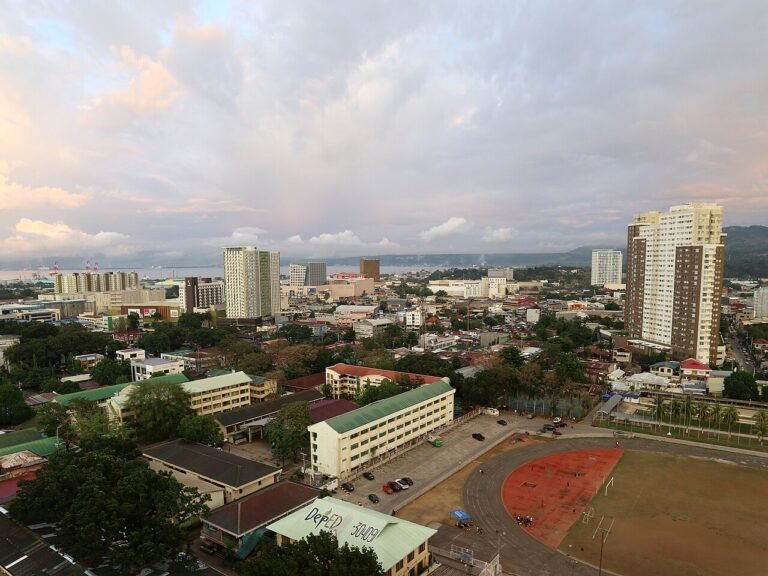
Cagayan de Oro is a working city first and a tourist destination second, and it shows. The city centre is congested, traffic at rush hour is genuinely bad, and there is not a great deal of architectural charm. If you are expecting Vigan or Intramuros, adjust.
The river is brown. This surprises people who have seen marketing photographs. It is silt, not pollution, and it does not affect the rafting experience, but it is not the turquoise water of the tourism posters.
Air quality in the centre is mediocre and the heat between March and May is real. Plan outdoor activity for mornings.
Finally, CDO is a gateway. A lot of what makes a trip here memorable is actually in Bukidnon, an hour or two inland. Budget a full day for that rather than treating it as an afternoon add on, or you will feel the city alone did not justify the flight.
Quick FAQ
What is the best time to visit Cagayan de Oro? February through May, with March and April best of all. Those months are driest and give the most reliable whitewater rafting conditions. Late August is worth it for the Kagay an Festival if you accept some rain.
What is the best month to visit Cagayan de Oro? April. It is dry, the rivers run predictably, and the Bukidnon roads are in good shape for day trips. November is the quieter alternative with lower prices.
Does Cagayan de Oro get typhoons? Rarely. CDO sits on the north Mindanao coast, largely outside the main typhoon track, which is why it stays visitable in months when Luzon and the Visayas are disrupted.
How much does whitewater rafting in Cagayan de Oro cost? Roughly 1,000 to 1,500 pesos for a beginner half day, and roughly 1,800 to 3,000 pesos for the advanced or extreme runs, including guide and safety gear.
How many days do you need in Cagayan de Oro?
Two days covers rafting plus one or two city attractions. Add a third day if you want to extend into Bukidnon for ziplining and highland scenery.
How do you get to Cagayan de Oro from Manila?
Nonstop flights from Manila to Laguindingan International Airport take roughly 1 hour 45 minutes, operated by Cebu Pacific, Philippine Airlines and Philippines AirAsia.
Is Cagayan de Oro safe for tourists?
Yes, standard city precautions apply as they would in any mid-sized Philippine city: avoid unlit areas at night and keep valuables secured in crowded places.
Do you need rafting experience to try the Cagayan River?
No. Operators offer beginner, advanced and extreme courses, so first timers can choose an appropriate difficulty level with a guide.
What is the best time to visit Cagayan de Oro?
November through May, during the dry season, offers the most predictable conditions for rafting and outdoor activities.
You Might Also Like
- Cagayan de Oro Travel Guide: What to Know Before You Go
- Top Things to Do in Dipolog: Boulevard, Dapitan and the Sulu Sea
- Top Things to Do in South Cotabato: Lake Sebu and GenSan
Planning more of Mindanao? Our guides to things to do in Bukidnon, Gingoog and Ozamis City cover the rest of the northern Mindanao circuit, and is Ozamiz City safe for tourists answers the question most first time visitors to the region ask.