If you’ve been staring at photos of the Banaue Rice Terraces and wondering how much of a mission it actually is to get there, here’s the honest answer: getting from Manila to Banaue is a long night on a bus, and that’s basically it. There’s no airport in Banaue. There’s no train. What there is, is a well worn overnight bus route that thousands of travellers and Ifugao locals use every week, and once you know which terminal to show up at, the whole thing is a lot less intimidating than it looks.
I’ll walk you through every option, what each one really costs, and which one I’d pick depending on your budget and how much sleep you’re willing to sacrifice.
The quick version: how far is Banaue from Manila?
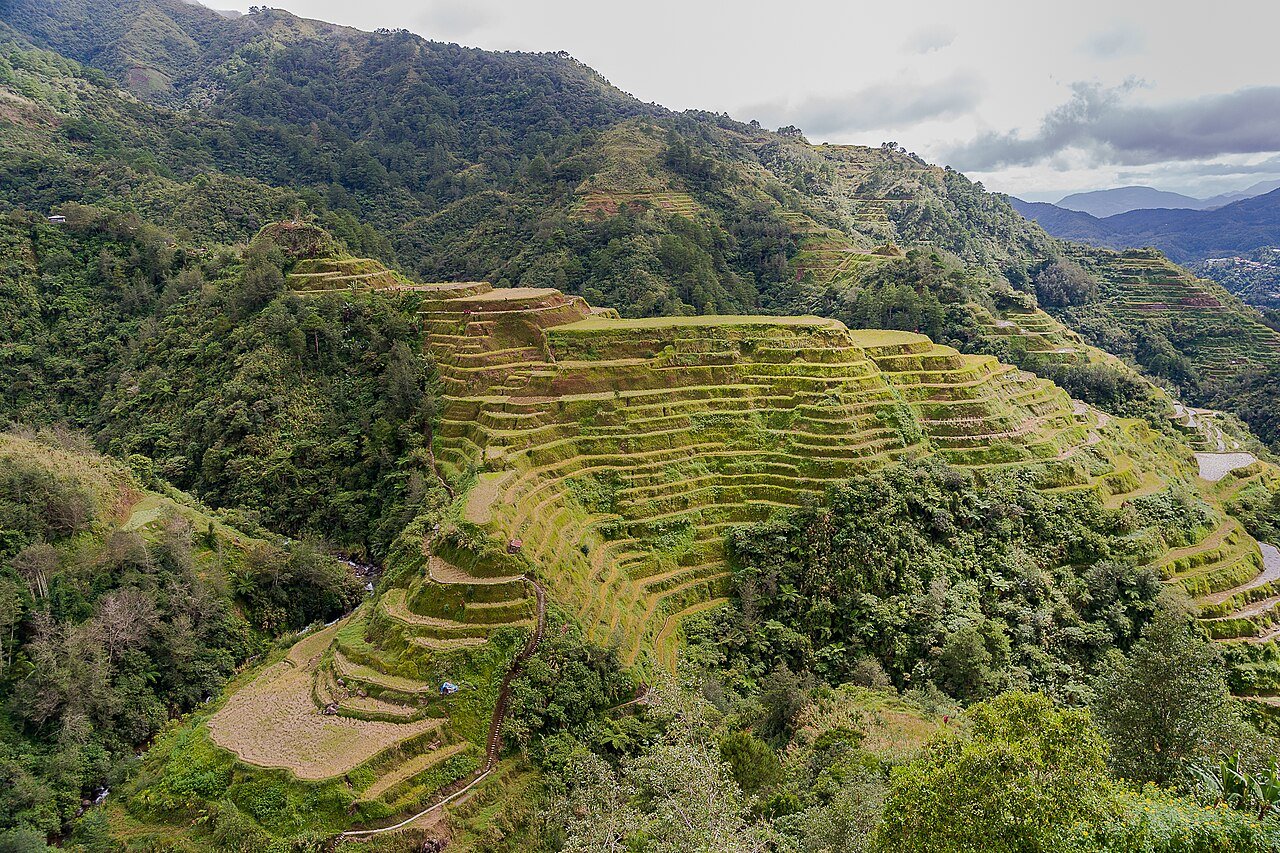
Banaue sits in Ifugao province, roughly 340 to 350 km north of Metro Manila, deep in the Cordillera mountains. On paper that doesn’t sound like much. In practice the last stretch is winding mountain road, so you’re looking at roughly 9 to 10 hours by bus, sometimes more if the weather is bad or there’s roadwork. Almost every bus runs overnight, which is actually a blessing. You sleep through the boring part and wake up to fog rolling over the terraces.
One thing worth flagging early: most people say “Banaue Rice Terraces” but the postcard shot you’ve probably seen is often the Batad amphitheatre, which is a separate trip from Banaue town. More on that further down.
Option 1: Overnight bus with Ohayami Trans
Ohayami Trans is the old reliable on this route. Their Manila terminal is at the corner of Fajardo Street and Lacson Avenue in Sampaloc, near UST. It’s not a glamorous terminal, so don’t expect a lounge, but the buses do the job.
Departures are in the evening, generally from around 8:00 PM onwards, with two to three trips a night depending on the season. Fares sit at roughly PHP 650 to 750 one way. Travel time is around 9 hours, so an 8:00 PM departure typically has you in Banaue somewhere between 5:00 and 6:00 AM.
Book ahead if you can. Ohayami takes reservations by phone and through their site, and during Holy Week, long weekends and the December to January period the buses genuinely sell out. Showing up at the terminal at 7:00 PM on a Friday hoping for a seat is a gamble.
Option 2: Overnight bus with Coda Lines
Coda Lines is the newer, comfier operator, and if you’re taller than about 5’8″ you’ll appreciate it. Their terminal is in Quezon City, which is a big deal if you’re staying anywhere in the northern half of Metro Manila. Getting to QC beats crossing the city to Sampaloc at rush hour.
They run two tiers. Express buses start departing around 8:00 PM with the last trip around 10:30 PM, at roughly PHP 670 one way. VIP buses depart between about 9:00 PM and 10:00 PM at roughly PHP 780. The VIP seats recline further and there are fewer of them per bus. For around a hundred pesos more, on a 9 hour overnight ride, I think it’s worth it.
Coda also runs Banaue to Sagada connections, which matters if you’re chaining Cordillera stops together. If that’s your plan, our guide on how to get from Manila to Sagada covers that side of the loop.
Option 3: Fly to Cauayan or Tuguegarao, then go overland
There is no airport in Banaue, and there won’t be one any time soon. The nearest commercial airports are Cauayan in Isabela and Tuguegarao in Cagayan. Both are served from Manila by short flights of roughly an hour.
Here’s the problem. From Cauayan you still have a road transfer of several hours to Banaue, usually via Lagawe or Solano, and the connections are not designed for tourists. You’d be piecing together vans and jeepneys, or hiring a private vehicle. Once you add the flight, the transfer and the waiting, you’ve usually spent more money and about the same total time as just taking the overnight bus.
So I’ll be blunt: flying is not really a sensible option for Banaue unless you’re already in Cagayan Valley for another reason, or you have a specific need to avoid a long bus ride. It’s technically possible. It’s rarely the right call.
Option 4: Private van or car hire
If there are four to six of you, hiring a van with a driver becomes reasonable. Expect somewhere in the range of PHP 12,000 to 20,000 for a one way transfer, and more for a multi day charter where the driver stays with you. Split six ways that’s PHP 2,000 to 3,300 each, so several times the bus fare.
What you get for that is real flexibility. You can leave when you want, stop at Dalton Pass, detour to a viewpoint, and carry on to Batad or Sagada without renegotiating. For families with small kids or anyone with mobility issues, it’s genuinely the most comfortable way to do this trip. For a solo backpacker, it makes no sense.
Option 5: The Baguio combo route
Some travellers break the journey in Baguio. You take a bus from Manila to Baguio, which takes around 4 to 6 hours, spend a night or two, then continue to Banaue or Sagada. There are Baguio to Banaue connections, though they’re less frequent and the mountain road through Bontoc is slow.
The upside is you don’t do one giant overnight haul and you get to see Baguio. The downside is that Baguio to Banaue can eat another 8 to 9 hours, so you’re not saving travel time, you’re spreading it out. If your trip is longer than a week, this is a nice way to do it. If you have four days, take the direct bus.
Cost comparison at a glance
Rough one way costs per person, current as of writing and always worth double checking before you commit:
Ohayami Trans overnight bus: around PHP 650 to 750. Cheapest and most direct.
Coda Lines Express: around PHP 670. Similar price, newer buses, QC terminal.
Coda Lines VIP: around PHP 780. Best comfort for the money on this route.
Fly plus land transfer via Cauayan: roughly PHP 2,500 to 5,000 all in, depending on airfare and how you handle the transfer. Slower door to door than it looks.
Private van: roughly PHP 12,000 to 20,000 for the vehicle, so PHP 2,000 to 3,300 each in a group of six.
Which option should you choose
For most people, the answer is Coda Lines VIP. You get a proper reclining seat, the terminal is easier to reach from most of Metro Manila, and the price difference against the cheapest option is about the cost of a coffee and a sandwich.
Go with Ohayami if you’re staying near Sampaloc or Espana, if Coda is sold out, or if you just want the cheapest seat. The buses are older but the route and the timing are the same.
Hire a van if you’re a group of four or more, if you’re travelling with kids or older relatives, or if you want to fold Sagada and Batad into one loop without waiting around for connections. Skip the flight entirely unless your itinerary already puts you in Isabela or Cagayan.
Getting from Banaue town to the actual terraces
This trips people up constantly, so it’s worth spelling out. Your bus drops you in Banaue town, or at the public market. The Banaue Viewpoint, the one on the old thousand peso note, is a short tricycle ride uphill, usually around PHP 200 to 400 return with waiting time, negotiated up front.
Batad is a different trip. You take a jeepney or hired van from Banaue to the Batad saddle, which takes roughly 45 minutes to an hour on rough road, then walk down into the village. Budget half a day minimum, ideally an overnight stay in Batad itself. If you want a feel for what that hike is actually like, we wrote up our experience hiking the Banaue Rice Terraces.
There’s also an environmental fee for Banaue, typically around PHP 50, plus separate small fees at some viewpoints and for Batad. Carry small bills. Card acceptance in Banaue is thin and the ATMs are not always cooperative, so bring enough cash from Manila or Solano.
Practical things nobody tells you before the bus
Bring a jacket. Not a light one. The bus air conditioning is aggressive and Banaue in the early morning at around 1,500 m sits comfortably in the mid teens Celsius, sometimes cooler. People step off in shorts and a t shirt and regret it within ninety seconds.
The bus makes one or two comfort stops, usually somewhere around Nueva Ecija or Nueva Vizcaya, but don’t count on a proper meal. Eat before you board and bring water and snacks.
Motion sickness is real on the final stretch. The road from Solano up through the mountains is a long series of switchbacks. If you’re prone to it, take something before you sleep, and try for a seat toward the front.
Finally, check the weather. Typhoon season roughly runs June to October and landslides do close the mountain roads. It’s not usually dangerous, buses just don’t run or get badly delayed. The dry months of December to February are cold but reliable, and the terraces are greenest around June to July after planting. For broader regional context, the Ifugao travel guide is a good next read.
More Manila Guides
Rounding out your Manila leg? These cover what to do in the city and the practical basics before you go.
Quick FAQ
How long is the bus from Manila to Banaue? Around 9 hours for a direct overnight bus, occasionally 10 or more in bad weather or heavy traffic leaving Metro Manila. Departures are typically between 8:00 PM and 10:30 PM, arriving early the next morning.
Can I fly from Manila to Banaue? No. Banaue has no airport. The nearest options are Cauayan and Tuguegarao, and both still need a road transfer of several hours, which usually makes the overnight bus faster and cheaper overall.
How much does the Manila to Banaue bus cost? Roughly PHP 650 to 780 one way depending on operator and seat class. Coda Lines VIP is at the top of that range, Ohayami and Coda Express near the bottom.
Do I need to book the bus in advance? Ideally yes. On ordinary weekdays you can often walk up, but weekends, Holy Week and the December holidays regularly sell out. Booking a few days ahead costs nothing extra and saves a wasted trip to the terminal.