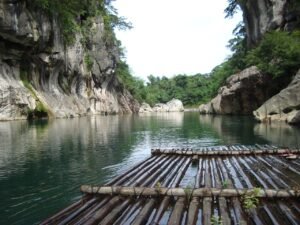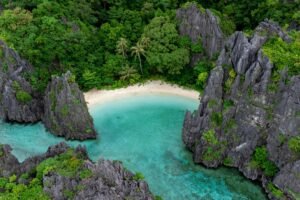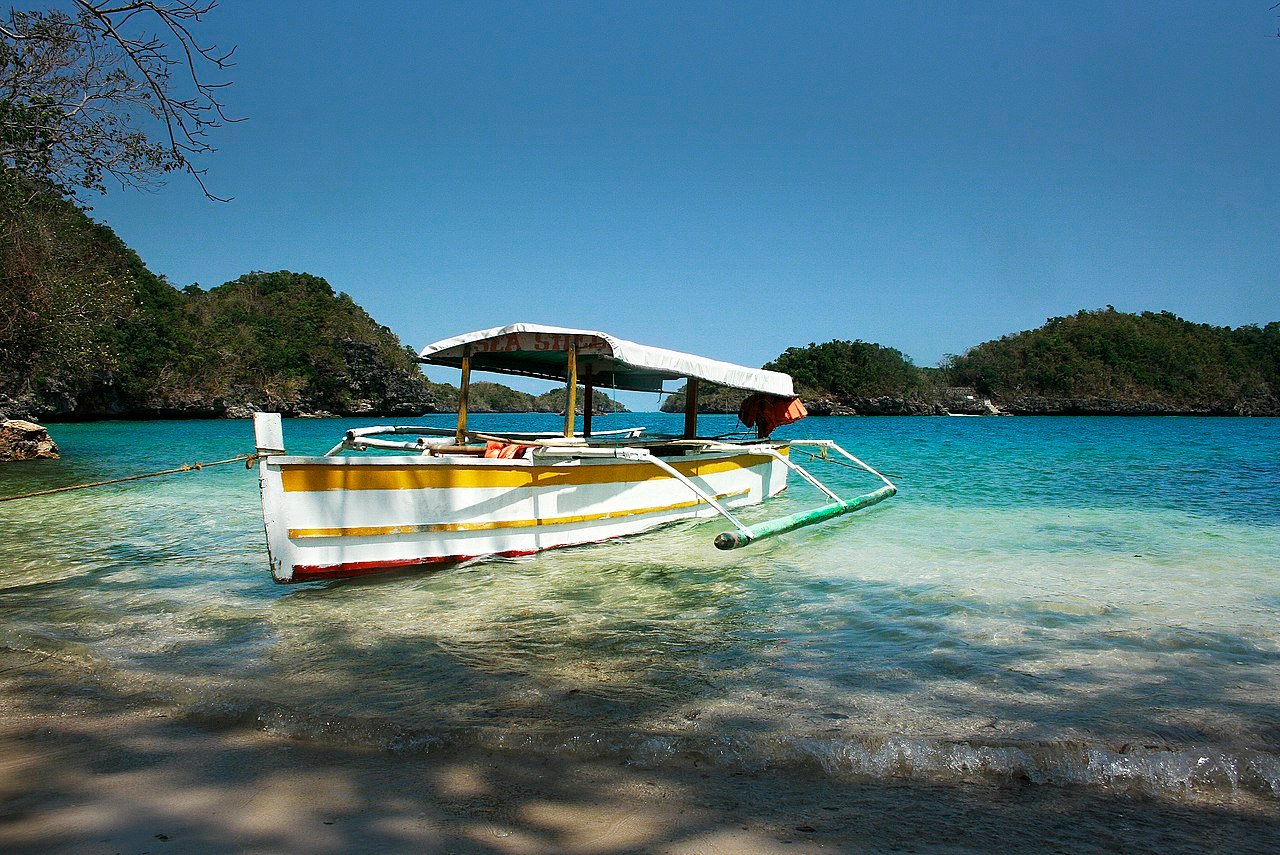

If you are asking whether Alaminos is safe for tourists, the short version is yes, and by Philippine standards it is one of the easier places to visit. Alaminos City in Pangasinan is the gateway to Hundred Islands National Park, it sees a large volume of domestic visitors every year, and the things most likely to go wrong there have nothing to do with crime. They have to do with water, weather, and the boat you climb into at Lucap Wharf.
That is the honest framing, and it is worth saying plainly because a lot of what you will read about safety in the Philippines is written about a completely different part of the country. Pangasinan is not Mindanao. There is no insurgency issue here and no foreign government advisory zone. What there is, and what actually hurts people in Alaminos, is a mix of drowning risk, cliff jumping injuries, sunstroke, overloaded bangkas during peak weekends, and the long road trip up from Manila.
The short answer on whether Alaminos is safe
Alaminos is a small city of roughly 100,000 people whose economy leans heavily on tourism. That matters in a practical way. A place that depends on visitors coming back tends to police itself, and the city has been formalising the Hundred Islands operation for years. Boat rates are set by city ordinance rather than haggled at the wharf. Guides are registered. In February 2026 the park launched the Hundred Islands National Park Management System, a computerised registration and visitor monitoring setup, which means there is now a record of which boat you left on and when you are due back.
Violent crime against tourists is rare enough that it is not the thing to plan around. Petty theft is the realistic crime risk, and it is concentrated exactly where you would expect, on the crowded developed islands on a Saturday in April when a few thousand people share three small beaches.
What the crime picture actually looks like
Pangasinan sits in the Ilocos Region, and the region consistently records lower crime volumes than Metro Manila or the big Visayan cities. Alaminos itself is quiet. Walking around the town centre in the evening is normal and unremarkable, and the area around the public market and the plaza stays busy and well lit until fairly late.
The realistic risks, in rough order of how often they happen:
Bag and phone theft on crowded islands. Quezon Island and Governor’s Island on a peak weekend are dense with people, and bags get left on the sand while everyone swims. This is the single most common thing that goes wrong. Bring a dry bag, take it into the water with you, and do not leave a phone on a towel.
Opportunistic theft in budget rooms. Cheap guesthouses near Lucap Wharf are good value and not all of them have safes. Keep your passport and cash on you or locked in your own bag.
Overcharging rather than outright scamming. More on this below. It is annoying rather than dangerous.
What you are unlikely to encounter is anything worse. Alaminos does not have a tourist mugging problem, a spiked drink problem, or a red light district. It is a family destination and it feels like one.
Water safety at Hundred Islands, the real risk
This is the section that matters most, and it is the one most guides skip.
Hundred Islands looks gentle. The water between the islands is shallow in places, the islands sit close together, and the whole thing has the feel of a big protected lagoon. It is not. The channels between islands carry real current, the depth changes fast, and the limestone drops away steeply just past the sandy shelf on several of the developed islands. People who are comfortable in a hotel pool get into difficulty here every season.
A few concrete rules. Swim inside the roped areas on the developed islands rather than striking out between islands. Do not swim across a channel, however short it looks, because the boat traffic will not see you. Wear the life jacket if you are not a confident swimmer, and note that on most tour packages a life jacket is included whether you asked for one or not.
The other water risk is cliff jumping. Marcos Island has Imelda Cave, where you climb through a limestone opening and jump into the sea from a ledge. It is genuinely fun and it is also where the injuries happen, mostly from people jumping at low tide, landing flat, or jumping without checking what is underneath. Ask the boatman about the tide before you climb up. If the answer is vague, skip it.
Boat safety and what to check before you board
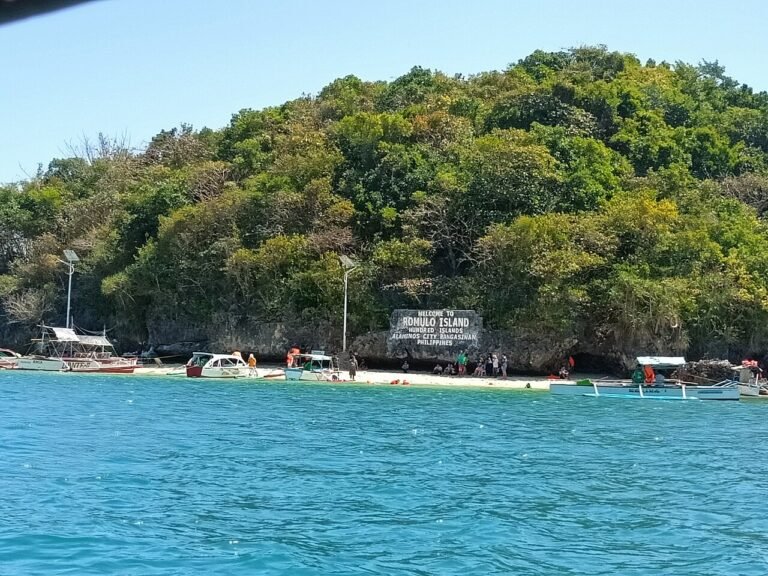
Every Hundred Islands trip starts with a bangka from Lucap Wharf. The boats are wooden outriggers, they are registered, and the city sets the rates by boat size. Under City Ordinance No. 09-2026, one day tour rates run at roughly PHP 1,920 for a small boat carrying 1 to 5 passengers, around PHP 2,400 for a medium boat carrying 6 to 10, and around PHP 2,880 for a large boat carrying 11 to 15. Bigger deluxe boats are available above that.
Those capacity numbers are the safety mechanism, so treat them as a hard limit rather than a suggestion. The thing to watch for is a boatman offering to squeeze your group of thirteen onto a medium boat to save a few hundred pesos. That is how boats get overloaded, and an overloaded outrigger in choppy water is the one scenario in Alaminos with a genuinely bad outcome. Pay for the right size.
Before you leave the wharf, check three things. That there are life jackets on board for everyone, that you know roughly what time the boat is due back, and that you have the boatman’s name or the boat number. The registration system captures this anyway, but knowing it yourself is free.
Jellyfish, sea urchins and sun
Jellyfish appear seasonally, usually more in the warmer months and after rain. They are mostly the stinging but not dangerous kind. Vinegar helps and the island vendors generally have some. If you have a known allergy, carry what you would normally carry.
Sea urchins cause the more common injury. The rocky edges of the less developed islands are full of them and people step on them getting in and out of the water off the rocks. Water shoes solve this completely and cost very little in the town market.
Sunburn ruins the most trips. There is almost no shade on the boats, the tour runs four to six hours on open water, and the reflection off the sea doubles the exposure. Bring more sunscreen than you think you need, and a long sleeve rash guard beats reapplying.
Typhoons and when not to go
The genuine seasonal danger in Alaminos is weather, not people. Pangasinan sits on the west coast of Luzon and takes the tail of the southwest monsoon plus a share of the typhoons that cross northern Luzon. The wet season runs roughly June to October, with the heaviest risk around July to September.
In practice this means two things. Boat trips get suspended outright when the coastguard raises a small craft warning, and you can lose a whole two day trip to a cancelled tour with no refund on your accommodation. Second, some islands close during rough seas because landing on them is unsafe. If you are travelling in the wet season, build a spare day into the plan and do not book non refundable rooms.
The safest and most pleasant window is roughly November to May. March to May is the calmest water and also the most crowded, especially Holy Week.
Getting there safely from Manila
The drive up is statistically the riskiest part of a trip to Alaminos, which is true of most Philippine destinations and rarely mentioned.
By bus, Victory Liner runs from Cubao for roughly PHP 543 and Five Star runs from Pasay for around PHP 600. Journey time is roughly 5 to 7 hours depending on where you start and how bad the traffic out of Metro Manila is. There are frequent departures through the day. Overnight buses exist and are the fastest option because the roads are empty, though a night bus on a mountain adjacent highway is not everyone’s idea of restful.
The practical safety advice for the bus. Take the aircon express rather than the ordinary bus, keep your daypack on your lap rather than in the overhead, and do not put anything valuable in the luggage hold. Book ahead on long weekends because standing passengers on a five hour trip is miserable and, on some operators, still happens.
Driving yourself takes roughly 4 to 5 hours via the expressways and then the national highway. The last stretch has heavy tricycle and motorbike traffic and poor lighting after dark. If you are self driving, aim to arrive before sunset.
There is no airport at Alaminos. The nearest serviceable option involves flying elsewhere and driving, which for most people is slower than simply taking the bus.
Getting around Alaminos and what a fair fare looks like
Tricycles are the default. From the Alaminos bus terminal or town centre out to Lucap Wharf, where the boats leave, is a short hop of roughly 10 to 15 minutes and should cost somewhere around PHP 100 to PHP 150 for the whole tricycle, or considerably less per person if you are sharing a regular route trike.
Around town, short trips run roughly PHP 20 to PHP 30 per person on a shared trike. Jeepneys serve the longer routes to neighbouring towns for similar money.
Agree the fare before you get in. This is not because drivers are dishonest, most are perfectly straight, but because an unstated fare is where the friction happens. Ask your guesthouse what the going rate is on arrival and you will never have the conversation again.
Scams and overcharging, what to watch for
Alaminos is on the mild end of the scale here. The published boat rates remove most of the room for invention, and the city posts the rate card at the wharf. Still, a few things recur.
Someone approaching you before you reach the official registration desk, offering to sort your boat out. Go to the desk. It exists precisely so you do not need a middleman.
Optional extras presented as compulsory. The zipline on Governor’s Island, helmet diving, kayak hire and guided cave visits are all genuine activities and all optional. Zipline runs around PHP 250 and helmet diving somewhere around PHP 500 to PHP 750 depending on the operator. Nobody is required to buy any of it.
Tricycle drivers quoting a tourist rate. Covered above. Ask first.
Food and drink prices on the islands are higher than in town, which is fair enough given everything arrives by boat, but bringing your own water and lunch saves real money and reduces the plastic you have to carry back out.
Money, ATMs and keeping your valuables
Bring cash. Alaminos town has bank ATMs and they generally work, but Lucap Wharf and the islands themselves run on cash entirely. Boat fees, entrance fees, food, activities and tricycles are all cash. There is no card payment on an island.
Withdraw in town before you head to the wharf, and split your money so you are not carrying everything in one place. A waterproof pouch is worth the small cost because your bag will get wet on the boat regardless of the weather.
Health, water and food
Do not drink the tap water. Bottled and refilled purified water is cheap and everywhere. Ice in established restaurants in town is generally made from purified water and is fine, though on the islands it is worth asking.
Food safety in Alaminos is unremarkable. Grilled fish and seafood at the wharf and on the islands is fresh because it has not travelled far. The usual rule applies, eat where it is busy and where the turnover is high.
For medical care, Alaminos has a district hospital and several clinics, adequate for a sea urchin spine, a sprain, or stitches. Anything serious means a transfer to Dagupan or further, which takes time. This is a reason to carry travel insurance and a reason not to do the cliff jump if you are unsure about it.
Solo travellers, women and families
Alaminos is a comfortable destination for solo travellers. The domestic tourist volume means you are never the only visitor, English is widely spoken, and the boat tour format naturally puts you alongside other groups. Solo travellers do face one practical problem, which is that boats are priced per boat and not per person, so a solo trip is expensive unless you join others. Ask at the registration desk about sharing. This is normal and people do it constantly.
For women travelling alone, the general read is that Alaminos is low hassle by regional standards. Ordinary precautions apply and little more. Dress on the beach is fairly conservative by Western standards, with plenty of people swimming in shirts and shorts, so a rash guard blends in better than a bikini if you would rather not attract attention.
For families, this is one of the better destinations in northern Luzon. The developed islands have shallow roped swimming areas, toilets, and food. The main cautions are the drop offs described above, the total lack of shade on the boat, and the fact that a six hour tour is a long day for small children. A half day tour is often the better call.
What it costs, and the fees you must pay
The compulsory costs are small. The environmental and entrance fee is roughly PHP 120 per person for a day trip and around PHP 200 per person if you are staying overnight on an island. There is also a refundable trash deposit of around PHP 200 per group, refunded when you bring your rubbish back. Senior citizens and persons with disabilities get a 20 percent discount on the fees.
Then the boat, at the ordinance rates above. Split across a group the boat is cheap. For two people it is the largest single cost of the day.
A realistic day for a couple, including bus fares from Manila, fees, a small boat, lunch and a tricycle, lands somewhere around PHP 3,500 to PHP 4,500 for the pair. A weekend with a mid range room, two days of activity and meals runs closer to PHP 7,000 to PHP 10,000 for two.
Where to stay if safety and convenience are the priority
Staying in Lucap, the barangay at the wharf, is the convenient choice. You walk to the boats, you get out early before the day trippers arrive, and you are surrounded by other visitors. Budget rooms here start somewhere around PHP 800 to PHP 1,200, mid range places run roughly PHP 2,000 to PHP 3,500, and the handful of resort style options sit above that.
Staying in Alaminos town centre is cheaper and gives you proper restaurants, the market and the banks, at the cost of a tricycle ride each morning.
Camping overnight on Governor’s Island or Quezon Island is permitted and is the most memorable option, but be clear eyed about it. There is no medical help on an island overnight, the facilities are basic, and if the weather turns you are stuck there. It is a great experience for confident travellers and a poor one for anyone nervous. Our guide to where to stay in Alaminos breaks the areas and price brackets down properly.
What to skip in Alaminos
Honest negatives, because the glossy write ups leave these out.
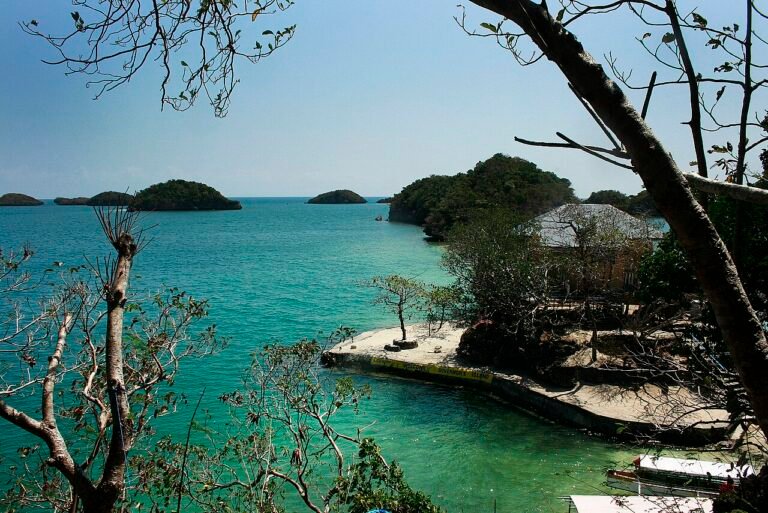
Do not come expecting white sand and clear water. Hundred Islands is a landscape destination. The appeal is the extraordinary sight of scores of limestone hummocks scattered across a bay. The water is decent rather than dazzling, and the sand on most islands is coarse and narrow. If you want the postcard beach, this is the wrong trip.
Skip peak weekends if you can. Holy Week and long weekends put thousands of people onto three small islands. The experience degrades badly and the petty theft risk goes up with it.
Skip the extra activities if the water is rough. Kayaking and helmet diving in chop are unpleasant and pointless.
Do not bother with the very cheapest boat if your group is large. Covered above, and worth repeating.
Emergency numbers and who to call
The national emergency number in the Philippines is 911 and it works in Alaminos. For anything at the park itself, the first call is to the Hundred Islands registration office at Lucap Wharf, which coordinates the boats and can reach a boatman on the water faster than anyone else. Your accommodation will have the current local numbers for the city tourism office and the police station, and it is worth taking a photo of them on arrival.
Mobile signal is reasonable in town and at the wharf, and patchy on the outer islands. Do not assume you can call for help from a remote island. This is another argument for staying on the developed ones if you are not experienced.
So, is Alaminos safe for tourists?
Yes, with the caveat that the risks are environmental rather than criminal. If you respect the water, pay for the right size boat, check the weather in the wet season, and keep an eye on your bag on a crowded island, Alaminos is a straightforward and rewarding destination. The things that will actually spoil your trip are more likely to be sunburn, a cancelled boat, or a crowded island on the wrong weekend than anything more sinister.
Once you are comfortable on the safety front, our guides to the top things to do in Alaminos and the wider Hundred Islands travel guide cover the itinerary side, and the Alaminos travel guide handles the general practicalities. If you are building a longer northern Luzon trip, San Juan in La Union pairs well and sits on the same highway.
Quick FAQ
Is Alaminos safe for tourists at night? Yes. The town centre and the plaza area are busy and well lit into the evening, and Alaminos does not have a nightlife district that draws trouble. Lucap Wharf goes quiet early, so if you are staying there expect a sleepy evening rather than an unsafe one.
Is it safe to swim at Hundred Islands? Inside the roped areas on the developed islands, yes. The risk comes from swimming between islands, where there is current and boat traffic, and from the steep drop offs just past the sandy shelf. Wear a life jacket if you are not a strong swimmer.
Is Alaminos safe for solo female travellers? Generally yes, and it is low hassle compared with the bigger tourist centres. Ordinary precautions are enough. The practical problem for solo travellers is cost rather than safety, since boats are priced per boat, so ask about sharing at the registration desk.
What is the most dangerous thing about visiting Alaminos? Water, in two forms. Drowning while swimming outside the marked areas, and injuries from the cliff jump at Imelda Cave on Marcos Island, usually at low tide. Neither is common but both are far more likely than any crime.
Do I need travel insurance for Hundred Islands? It is a good idea. Local clinics handle minor injuries, but anything serious means a transfer to Dagupan or beyond, and the activities on offer include cliff jumping, ziplining and helmet diving.
When should I avoid going to Alaminos? July to September carries the highest typhoon and monsoon risk, and boat trips get suspended outright when a small craft warning is up. Holy Week and long weekends are safe but extremely crowded. November to May is the best window.