
Volunteering with an NGO in Palawan is one of the more meaningful ways to spend time on the island, and also one of the easiest to get wrong. Palawan attracts a lot of goodwill and a lot of unregulated placement schemes, so the difference between a genuinely useful volunteer stint and an expensive holiday with a logo on it comes down to homework. This guide covers how placements actually work, what they cost, what the work involves day to day, and the hard questions worth asking before you commit.
What Volunteering in Palawan Usually Involves
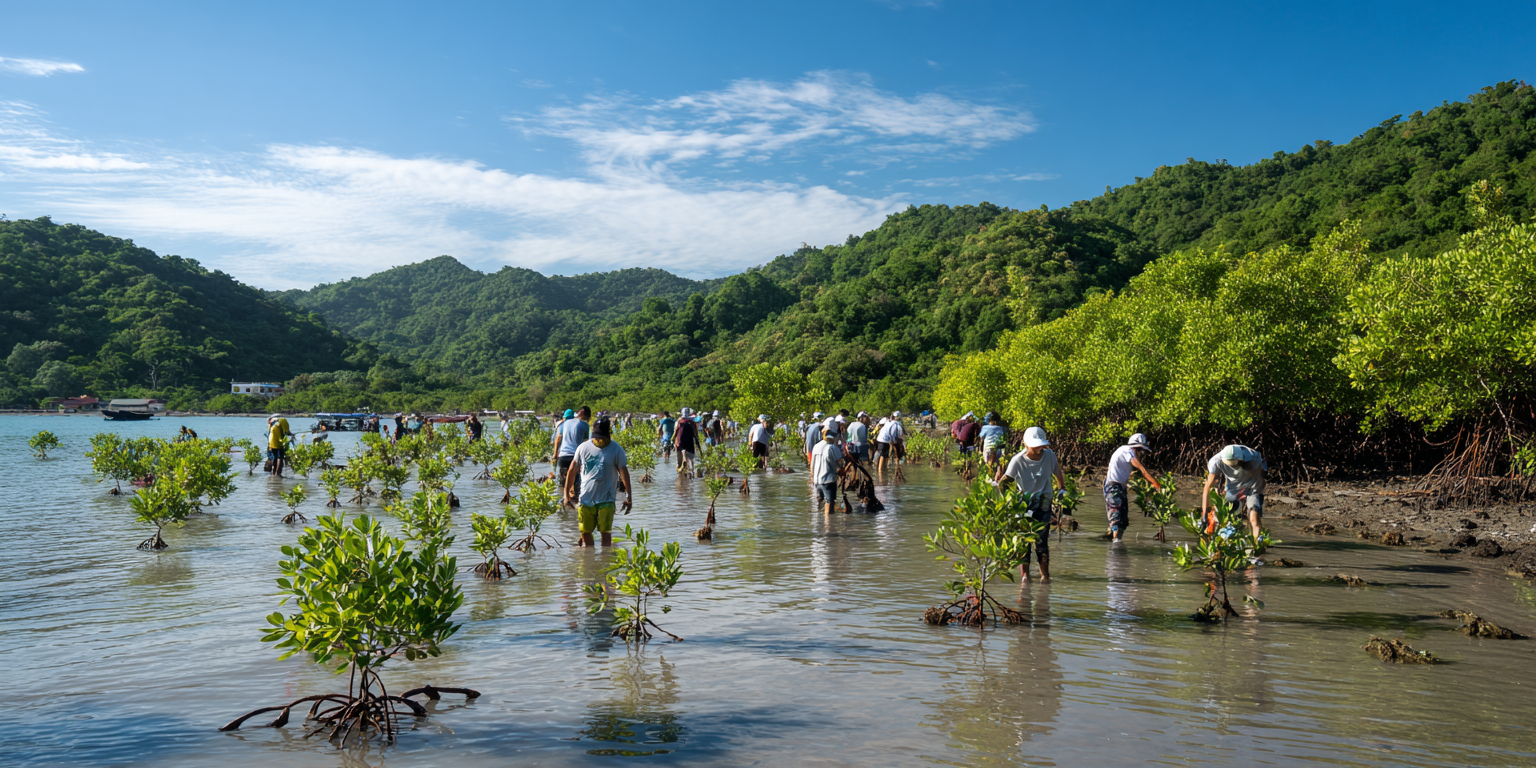
Most volunteer work on the island falls into four buckets. Marine conservation is the largest, covering reef monitoring, coral nursery work, crown of thorns removal and beach cleanups, concentrated around El Nido, Port Barton, San Vicente and the coast north of Puerto Princesa. Terrestrial conservation covers reforestation, mangrove planting and wildlife work, including the well known crocodile and cockatoo programmes. Community development covers teaching English, livelihood training and construction. Animal welfare covers the small number of street dog and cat rescue operations around Puerto Princesa.
The work is physical and often repetitive. A mangrove planting day means standing in tidal mud for hours. A reef survey day means several hours in the water with a slate. If that sounds unappealing rather than satisfying, this is worth knowing before you pay a deposit.
How to Find a Legitimate Organisation
Start with organisations that exist independently of their volunteer programme. A real NGO has a mission, staff and funding that would carry on if no volunteer ever turned up. A placement operation has volunteers as its product. The tell is usually the website: if the volunteer sign up page is the main event and the actual conservation or community work is described vaguely, be sceptical.
Practical checks worth doing. Ask whether the organisation is registered with the Philippine Securities and Exchange Commission, which is how local non profits are constituted. Ask who supervises volunteers day to day and what their qualification is. Ask for contact details of two past volunteers and actually email them. Ask what happens to your fee, broken down. A serious outfit will answer all four without getting defensive. Local government tourism offices and the Palawan Council for Sustainable Development can also point you toward established groups.
Red Flags to Walk Away From
Any programme placing untrained volunteers in direct, unsupervised contact with children is a serious concern, and the global consensus on orphanage volunteering has moved firmly against it for good reason. Programmes that promise you can “hold a baby sea turtle” or handle wildlife as a selling point are usually optimising for your photos rather than the animal. Very high fees with no breakdown, high pressure sales, and a refusal to let you speak to previous volunteers are all reasons to keep looking.
Short placements of a few days are rarely useful to anyone but the volunteer. If a programme is happy to take you for three days and charge you for it, ask yourself honestly what skill you are bringing that a local hire could not do better and cheaper.
What It Costs
Costs vary enormously and the range is wide enough that you should treat any single figure with suspicion. International placement agencies, the ones that market heavily in Europe and North America, commonly charge somewhere around 40,000 to 100,000 PHP for a two to four week placement including accommodation and some meals. Going direct to a local NGO is usually far cheaper, often around 800 to 2,000 PHP per day to cover your food and lodging, and some smaller groups charge nothing beyond your own costs.
Beyond the placement fee, budget for flights, travel insurance that explicitly covers volunteer work and diving if relevant, dive certification if the programme requires it, and your own transport around the island. Weekends are usually yours, and Palawan is not a cheap place to spend them.
Accommodation and Living Conditions
Expect basic. Shared dormitory rooms or simple twin rooms, fans rather than air conditioning, cold water, and intermittent power in the more remote sites. Wifi is often limited to the main town, and mobile data coverage drops off quickly once you leave the main road. Meals are usually rice based and simple, and vegetarians should confirm in advance rather than assume.
If you want a softer landing, plan a few nights in ordinary accommodation before or after the placement. Our guide to where to stay in Palawan covers the main bases and what rooms cost across the island.
Visas and the Legal Position
Most nationalities enter the Philippines visa free for an initial period and can extend at a Bureau of Immigration office, and Puerto Princesa has one. Unpaid volunteer work occupies a grey area, and requirements can change, so confirm the current position with the Bureau of Immigration or your embassy rather than relying on a placement agency’s reassurance. If you are staying beyond about six months in total you will also run into the ACR I Card requirement. Overstaying carries fines that compound, so keep your extension dates written down somewhere you will actually look.
Skills That Are Genuinely Useful
Some skills are in real demand and will get you welcomed almost anywhere: dive instruction or divemaster certification, marine biology or ecology training, teaching qualifications, nursing and medical training, carpentry and construction, and grant writing. Grant writing in particular is underrated, because small Philippine NGOs are frequently excellent at the work and poor at fundraising documentation in English.
If you have none of these, that is fine, but be realistic about your role. You will be labour, not leadership, and the most valuable thing you can do is turn up on time, work hard, and not create extra management burden.
Best Time of Year to Volunteer
The dry season, roughly late November to May, is the practical window for most fieldwork. Marine programmes need calm water, and boats do not go out in rough conditions, so a placement in the height of the southwest monsoon may involve a lot of waiting around. March to May is hottest and driest. The tail of the year brings typhoon risk, though Palawan is hit less often than the eastern seaboard.
Conversely, if you are doing office based, teaching or admin work, the wet months are perfectly workable and you will find both flights and accommodation cheaper.
What to Bring
Reef safe sunscreen, a wide brimmed hat and long sleeved rash guards, because you will be outdoors far more than a normal trip. Sturdy closed shoes for mangrove and forest work. A refillable water bottle and a filter, since single use plastic is exactly what a lot of these programmes are fighting. Basic first aid supplies and any prescription medication, because pharmacies outside Puerto Princesa are limited. A dry bag for anything electronic.
Leave behind anything you would be upset to lose to salt, mud or humidity.
Honest Negatives Worth Knowing
The impact of short term volunteering is contested, and reasonable people disagree. Some placements genuinely fill a skills gap. Others displace local employment or create a dependency on a rotating cast of foreigners. Bureaucracy and weather will eat days you expected to spend working. Some organisations are far better run than others, and you will not know which until you arrive.
There is also a simpler point. If the goal is to help Palawan, a straightforward donation to a good local organisation, or simply travelling responsibly and spending money with local operators, may do more good per peso than a placement fee that partly funds your own board and lodging. That is not a reason not to volunteer. It is a reason to be clear about your own motives.
Combining Volunteering with Travel
Most volunteers build a few weeks of ordinary travel around the placement, which is sensible. The classic loop runs Puerto Princesa to El Nido to Coron, and our guides cover getting from Puerto Princesa to El Nido and onward from El Nido to Coron. If you want somewhere quieter and less processed, Port Barton and San Vicente are both a short hop off the main road and considerably more relaxed than El Nido in high season.
A Realistic Week on a Marine Placement
Marine programmes tend to run on a fixed weekly rhythm, and knowing it helps you judge whether a placement is serious. A typical week has three or four dive or snorkel survey days, one or two shore days for data entry and equipment maintenance, and a rest day. Survey work means swimming transect lines, identifying and counting species against a slate, and then spending an hour or two afterwards typing it up. The typing up is not glamorous and it is the part that actually produces something useful.
Ask how the data is used. A good answer names a partner, a government agency or a published monitoring programme. A vague answer about “building a picture over time” with no destination for the numbers usually means the surveys are an activity for volunteers rather than research.
Getting to Your Placement
Almost everyone arrives through Puerto Princesa, which has the island’s main airport and frequent flights from Manila, Cebu and Clark. From there, vans and buses run north along the main highway, and most placements will meet you at a drop off point or arrange a habal habal for the last stretch. Puerto Princesa to El Nido takes roughly five to six hours by van at around 600 to 900 PHP. Port Barton and San Vicente are shorter hops off the same road.
Give yourself a buffer night in Puerto Princesa rather than connecting straight through. Flights into Palawan are delayed often enough that arriving the day before your placement starts is worth the extra room cost, and it gives you a chance to buy anything you forgot while you are still somewhere with proper shops.
After the Placement
The most useful thing most volunteers do happens after they leave. Small Philippine NGOs are chronically short of documentation, decent photographs, English language reporting and overseas fundraising contacts. If you have any of those to offer, offer them, and follow through. A one off two week stint fades quickly. A volunteer who keeps writing grant applications from home for the next two years is worth considerably more than the labour they contributed on site.
Quick FAQ
How much does it cost to volunteer in Palawan? Going direct to a local NGO typically costs around 800 to 2,000 PHP a day to cover food and lodging, and some charge nothing beyond your own expenses. International placement agencies commonly charge somewhere around 40,000 to 100,000 PHP for two to four weeks.
Do I need a special visa to volunteer in the Philippines? Most visitors enter visa free and extend at a Bureau of Immigration office, and there is one in Puerto Princesa. Unpaid volunteering sits in a grey area, so confirm the current rules with immigration or your embassy rather than with a placement agency.
What is the best time of year to volunteer in Palawan? Roughly late November to May for anything involving boats or fieldwork, since marine programmes lose days to rough water in the southwest monsoon. Office, teaching and admin placements work fine year round and are cheaper to travel for.
Can I volunteer in Palawan without any qualifications? Yes, for manual conservation work such as planting, cleanups and construction. Diving, teaching and medical roles normally require certification, and any programme offering you unsupervised work with children regardless of background should be avoided.
How do I know if a Palawan volunteer programme is legitimate? Check that the organisation is registered locally, ask for a breakdown of where your fee goes, ask who supervises volunteers, and ask to speak to two past volunteers. A well run group answers all four without hesitation.
Is short term volunteering actually helpful? It depends heavily on the placement and your skills. Stints of a few days rarely help anyone but the volunteer. Two weeks or more with a skill the organisation actually lacks is a different proposition.