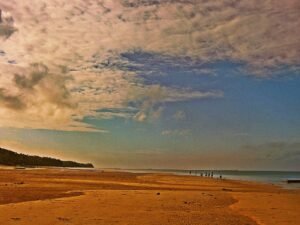
People call Pagudpud the Boracay of the North, which is a comparison that does it no favours. The two places have almost nothing in common beyond white sand. Boracay is a party island with a beachfront of bars and boat touts. Pagudpud, sitting at the very top of Luzon in Ilocos Norte, is a scattered farming and fishing town where the best things to do involve a tricycle, a bit of walking, and quite a lot of coastline with nobody on it.
That is the appeal, and it is also the thing to understand before you go. Pagudpud is not compact. The attractions are spread across maybe 30 kilometres of coast road, so you will spend a decent chunk of your day in transit. Once you accept that, it is one of the more rewarding corners of the country.
Saud Beach, the one everyone comes for
Saud Beach is the long crescent of white sand that put Pagudpud on the map. It runs for roughly three kilometres, the water is shallow and calm for most of the year, and the resorts here are low rise and low key. There is no entrance fee to the beach itself, though some resorts charge a small day use fee if you want to park yourself under their umbrellas.
Mornings are the best time. The light is soft, the fishing boats are coming in, and you will often have long stretches to yourself. By late afternoon the local families arrive and it gets pleasantly busy without ever feeling crowded.
Blue Lagoon at Maira Ira Point
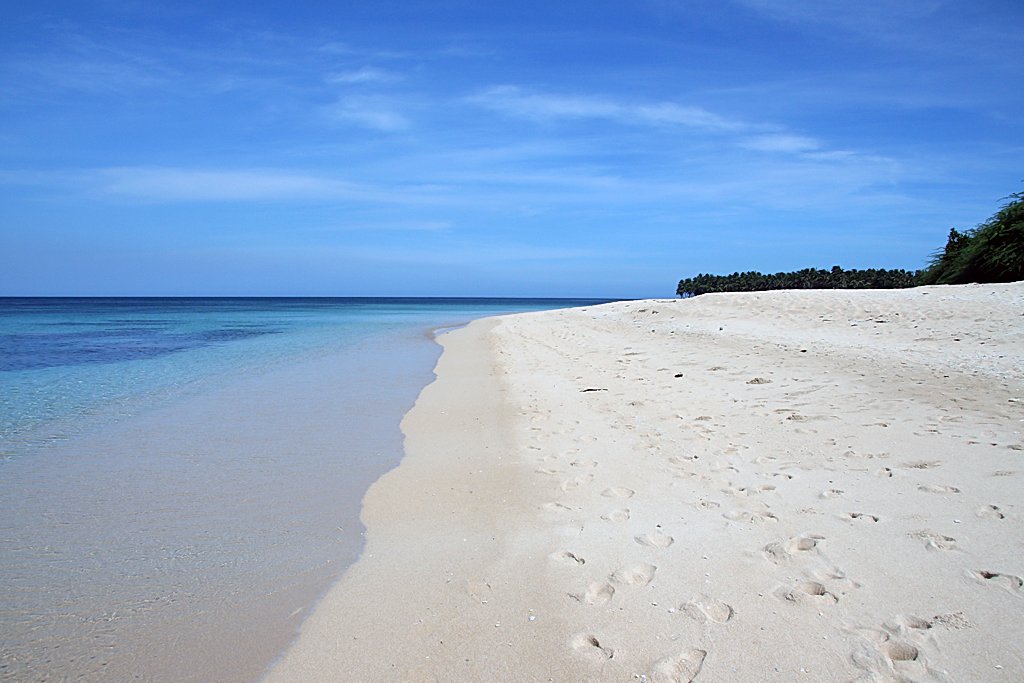
About 20 minutes north of Saud, Blue Lagoon is the other famous beach and it has a completely different character. The water is a genuinely startling turquoise, the cove is tucked between headlands, and because it faces more open water it picks up surf. From roughly July through October there are decent beginner waves here and a few small operations renting boards and giving lessons.
Entrance is around PHP 20 per person. There is also a long zipline running out over the cove if you fancy it, usually a few hundred pesos. Weekends bring day trippers from Laoag, so go on a weekday if you can.
Kabigan Falls
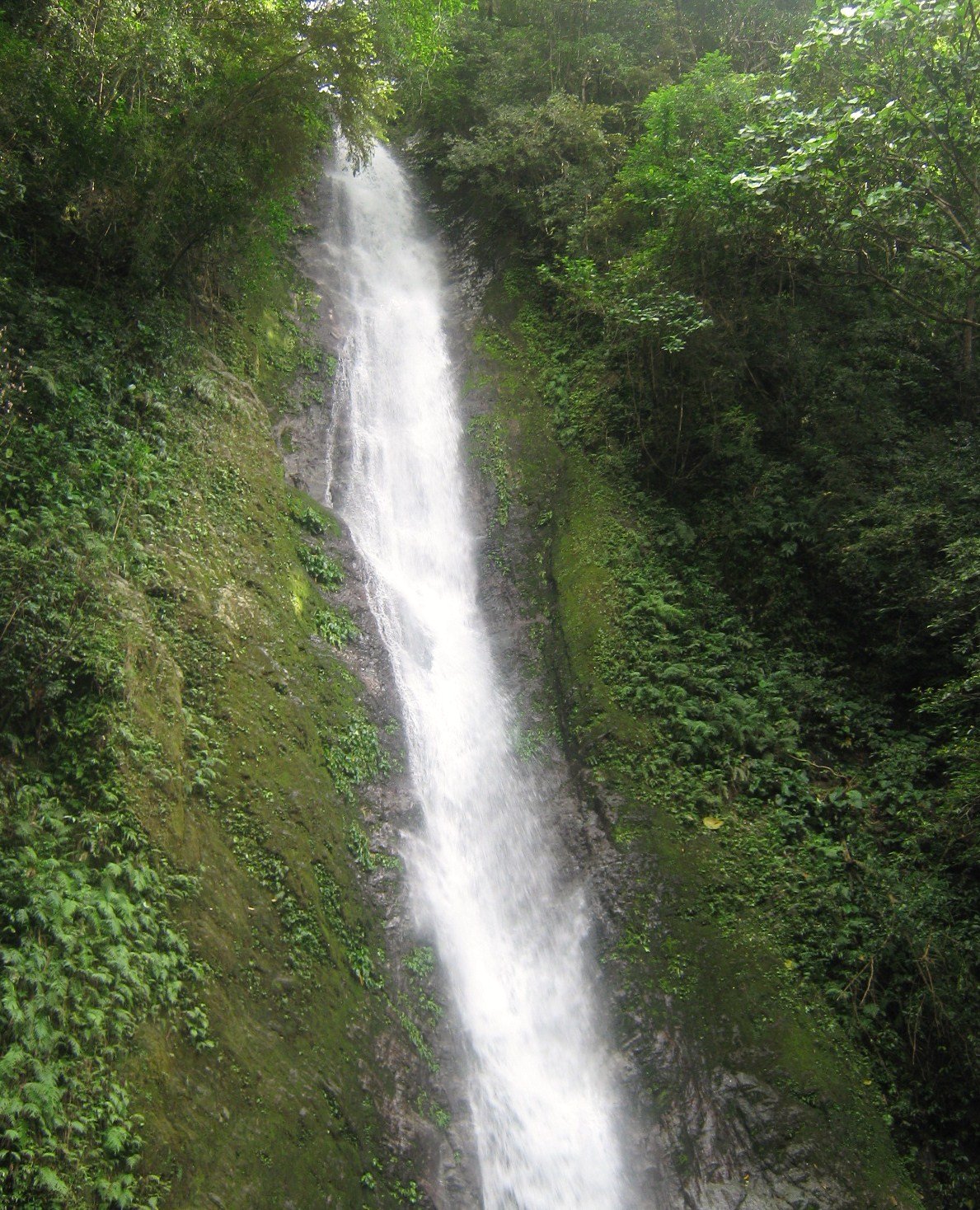
This is my favourite thing to do in Pagudpud, and it is the one people skip because it involves effort. Kabigan Falls sits inland from the coast road, reached by a flat, pleasant walk of about 1.5 kilometres through rice fields and forest. It takes maybe 30 minutes each way and it is genuinely lovely walking.
Entrance is around PHP 20 and a guide is mandatory at roughly PHP 120 per group, which is not a scam, it is a community arrangement and the guides know the trail. The falls drop into a wide, cold pool that you can swim in. Go early, before the tour vans arrive around 10am.
Patapat Viaduct
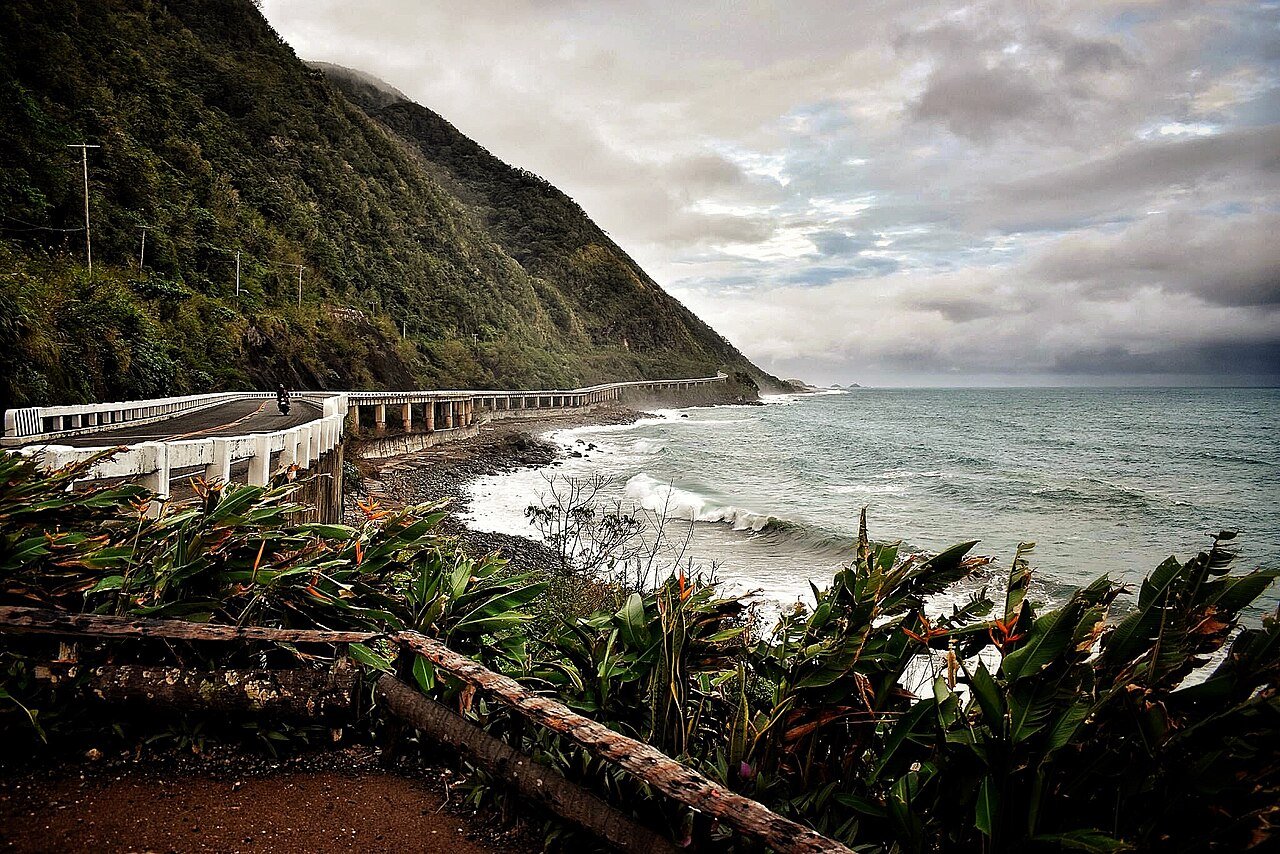
The viaduct is a 1.3 kilometre elevated coastal road that curves around the mountainside north of town, carrying the highway on out towards Cagayan. It is one of the best drives in the Philippines, with the sea on one side and jungle cliffs rising on the other. There are pull off points where you can stop for photos, and the view back south over the coast is superb in the late afternoon.
It costs nothing. Just tell your tricycle driver you want to stop, and be sensible about traffic, because it is a working highway and trucks come through fast.
Bantay Abot Cave and Timmangtang Rock
These two sit close together on the coast road and take maybe twenty minutes to see, which is exactly the right amount of time. Bantay Abot is a hole punched clean through a rocky headland, apparently opened up by an earthquake, and you can walk through it at low tide. Timmangtang Rock is a near perfect dome of rock sitting on the shore just opposite.
Neither is a full attraction on its own, but they break up the drive nicely and the coastline around them is dramatic.
The Bangui Windmills
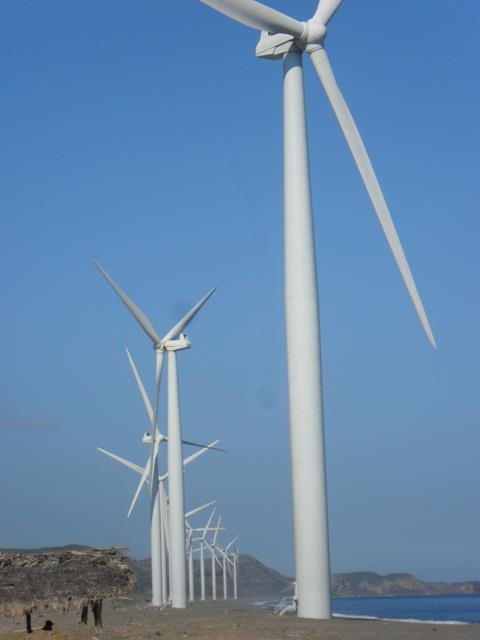
Technically in the neighbouring town of Bangui rather than Pagudpud itself, but every tour includes them and they are worth the stop. Twenty enormous turbines stand in a curve right on the beach, and standing underneath one while it turns is oddly moving. They were among the first commercial wind farms in Southeast Asia.
There is usually a small parking or entrance charge of around PHP 20 to PHP 50. Sunset here is the classic shot, though the light is also good in the early morning with fewer people around.
Kapurpurawan Rock Formation
A bit further along in Burgos, Kapurpurawan is a great bone white limestone formation sculpted by wind and waves into shapes that do not look quite natural. It is a short walk or a horse ride from the car park, and the ground is uneven, so wear something better than flip flops.
Entrance is small, around PHP 30, and there is often a separate parking fee. Go early or late, because there is essentially no shade and the white rock throws the heat straight back at you.
Agua Grande and Paraiso ni Anton
Agua Grande is a roadside spot where a freshwater stream comes down out of the hills and meets the sea, with a small park, picnic tables and a shallow pool. It is where local families go on a Sunday. Paraiso ni Anton is a quieter, slightly strange little site inland, a small waterfall with a grotto beside it that draws pilgrims. Both are quick stops rather than destinations, and both are free or near enough.
Dos Hermanos Islands and the northern coast
The two small rocky islets off the coast near Blue Lagoon are the Dos Hermanos, and while you cannot really land on them, they frame the view north beautifully. If you keep driving past the viaduct you get into some of the emptiest, most spectacular coastline in Luzon, all the way towards Claveria in Cagayan. If you have your own transport, an hour spent just driving north is time well used.
What it costs to get around
This is the practical bit that most guides gloss over. Pagudpud runs on tricycles, and the standard arrangement is a whole day tour. Expect to pay around PHP 600 to PHP 800 for a tricycle covering the northern loop, which typically means Kabigan Falls, Patapat Viaduct, Bantay Abot, Timmangtang Rock, Blue Lagoon and Agua Grande. A southern loop taking in the Bangui Windmills and Kapurpurawan usually costs a similar amount, or you can negotiate both into one long day for somewhere around PHP 1,200 to PHP 1,500.
Entrance and guide fees are separate and add up to maybe PHP 200 to PHP 300 per person across a full day. Agree the whole route and the price before you set off, and be clear about whether waiting time is included. Drivers here are generally straight with you, but a five minute conversation at the start saves an awkward one at the end.
Renting a scooter is possible and costs roughly PHP 500 to PHP 700 a day. It gives you far more freedom, though the coast road has fast traffic and a few blind bends, so only do it if you are a confident rider.
When to go
The dry season from November through April is the reliable window, with February and March about as good as it gets. The far north catches typhoons from around July to October, and while that is also when Blue Lagoon has its surf, it is a gamble. Avoid Holy Week unless you enjoy queues, because the whole of Ilocos fills up.
Most people combine Pagudpud with the heritage town further south. If that is your plan, our guides to the top things to do in Vigan and how to get from Manila to Vigan cover the route up, since Vigan is the natural first stop on the way. From Vigan it is around four hours further north to Pagudpud by bus, or a bit less by car.
Plan Your Trip to Pagudpud
Ready to book? Compare hotels and tours in Pagudpud below.
- Search Hotels in Pagudpud on Booking.com
- Compare Hotels in Pagudpud on Agoda
- Find Tours and Activities in Pagudpud on Klook
- Book Tours in Pagudpud on GetYourGuide
Booking through these links may earn us a small commission at no extra cost to you.
Quick FAQ
How many days do you need in Pagudpud? Two full days is the sweet spot. One day covers the northern loop including Kabigan Falls and the viaduct, the second covers the windmills, Kapurpurawan and a slow afternoon on Saud Beach. One day is doable but rushed.
What is the entrance fee for Blue Lagoon in Pagudpud? Around PHP 20 per person for beach access. The zipline and any board rental are charged separately, and some of the resorts fronting the cove have their own day use rates.
Is Pagudpud better than Boracay? Different, not better. Pagudpud has quieter beaches, waterfalls, dramatic coastal scenery and far fewer people, but almost no nightlife and limited dining. If you want a beach to yourself, Pagudpud wins easily. If you want restaurants and bars, it does not.
Can you swim at Saud Beach year round? Mostly yes. The water is calm and shallow through the dry season. During the storm months from July to October the surf picks up and there can be strong currents, so check with your resort before going in.
More Philippines Destinations to Explore
Worth adding to a longer Philippines trip: