

Iligan doesn’t get anywhere near the Instagram traffic of El Nido or Siargao, and honestly, that’s part of the appeal. Tucked into the north coast of Mindanao between Cagayan de Oro and the wilds of Lanao del Norte, this hardworking industrial city has quietly earned the nickname “City of Majestic Waterfalls.” Locals will tell you there are more than twenty of them within city limits, and once you start ticking a few off, it’s easy to believe. If you’re researching things to do in Iligan, you’re probably weighing it as a side trip from Cagayan de Oro or a stop on a longer Mindanao loop, and either way, it delivers more than most itineraries give it credit for. This guide walks through the waterfalls worth the trip, the ones you can skip, realistic costs in Philippine pesos, where to sleep, what to eat, and how to fit it all into a day trip or a full weekend. If you are wondering about safety before you book anything, see our Is Iligan safe for tourists guide for the honest rundown.
Getting to Iligan from Laguindingan Airport (and Beyond)
Most travelers fly into Laguindingan Airport (CGY), which technically serves Cagayan de Oro but actually sits closer to Iligan geographically. From the terminal it’s roughly a one to one and a half hour drive west along the national highway, depending on how traffic through Opol and Alubijid is behaving that day.
You’ve got a few ways to cover that stretch. Shared airport vans wait just outside arrivals and charge somewhere around 150 to 350 pesos per person, with private hire costing more. The Super Five bus service runs roughly every 30 minutes from the Laguindingan terminal, with fares around 120 to 200 pesos and a journey time of about one hour fifteen minutes to one hour thirty minutes depending on stops. It drops passengers at Iligan’s Integrated Bus Terminal in Tambo, from where you’ll need a tricycle or Grab into the city center. A straight taxi or Grab transfer from the airport is the fastest option but also the priciest, likely landing somewhere around 1,500 to 2,500 pesos.
If you’re routing through Cagayan de Oro city proper first, the Iligan leg from there takes about one and a half to two hours by bus or van, with fares roughly 100 to 180 pesos from terminals near Agora or Bulua. Our Cagayan de Oro travel guide covers that city in more depth if you’re spending a night or two there first, and our Lanao del Norte travel guide is useful if you’re planning to range further out from Iligan into the wider province. For visa rules, safety notes, and other general trip-planning basics, our Iligan travel guide is worth a read before you go.
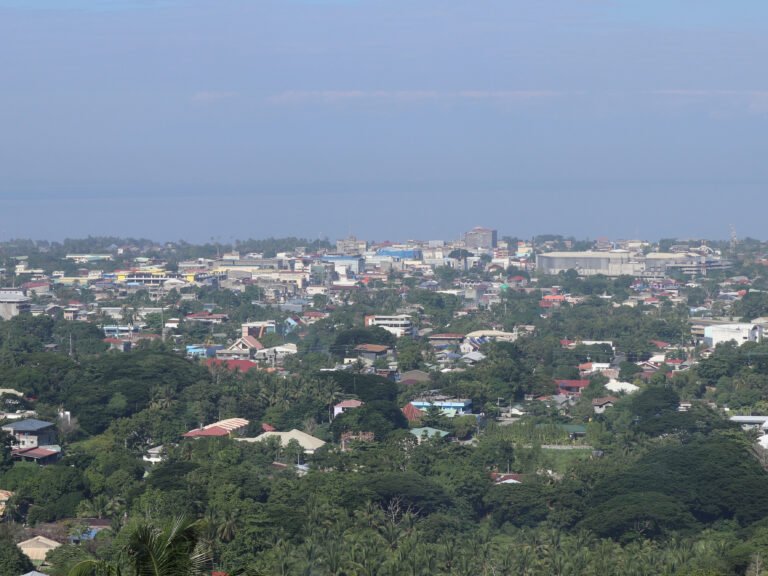
Maria Cristina Falls: Iligan’s Iconic Powerhouse Waterfall
This is the falls Iligan is actually famous for, and the reason the city calls itself the power capital of Mindanao. Maria Cristina Falls plunges roughly 320 to 340 feet down the Agus River, and its flow has been partially diverted for decades to feed a hydroelectric plant that supplies a huge share of Mindanao’s electricity. That’s a mixed blessing for visitors. The falls are undeniably dramatic, especially after heavy rain, but you view them from a fenced platform inside the National Power Corporation compound rather than up close, and there’s no swimming here.
The falls reopened to public viewing in August 2025 after infrastructure repairs, and at the time of writing the entrance fee hadn’t been fully re-established, so budget a small amount, likely somewhere in the 20 to 50 peso range based on historical pricing, and expect it could change. Morning visits tend to have clearer light for photos, and the mist can be heavier and cooler during rainy season (roughly June to November). It’s a quick stop, maybe 20 to 30 minutes, so pair it with Tinago Falls or Timoga Springs since they’re all roughly along the same route out of the city.
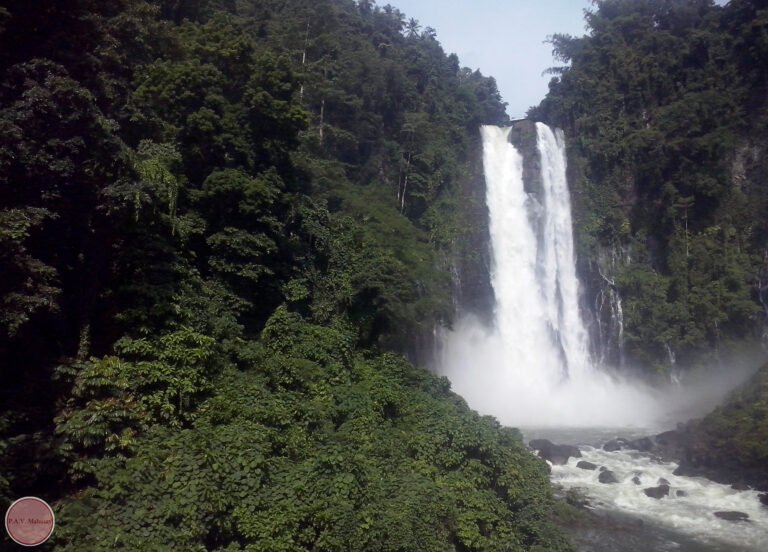
Tinago Falls: The Hidden Falls Everyone Talks About
If Iligan has a single must-see, this is it. “Tinago” means hidden in Cebuano, and the name fits. The falls drop into a turquoise lagoon tucked into a ravine, and getting down to it means descending a long concrete staircase, somewhere around 400 to 500 steps depending on who’s counting, cut into the hillside. It’s a workout on the way back up, so pace yourself and bring water.
Entrance runs around 60 to 65 pesos per person, and that typically includes the use of a life jacket, which is mandatory if you want to swim in the basin, and swimming here is genuinely worth it. Cottage rental at the bottom costs roughly 50 to 100 pesos if you want shade and a place to leave your things, and a short bamboo raft ride out toward the falls runs about 15 to 20 pesos. Tinago Falls sits in Barangay Ditucalan, roughly 15 kilometers from the city center, reachable by habal-habal (motorcycle taxi) or hired tricycle for around 300 to 500 pesos round trip depending on how much haggling you do and how long the driver waits for you.
Go early, ideally before 9am, both to beat the heat on the stair climb and to have the lagoon closer to yourself before tour groups arrive. Dry season, roughly December through May, gives you clearer water; rainy months make the falls more powerful but murkier and the steps slicker.

Dodiongan Falls: Cliff Jumping and Turquoise Pools
Smaller and less famous than Tinago, Dodiongan Falls is where a lot of local weekend crowds actually go. It’s about 20 meters high, cutting through moss covered limestone into a turquoise basin, and it’s a legitimate spot for cliff jumping if that’s your thing, with a few different jump heights depending on your nerve. It’s in Barangay Bonbonon, roughly 14 kilometers from the city.
Entrance fee is modest, likely around 20 to 50 pesos, though exact pricing can vary by season and whoever’s managing access that year, so treat it as a rough estimate. If you’re planning to jump, it’s worth asking a local or a barangay guide to point out which spots are safe given recent water levels, since depth can shift with rainfall.
Mimbalut Falls and Iligan Paradise Resort and Eco-Park
Mimbalut Falls (sometimes spelled Mimbalot) sits within the grounds of the Iligan Paradise Resort and Eco-Park in Barangay Buru-un, about 11 kilometers from the city proper. The falls themselves are around 90 feet with big boulders scattered at the base, and because the resort maintains the area, it comes with extras: a zipline, cable car, kayaking, and horseback riding, each priced separately on top of the base entrance fee.
Expect entrance around 50 to 100 pesos, with the adventure activities adding anywhere from another 100 to 300 pesos each depending on what you choose. It’s more built up and commercial feeling than Tinago or Dodiongan, which some travelers love for the extra activities and others find takes away from the natural setting. Good for families with kids who want more than just a swim.
Timoga Cold Springs: Where Locals Actually Cool Off
Timoga is less a single spot and more a cluster of resorts along the Buru-un highway, all built around the same icy, crystal clear spring source. Mimar’s Springway and a handful of neighboring resorts channel the spring water into pools and small cascades, and the water stays genuinely cold year round, which is a welcome shock after a humid afternoon of waterfall chasing.
Entrance fees vary resort to resort, generally somewhere between 50 and 100 pesos per person, and cottage or table rental is usually extra. This is a good stop to break up a day of hiking and stairs, since there’s minimal walking involved and it’s directly on the route between the city and the bigger falls.
Limunsudan Falls: For Serious Waterfall Chasers Only
Worth mentioning even though most visitors should skip it. Limunsudan Falls, in remote Barangay Rogongon within Higaonon ancestral territory, is often cited as the second highest waterfall in the Philippines at around 870 feet in two tiers, with a lower cascade alone reportedly taller than the entirety of Maria Cristina Falls. It’s genuinely spectacular in photos.
The catch is getting there. It’s roughly 55 kilometers from the city proper, and reaching it typically means either a two-day trek or a roundabout five hour drive that loops through Cagayan de Oro and Talakag in Bukidnon before doubling back into Lanao del Norte. Unless you’ve got a few extra days, a 4×4 or habal-habal arranged well in advance, and ideally a local guide with community contacts, this isn’t realistic for a standard Iligan visit. Mention it to your guesthouse if you’re the adventurous type and have time to spare; otherwise, don’t feel bad skipping it.
Paseo de Santiago: Sunset by Iligan Bay
After a day of waterfalls and stairs, Paseo de Santiago is the easy, free counterpoint. It’s a seaside park along Iligan Bay with the kind of oversized concrete letter signs spelling out “Iligan City” that practically beg for a photo, open-air seating, food stalls, and most evenings a live band playing on a small stage. Entrance is free, and it’s at its best around sunset when the heat breaks and the vendors start setting up. There’s also Casa de Paseo de Santiago on the same grounds, a resort built to resemble a small medieval castle that hosts weddings and events, worth a look even if you’re not staying there.
Heritage and History: Ancestral Houses and City Landmarks
Iligan’s history runs deeper than its waterfalls. The Macaraeg-Macapagal Ancestral House is the childhood home connected to the family of former President Diosdado Macapagal and where former President Gloria Macapagal-Arroyo grew up, and it’s a small, quiet detour into Filipino-Spanish era architecture with original hardwood floors and period furniture. A few other heritage homes around the city center offer similar glimpses if you enjoy that kind of thing, though hours can be irregular, so it’s worth calling ahead or asking your hotel to check before making a special trip.
If you want a sense of the city’s more contemporary identity, a walk around Iligan City Hall and the surrounding Poblacion area gives you a feel for daily life here that the waterfalls alone don’t, especially in the late afternoon when government offices let out and the plazas fill up.
River Rafting and Other Adventure Activities
A few operators around Iligan run white water rafting trips on local rivers, generally packaged with helmets, life jackets, paddles, and an inflatable raft, plus a guide accompanying each group. Pricing isn’t consistently published online, so treat any number you see as a rough starting point and confirm directly with the operator, likely somewhere in the low thousands of pesos per person for a half day package given similar rafting setups elsewhere in Mindanao. Combined with the zipline and kayaking options at Mimbalut Falls, there’s enough here to fill an adventure-focused day if waterfalls alone aren’t your thing.
Where to Eat in Iligan
Iligan’s food scene skews toward hearty Filipino comfort food with a few standout specialty spots. Tita Fannie’s Liempo and Chicken Haus is a local favorite for lechon manok and grilled pork. Iliganon serves a broad menu of rice meals and noodles, and its house specialty rendang, made with beef, fish, or chicken, is known locally for genuinely bringing the heat, so order it if you like spice and skip it if you don’t. Jacko’s Kan-Anan near the MSU-IIT campus does a solid mix of Filipino and Asian dishes, including crispy squid and grilled tuna belly, both good value.
For something different, Tadakuma is a well-regarded Japanese restaurant, and Pizzarella near the university does Italian style pizza, with its spicy “Madcow” pie earning a loyal following among students. Coffee and pastry lovers should check out Aruma Coffee Lounge, and Seicha stands out as one of the city’s few dedicated matcha cafes. None of this is fine dining in the Manila sense, but that’s rather the point, prices are reasonable and portions are generous.
Where to Stay in Iligan
Iligan isn’t overflowing with hotel options the way Cagayan de Oro or Cebu are, but there’s enough spread across three brackets to suit most budgets. The city center near City Hall is the most convenient base, putting you close to restaurants and transport out to the falls. For a full breakdown of areas, prices and how to get from Laguindingan Airport, see our dedicated guide to where to stay in Iligan.
Budget (roughly 800 to 1,500 pesos a night): Places like RedDoorz-branded pension houses, Villa Verde, and Cozy Inn offer clean, no-frills rooms, usually with fan or basic air conditioning and shared or simple private bathrooms. Fine for a short stay where you’re out exploring most of the day anyway.
Mid-range (roughly 2,000 to 3,500 pesos a night): Go Hotels Iligan, Red-C Residences, and Mimi’s Condotel are the names that come up most often, generally offering reliable air conditioning, hot water, wifi, and sometimes a small pool or breakfast included.
Upscale (roughly 4,000 to 7,000 pesos and up a night): The Residence by Ivory is currently the city’s strongest boutique option, with a rooftop restaurant, lounge, bar, and airport transfer service. Plaza Alemania Hotel sits in a similar upper tier, known for its rooftop Munich restaurant, panoramic views, and indoor pool. Neither is going to rival five-star resorts in Cebu or Boracay, but both are a clear step up from the city’s standard hotel stock.
Day Trip vs Weekend: What It Actually Costs
For a single, well-planned day covering Maria Cristina Falls, Tinago Falls, and Timoga Springs, budget roughly 1,500 to 2,500 pesos per person. That covers entrance fees at each stop, a hired tricycle or habal-habal for the day (often around 800 to 1,500 pesos if you negotiate a flat day rate rather than paying per trip), lunch, and a couple of drinks or snacks along the way. Traveling with a group brings the per-person transport cost down significantly since you can split a hired tricycle or van.
For a full weekend, factor in one or two nights of accommodation on top of that, plus a second day covering Dodiongan Falls, Mimbalut Falls, and Paseo de Santiago in the evening. All in, a comfortable weekend lands somewhere around 3,500 to 7,000 pesos per person depending on which hotel bracket you pick and how many activities (zipline, kayaking, rafting) you add on. Traveling as a couple or small group brings costs down across the board since transport and cottage rentals are shared.
What to Skip, and Why
Not everything in Iligan is worth your limited time, and it’s worth being upfront about that. Maria Cristina Falls, for all its fame, is genuinely a quick photo stop rather than an experience, you can’t get close, can’t swim, and depending on the day, the view can be a bit hazy given the nearby industrial activity. Go, but don’t build your day around it.
Limunsudan Falls, as covered above, simply isn’t practical for most travelers given the five hour drive or two-day trek required to reach it. Unless you’re a dedicated waterfall chaser with days to spare, skip it without guilt.
Mimbalut Falls can feel overly commercialized on weekends, with crowds, loud music, and long queues for the zipline, so if you’re after a quieter natural swim, Dodiongan or Tinago will serve you better; save Mimbalut for a weekday visit if you want the extra activities without the crowds. And if anyone tries to sell you on a “sunflower garden” or similarly vague attraction that doesn’t show up in any official Iligan tourism materials, treat it with skepticism, it’s not one of the city’s verified, established sights.
Practical Tips: Weather, Safety, and Best Time to Visit
Iligan sits close enough to the equator that temperatures stay warm year round, generally in the high 20s to low 30s Celsius. Rainy season runs roughly June through November, which means fuller, more dramatic waterfalls but also slicker stairs at Tinago Falls and a higher chance of a washed out day trip. Dry season, roughly December through May, gives you the most reliable weather for cliff jumping and hiking, though the falls themselves will look a little less powerful.
Habal-habal and tricycle drivers around the falls are generally reliable and used to tourists, but always agree on a fare, ideally a round trip or full day rate, before you get on. Bring cash, since many of the smaller attractions and food stalls don’t take cards. And basic beach safety rules apply at any of the swimming spots, don’t jump into water you can’t see the bottom of without a local confirming it’s safe, and keep an eye on kids around the currents near Tinago’s basin.
Iligan pairs naturally with a wider Mindanao itinerary. If you’re continuing on, our guide to things to do in Camiguin is a good next stop for island scenery that contrasts nicely with Iligan’s waterfalls, and if you’re routing back through Bukidnon, our Dahilayan ziplining guide covers another popular Mindanao adventure stop worth folding into the same trip.
Beyond Iligan: The Rest of Lanao del Norte
Want to go further afield? See our guide to Top Things to Do in Lanao del Norte Beyond Iligan, covering Mount Inayawan, Kapatagan waterfalls, and coastal towns outside the city.
Continue Planning Your Iligan Trip
Iligan is easy to underrate. Here is where to stay, whether it is safe, and the practical basics.
- Iligan Travel Guide: What to Know Before You Go
- Where to Stay in Iligan: Best Areas & Hotels for Every Budget
- Is Iligan Safe for Tourists? What to Know Before You Go
Plan Your Trip to Iligan
Ready to book? Compare hotels and tours in Iligan below.
- Search Hotels in Iligan on Booking.com
- Compare Hotels in Iligan on Agoda
- Find Tours and Activities in Iligan on Klook
- Book Tours in Iligan on GetYourGuide
Booking through these links may earn us a small commission at no extra cost to you.
Quick FAQ
Is Iligan worth visiting? Yes, especially if you enjoy waterfalls and want a less touristy alternative to the Philippines’ more famous beach destinations. It’s compact, affordable, and easy to combine with Cagayan de Oro or a wider Mindanao trip.
How many days do you need in Iligan? A single well-planned day covers the highlights, but two days lets you add Dodiongan or Mimbalut Falls plus an evening at Paseo de Santiago without rushing.
Is Iligan safe for tourists? Generally yes in the areas tourists visit, though as with anywhere in Mindanao it’s worth checking current travel advisories before you go and sticking to well-established tour routes and reputable drivers rather than wandering into unfamiliar areas alone at night.
Can you swim at Maria Cristina Falls? No, it’s a viewing-only spot from a platform within the National Power Corporation compound. Tinago Falls and Dodiongan Falls are your best options if you want to actually get in the water.
What’s the best time of year to visit Iligan? Dry season, roughly December through May, offers the most reliable weather for hiking and cliff jumping, though the waterfalls run fuller and more dramatic during the rainy months from June through November.
Do you need a guide to visit the falls? Not for Tinago, Dodiongan, Mimbalut, or Maria Cristina Falls, all of which are set up for independent visitors with clear paths and staff on site. A guide is strongly recommended, if not essential, for Limunsudan Falls given how remote and undeveloped the route is.