Camiguin is the kind of island that makes you wonder why everyone’s still queueing for the famous spots. It’s small, about 64 kilometers all the way around, born of seven volcanoes, and packed with more waterfalls, springs and sandbars per square kilometer than anywhere else I can think of in the Philippines. Locals call it the Island Born of Fire. You can circle it on a motorbike in a day, but don’t. Give it three days minimum, because nearly everything on this list will tempt you to linger.
Chase the sandbar at White Island
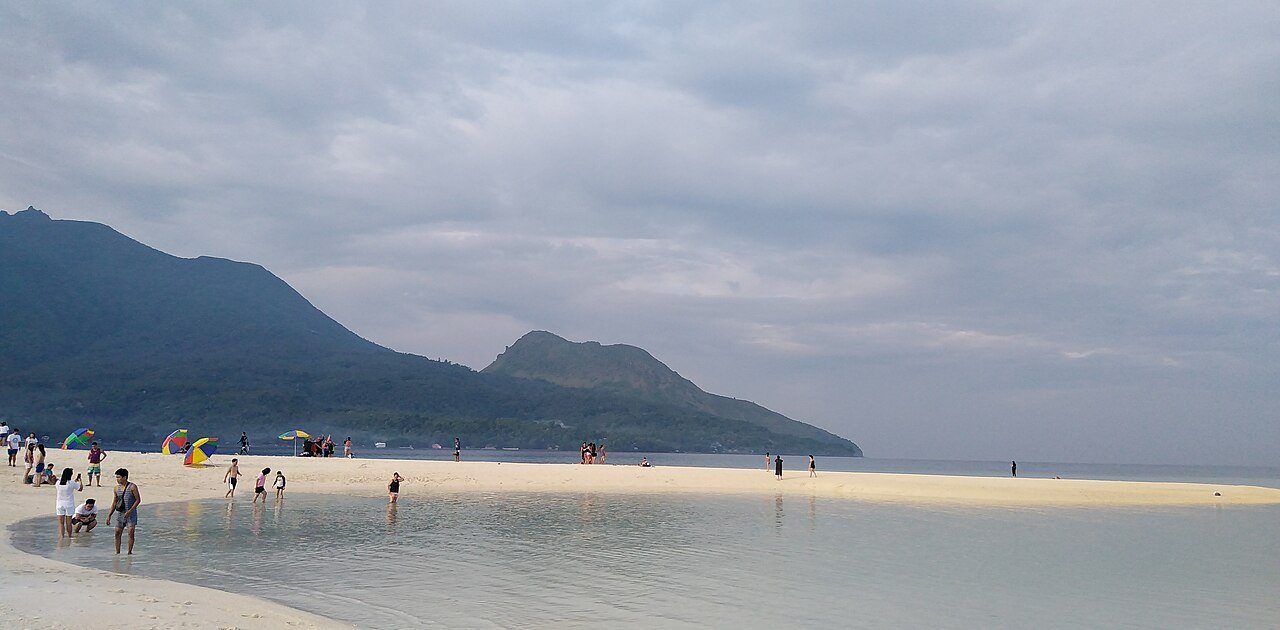
Start with the postcard. White Island is a bare, dazzling sandbar floating a few minutes off the northwest coast, with Mt. Hibok-Hibok looming behind it for the best photo backdrop on the island. Boats leave from the shore near Yumbing, cost around PHP 500 to 600 per boat round trip (good for a small group), and take maybe ten minutes. Go at sunrise. The light is soft, the crowds haven’t arrived, and the tide is usually kinder to the sandbar’s size. There’s zero shade out there, so bring water, sunscreen and a hat, and agree on a pickup time with your boatman before he putters off.
Snorkel over the Sunken Cemetery
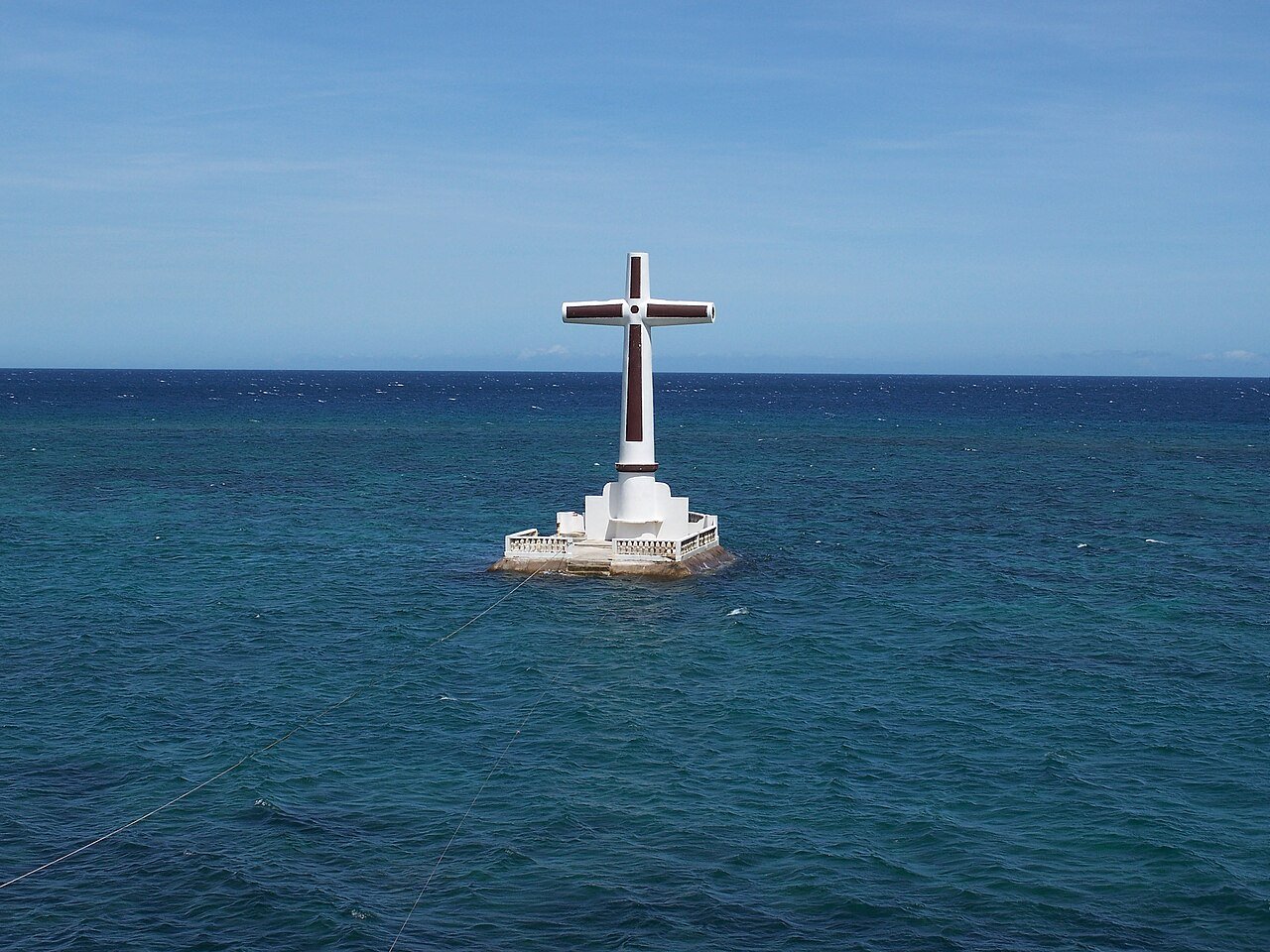
This is Camiguin’s most haunting sight. When Mt. Vulcan erupted in the 1870s, it pushed an entire coastal cemetery beneath the sea. Today a large cross marks the spot, and you can hire a snorkel guide from the shore for a small fee to float over coral-crusted gravestones. It sounds macabre, but in person it’s oddly peaceful, all that history quietly becoming a reef. Sunset here is special too, with the cross silhouetted against an orange sky. There’s a small parking and viewpoint fee, pocket change really.
Wander the Old Church Ruins in Catarman
A few minutes from the Sunken Cemetery stand the ruins of the old Guiob Church, volcanic stone walls that survived the same eruption that drowned the cemetery. Massive century-old trees now grow inside the roofless nave. It’s free or nearly free to enter, quiet most of the day, and worth twenty unhurried minutes. Between the ruins and the cemetery you get a real sense of how completely the volcano rewrote this island.
Cool off at Katibawasan Falls
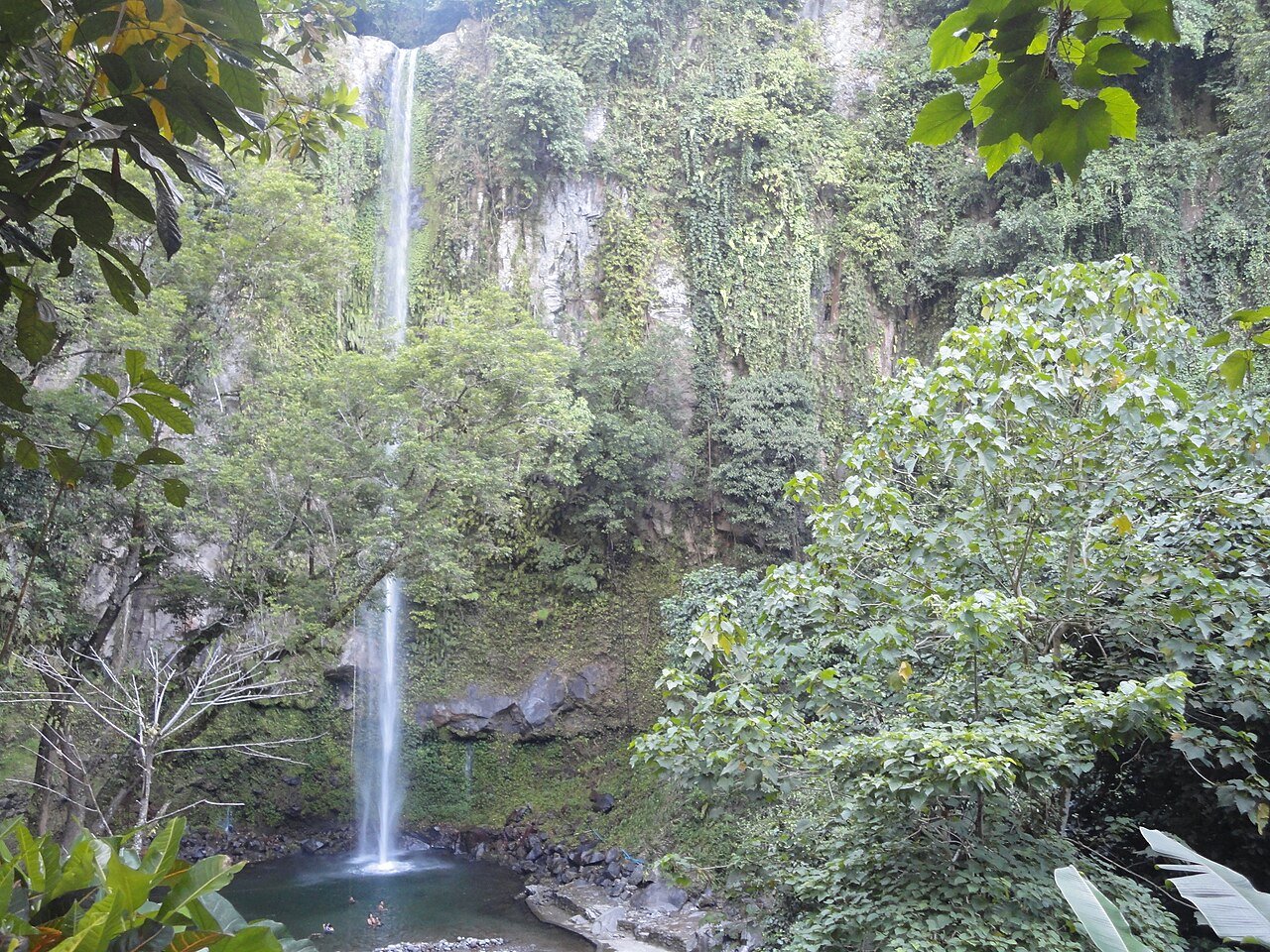
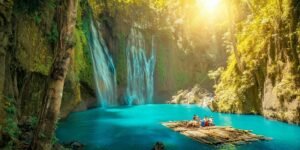
Katibawasan is a showstopper: a slender ribbon of water dropping roughly 70 meters into an icy green pool ringed by ferns and orchids. The entrance fee is small, around PHP 50, and the swim is bracing in the best way. Come mid-morning before the tour vans arrive. If you’re still in a waterfall mood afterwards, Tuasan Falls on the other side of the island is wider, wilder and reached by a pleasant riverside walk.
Soak at Ardent Hot Springs
Volcanoes take, and volcanoes give. Ardent Hot Springs, on the slopes of Hibok-Hibok, is a series of tiered pools where the water comes out warm, around body temperature, thanks to geothermal heat below. Entrance runs somewhere around PHP 50 to 100. It’s best at night when the air cools down and the pools feel properly hot. Locals treat it as a social spot, so expect karaoke drifting from somewhere nearby. Honestly, that’s part of the charm.
Take a boat to Mantigue Island
Off the east coast sits Mantigue, a tiny forested island wrapped in a marine sanctuary. Boats leave from near Mahinog, around PHP 600 to 700 per boat, and the snorkeling here beats anything on the main island: healthy coral, clouds of reef fish, and turtles if you’re lucky. There’s a small sanctuary fee, a short nature trail through the forest, and grilled fish if the caretakers are cooking that day. Pair it with the giant clam sanctuary at Cantaan, where a modest fee gets you a guided snorkel over clams the size of coffee tables.
Swim in cold springs and soda water
Camiguin’s party trick is that you can go from a hot spring to a cold one in twenty minutes. Sto. Nino Cold Spring in Catarman is a huge, glassy pool of spring water that stays cold all day, perfect at noon when the island bakes. Then there’s Bura Soda Water Park, where the pool is fed by naturally carbonated spring water. Yes, you can drink it, and yes, it’s fizzy. Entrance fees at both are small, generally under PHP 100. These are local family spots, busiest on weekends, cheerfully sleepy on weekdays.
Hike Mt. Hibok-Hibok if you’ve got the legs
The island’s resident active volcano is a rewarding day hike, roughly 4 to 6 hours up through forest and old lava fields to a crater rim with views across to Bohol on a clear day. You’ll need to arrange a guide and a permit in advance, which your guesthouse can usually sort out, and costs vary with group size. Start before dawn, both for the sunrise and to beat the heat. It’s a proper workout, not a stroll, so pack more water than you think you need.
Eat pastel and time your trip for the Lanzones Festival
Camiguin’s signature bite is pastel, a soft bun filled with sweet yema custard. The Vjandep brand is the famous one and boxes make great gifts, assuming they survive the trip home. Mine rarely do. The island is also the country’s lanzones capital, and if you visit in October you might catch the Lanzones Festival, a week of street dancing and costumes celebrating the small, sweet fruit. Roadside stalls sell them by the kilo in season, and you should absolutely stop.
Getting to and around Camiguin
Most travelers come through Cagayan de Oro: a bus from CDO to Balingoan takes about two hours, then it’s a ferry to Benoni Port, roughly an hour for around PHP 200 to 250. If you’re routing through CDO anyway, my Cagayan de Oro travel guide covers the city, and thrill seekers can detour to the Dahilayan ziplines nearby. There are also direct flights from Cebu to Camiguin’s little airport, and a ferry link from Jagna in Bohol, which makes it easy to bolt Camiguin onto a Bohol trip. Once on the island, rent a motorbike for around PHP 350 to 500 a day, or hire a multicab with driver if you’d rather not ride. The coastal road is one easy loop, and getting briefly lost here is part of the fun.
Where to base yourself on the island
Most visitors stay along the northwest coast between Yumbing and Agoho, and it’s easy to see why: you’re facing White Island, sunsets land right in front of your beer, and the cluster of small resorts there covers everything from backpacker fan rooms at around PHP 800 a night to comfortable beachfront cottages in the PHP 2,500 to 4,000 range. Mambajao town has more local eateries, ATMs and the market, so it’s handy for errands even if you sleep elsewhere. Wherever you stay, book ahead for October’s festival week and Holy Week, since the island’s room supply is small and fills up fast. The rest of the year, you can often just show up.
What to Eat on Camiguin
Camiguin’s food scene is small but has a couple of genuine specialties worth seeking out. Pastel, a soft, slightly sweet bread roll filled with a meat or custard filling, is the island’s signature snack and you’ll find it sold in small bakeries around Mambajao for roughly PHP 10 to 20 each. Lanzones, the sweet, translucent fruit the October festival is named for, is worth trying in season if you’re visiting then. Beyond that, expect straightforward Filipino carinderia food, grilled fish and pork, rice, and simple vegetable dishes, at local eateries for roughly PHP 80 to 150 a meal, with a handful of more polished restaurant options near the resort strip in Yumbing and Agoho charging closer to PHP 200 to 400 for a full meal with a drink.
Tap water is not recommended for drinking, bottled water runs roughly PHP 15 to 25 and is sold everywhere, including small sari-sari stores along the coastal road. If you have dietary restrictions, don’t expect much beyond basic vegetarian rice-and-vegetable plates outside the resort restaurants, so it helps to ask ahead or bring a few snacks of your own.
Best Time to Visit Camiguin: Weather and Festivals
Camiguin is drier and sunnier roughly from March through May, which is also when the island is busiest and room rates creep up. The rainy season, roughly June through November, brings the odd typhoon risk (Camiguin sits in a fairly typhoon-prone part of Mindanao’s neighboring region) and can make Katibawasan Falls and Mt. Hibok-Hibok trails slippery, though it also means fewer crowds and greener scenery. The Lanzones Festival in October is the single best week to time a visit if festivals interest you, with street dancing and the whole island in a genuinely festive mood, but book accommodation well ahead since rooms sell out fast that week.
What to Skip: Honest Negatives
Camiguin is not flawless. Mt. Hibok-Hibok’s trail can be muddy and poorly marked outside peak season, and going without a registered guide is a bad idea, not just a rule. The Sunken Cemetery cross photo op gets crowded with day-tripping groups around midday, so aim for early morning or late afternoon if you want the water to yourself. Ardent Hot Springs, while pleasant, is basically a big public pool rather than a wild, secluded spring, so temper your expectations if you’re picturing something more remote. And because the island is small, a lot of visitors try to cram everything into one rushed day trip from Cagayan de Oro, which means white-knuckling between spots rather than actually enjoying any of them. Give it at least two nights if you can.
One more honest note: Camiguin’s beaches are mostly grey or black volcanic sand rather than the powder white sand of Boracay or El Nido, and the White Island sandbar itself is a shifting patch of white sand with no shade and no facilities, so bring your own water, sun protection and a hat, and plan your visit around low tide when the sandbar is largest.
Realistic Costs: A Day on Camiguin vs a Full Weekend
A single-day loop covering White Island, the Sunken Cemetery, Katibawasan Falls and Ardent Hot Springs runs roughly PHP 1,200 to 2,000 per person if you’re splitting a hired multicab or motorbike rental between two or three people, including entrance fees (most sites charge roughly PHP 20 to 60 each), the White Island boat crossing (around PHP 200 to 300 round trip per person, shared), and a simple lunch. A relaxed two night stay, budget guesthouse or mid-range cottage, all the main sights, and a Mantigue Island add-on, lands roughly around PHP 4,000 to 6,500 per person all-in, not counting the Cagayan de Oro or Cebu flight to get there. Backpackers sharing fan rooms and eating at local carinderias can bring a weekend down closer to PHP 2,500 to 3,500.
Continue Planning Your Camiguin Trip
Here is how to get to Camiguin from Cebu.
Plan Your Trip to Camiguin
Ready to book? Compare hotels and tours in Camiguin below.
- Search Hotels in Camiguin on Booking.com
- Compare Hotels in Camiguin on Agoda
- Find Tours and Activities in Camiguin on Klook
- Book Tours in Camiguin on GetYourGuide
Booking through these links may earn us a small commission at no extra cost to you.
Quick FAQ
How many days do you need in Camiguin? Three days covers the highlights at a happy pace: one for White Island and the west coast sights, one for Mantigue and the east, one for waterfalls, springs, and doing nothing.
What is Camiguin famous for? Seven volcanoes on one small island, the Sunken Cemetery, White Island sandbar, sweet lanzones fruit, and more hot and cold springs than you’ll have time for.
How do you get to Camiguin? Ferry from Balingoan (near Cagayan de Oro) to Benoni is the standard route. There are also flights from Cebu and a seasonal ferry from Jagna, Bohol.
When is the best time to visit Camiguin? Roughly February to May for the driest weather, or October if you want to catch the Lanzones Festival. It’s a year-round island though, with brief rains rather than washouts most of the time.