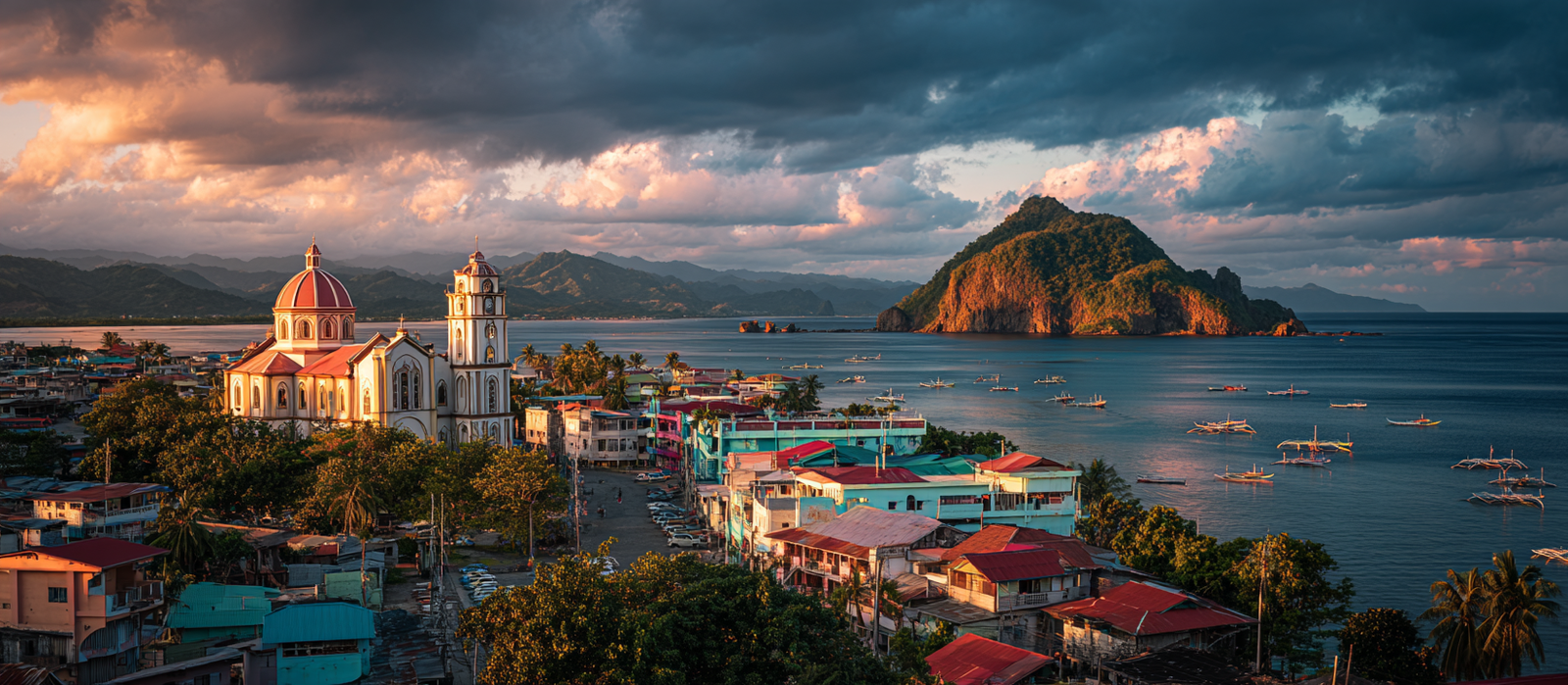

Alaminos City in Pangasinan is best known as the jump-off point for Hundred Islands National Park, a scattering of small limestone islands across Lingayen Gulf (124 of them at low tide, 123 once the water comes back up). Most visitors pass through on a rushed day trip: bus in, boat out to two or three islands, bus back to Manila the same night. That works fine if the islands are all you’re after. But if you’re staying a night or two, or you just want to know what things actually cost before you book anything, this guide covers the parts most itineraries skip over: how to get here from Manila and beyond, where to sleep, what a realistic budget looks like in PHP, and what’s honestly not worth your time. For the full island-by-island rundown of the national park itself, our Hundred Islands travel guide goes deep on that. This one is about Alaminos, the city that makes it all possible.
How to Get to Alaminos
From Metro Manila, the easiest option is a direct bus. Victory Liner, Five Star, and Solid North all run multiple daily trips to Alaminos City, usually departing from terminals in Pasay, Cubao, or Avenida. The ride takes roughly 4 to 6 hours depending on traffic and how many stops the bus makes along the way, and fares run around PHP 450 to 600 one way. Overnight buses exist too, which can save you a hotel night if you’re on a tight budget, though you’ll arrive groggy. If you’re driving, the route is straightforward: NLEX to TPLEX, then local roads into Alaminos, which usually takes about 4 to 5 hours depending on traffic out of the city. If you’re passing through Tarlac on the way up, it’s a reasonable halfway stop to stretch your legs or grab a meal.
Coming from elsewhere in North Luzon, Alaminos is more of a detour than a straight shot, so budget extra time. From Baguio, you’re looking at around 4 to 5 hours by bus or private van via Dagupan, since there’s no direct route hugging the coast. From Vigan and the rest of Ilocos, buses heading south toward Manila pass through Pangasinan, so you can get off at Alaminos or a nearby junction and transfer by tricycle or jeepney. If you’re coming from further afield, our guide to getting from Manila to Vigan covers that corridor in more detail, and Alaminos makes a sensible stop if you’re stringing together a longer Ilocos and Pangasinan loop. From San Juan, La Union, expect around 2 to 3 hours by bus or private transfer down the coast. Once you’re in Alaminos proper, tricycles handle the rest. Lucap Wharf, the main jump-off point for Hundred Islands, is a short 10 to 15 minute ride from the city center, and you’ll pay somewhere around PHP 30 to 50 per person, or more if you charter the whole tricycle.
Things to Do in Alaminos
The main event, obviously, is Hundred Islands National Park. Head to Lucap Wharf, pay the entrance and environmental fees (roughly PHP 100 to 160 total depending on whether it’s a day tour or overnight, plus a small insurance fee), and arrange a boat with the tourism office right there. A small boat for 1 to 5 people on the basic island-hopping package runs around PHP 1,400 to 2,000, which covers stops like Governor’s Island (views and a zip line), Quezon Island (the beach everyone photographs), and Children’s Island (calm, shallow water, good for families). Bigger groups can rent larger boats and split the cost, which is the smarter move if you’re not traveling solo. We won’t re-cover every island here since our dedicated Hundred Islands guide already breaks down which islands are worth your limited hours and which ones you can skip.
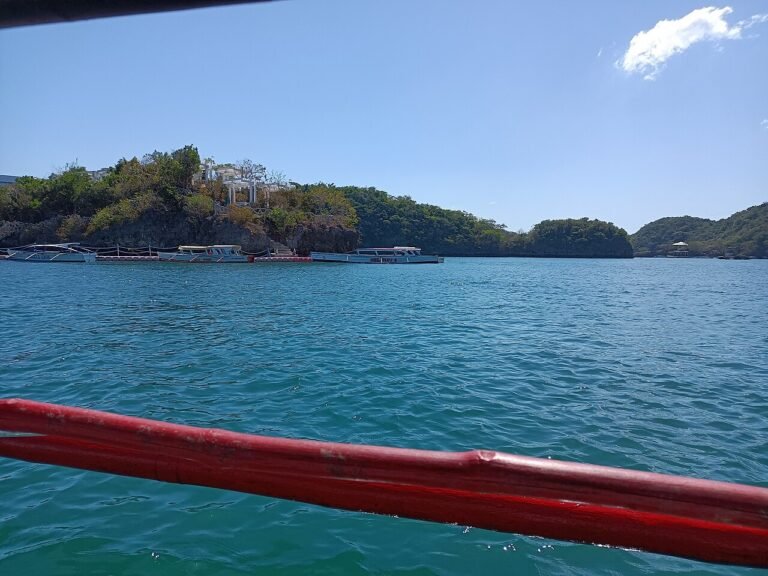
Beyond the islands, Alaminos City itself has a few things worth an hour or two. St. Joseph the Patriarch Parish Church, in the city proper, dates back to the Spanish colonial era and is worth a quick look if you like old churches. The public market is a better use of your time if you’re curious about local life, it’s where you’ll find fresh Pangasinan bangus (milkfish) and produce, usually cheaper than anywhere near the tourist strip. If Lucap Wharf feels too crowded, Bolo Beach nearby is a quieter alternative for a swim or a sunset, without the boat touts.
Where to Stay in Alaminos
Accommodation splits roughly into three brackets, and where you land depends on how much you care about proximity to the wharf versus price.
- Budget (around PHP 500 to 900 a night): Simple inns and guesthouses in Alaminos City proper, sometimes fan rooms rather than air-conditioned. You trade a bit of comfort for lower cost and easy access to city conveniences like banks and eateries. Camping on designated islands inside the park (Governor’s Island and Quezon Island allow it, with permits and fees) is the budget option if you’d rather sleep under the stars than in a room, though you’ll need to bring or rent your own gear.
- Mid-range (around PHP 1,500 to 3,500 a night): Small resorts and hotels closer to Lucap Wharf, usually air-conditioned with private bathrooms and sometimes a pool. This is the sweet spot for most travelers: close enough to walk or take a short tricycle ride to the boats, comfortable enough not to feel like roughing it.
- Upscale (around PHP 4,000 to 8,000-plus a night): Beachfront resorts with fuller amenities, restaurants on site, and better views, generally clustered around the wharf area or further out toward the coastal roads. These book up fast during peak season (March to May), so reserve ahead if this is your bracket.

Where to Eat in Alaminos
Alaminos is a coastal city, so seafood is the obvious strength. Near Lucap Wharf, plenty of small eateries grill up fresh fish, crabs, and prawns caught that morning. Try the local bangus prepared a few different ways, it’s a Pangasinan specialty and genuinely good here. Depending on the season, especially March to May, you’ll also find an abundance of Pangasinan mangoes, considered among the best in the country. Grab some from the public market rather than a tourist-priced stall. For budget-friendly Filipino meals away from the wharf, carinderias around the city proper serve home-style dishes at a fraction of the price you’d pay near the boats.
What a Day or Weekend in Alaminos Actually Costs
Rough numbers, per person, assuming you’re not traveling solo (island hopping gets expensive fast if you are, since boat rental is a flat fee split among the group):
- Day trip from Manila: Round-trip bus fare around PHP 900 to 1,200, tricycle fares around PHP 100, entrance and environmental fees around PHP 100 to 160, boat rental split among 4 to 5 people works out to roughly PHP 300 to 500 per person, plus food around PHP 300 to 500. All in, expect somewhere around PHP 1,700 to 2,500 per person for a full day trip, bus included.
- Weekend trip (two days, one night): Add a night’s accommodation, anywhere from PHP 500 budget to PHP 3,500 mid-range, plus a second day’s meals. A reasonable mid-range weekend budget lands around PHP 3,500 to 6,000 per person, more if you’re going upscale or adding extras like kayaking or an overnight camping package on the islands.
These numbers assume a group. If you’re traveling solo, boat rental alone can eat your whole budget unless you can join or split with other travelers at the wharf, which is common enough that the tourism office will often help pair you up.
What to Skip
Not everything here is worth your time, and it’s worth saying so plainly. The souvenir stalls right at Lucap Wharf tend to mark things up well above what you’d pay at the public market, so save your pasalubong shopping for the city proper. Cuenco Cave gets mentioned in a lot of itineraries but it’s a minor stop, easy to skip if you’re short on time or already island-hopping. The zip line on Governor’s Island involves a steep uphill walk and long queues during peak season, worth it if you actually want the zip line, skippable if heights aren’t your thing or you’re just there for photos. And if you can help it, avoid visiting during Holy Week or long weekends in April and May, the wharf gets genuinely crowded, boats fill up, and the whole experience feels rushed rather than relaxing.
Local Tips for Your Alaminos Adventure
- Best Time to Visit Alaminos: Dry season, November to May, gives you the calmest seas and the best odds of sunny skies for island hopping. Peak months are March to May, so expect more crowds and higher accommodation prices then. Avoid June to October if you can, typhoon season disrupts boat trips regularly and some days the wharf simply won’t let boats out.
- Getting Around: Tricycles are the default way to get around the city and out to the wharf. They’re affordable and everywhere, just confirm the fare before you get in, or ask a local what a fair price looks like for your destination.
- Cash is King: Bigger resorts and some restaurants take cards, but the market, tricycles, and most eateries are cash only. Carry enough pesos, especially for boat rental and fees at the wharf.
- Staying Hydrated: Bring a reusable water bottle. It’s hot, you’ll be on the water most of the day, and refill stations are easier to find than you’d expect.
Safety and Customs in Alaminos
Alaminos is generally a safe, low-key destination, and the usual travel precautions apply rather than anything unique to the area.
- Valuables: Keep an eye on your things in crowded spots like the wharf and market. A dry bag is worth bringing for phones and cash on boat tours, splashes happen.
- Water Safety: Wear a life vest on the boat, always. Listen to your boatman about currents and safe swimming zones, they know the water better than any guidebook.
- Environmental Responsibility: Hundred Islands National Park is a protected area. Pack out your trash (the wharf runs a deposit system tied to a trash bag you return), and don’t touch or stand on coral while snorkeling.
- Cultural Sensitivity: Filipino hospitality runs deep here. A friendly greeting and basic courtesy go a long way, and locals are generally happy to help with directions or recommendations if you ask.
More Alaminos and Hundred Islands Guides
Pair this with the rest of what you need to plan the trip.
- Top Things to Do in Alaminos: Hundred Islands and Beyond
- Hundred Islands Travel Guide: What to Know Before You Go
Alaminos City Hotels: What You Actually Get for Your Money
Most people treat Alaminos City as a place to sleep either side of a boat day, and that is a reasonable way to use it. Knowing the three brackets saves a lot of scrolling.
At the budget end, roughly 800 to 1,500 PHP gets you a clean fan or basic air conditioned room in town or near Lucap Wharf. Expect a firm bed, a cold shower, and wifi that works in the lobby. This is the honest majority of Alaminos City hotels and it is perfectly fine for one night.
The middle bracket, around 2,000 to 3,500 PHP, buys a proper air conditioned room with hot water and usually breakfast, mostly in the Lucap area so you can walk to the wharf. This is the sweet spot if you want an early boat without a pre dawn drive.
Above roughly 4,000 PHP you are into the resort properties with pools and sea views. They are comfortable, and they are also not why you came, because the actual scenery is out in the park rather than from the balcony.
Book ahead for Holy Week, long weekends and the summer months of March through May, when Alaminos City fills up with domestic visitors and the decent mid range rooms go first.
Staying at Lucap Wharf Versus Alaminos City Proper
This is the decision that actually shapes your trip, and nobody explains it. Lucap is the barangay with the wharf, about 15 to 20 minutes from the city centre, and a tricycle between the two runs around 100 to 150 PHP.
Stay in Lucap if your priority is being on the first boat. You roll out of bed, walk to the registration office and you are on the water while the day trippers are still on the highway. The trade off is a small, quiet strip with limited places to eat after dark.
Stay in Alaminos City proper if you want restaurants, the market, ATMs that work and a pharmacy. The trade off is a morning tricycle ride and, in practice, a later start.
If it is your only night, Lucap wins. If you are in the area for two or three days and using Alaminos City as a base for Bolinao and the coast, town is more useful.
Is Alaminos City Worth More Than One Night?
Honest answer: for most visitors, no. Hundred Islands is a full and satisfying day, and the city itself is a pleasant working provincial town rather than a destination.
Two nights make sense in two situations. If you want to do the park properly over two days, one for the popular islands and one for the quieter ones, the second day is genuinely different. And if you are pairing Alaminos City with Bolinao, the falls and Patar Beach eat a whole day on their own and the drive back to Manila afterwards is brutal.
Three nights is too many unless you are working remotely or waiting out weather.
Quick FAQ
How do I get from Manila to Alaminos? Take a direct bus from Victory Liner, Five Star, or Solid North from Pasay, Cubao, or Avenida. The trip takes roughly 4 to 6 hours and costs around PHP 450 to 600 one way. Driving via NLEX and TPLEX takes about 4 to 5 hours.
How much does the Hundred Islands boat tour cost from Alaminos? Budget around PHP 100 to 160 per person for entrance, environmental, and insurance fees, plus roughly PHP 1,400 to 2,000 for a small boat covering the basic island-hopping package, split among your group.
What’s the best time to visit Alaminos and Hundred Islands? November through May, during dry season. March to May is peak, with calmer seas but bigger crowds and higher prices.
Do I need to book a boat tour in advance? Not usually. Boats are arranged on the spot at the tourism office at Lucap Wharf. If you’re traveling solo, staff can often help pair you with other travelers to split the cost.
Is one day enough for Hundred Islands? For a taste, yes, most day tours cover two to three islands. If you want to snorkel, camp overnight, or see more islands without rushing, plan for two days.
Can I stay overnight on the islands themselves? Yes, camping is allowed on designated islands like Governor’s Island and Quezon Island, with permits and fees through the wharf’s tourism office. Bring your own gear.
Beyond Alaminos
If Hundred Islands is just one stop on a longer Pangasinan or Ilocos run, Alaminos slots in easily. Heading north, you can continue up toward Vigan for heritage architecture, or swing inland toward Baguio for cooler mountain air. If you’d rather stay on the coast, San Juan, La Union is a manageable hop south and popular with surfers. However you string it together, give Alaminos more than a single rushed afternoon if you can. The islands are the headline, but the city around them is worth a slower look too.
More Philippines Travel Guides
Planning a longer trip? These lesser-visited provinces pair well with a Philippines itinerary: