
Ati-Atihan in Kalibo is the oldest and rawest of the big Philippine festivals, the one the others were modelled on. Held every January in Aklan, it is less choreographed than Sinulog and less polished than Dinagyang, and that is precisely the appeal. Everyone joins in, faces painted, drums going, for three days straight.
This guide covers the dates, what happens, where to stay, what it costs and who will and will not enjoy it.
What Ati-Atihan Is
Ati-Atihan means “to be like the Ati”, the indigenous people of Panay. The festival commemorates a 13th century agreement between Ati locals and Malay settlers, later fused with devotion to the Santo Nino after Spanish colonisation.
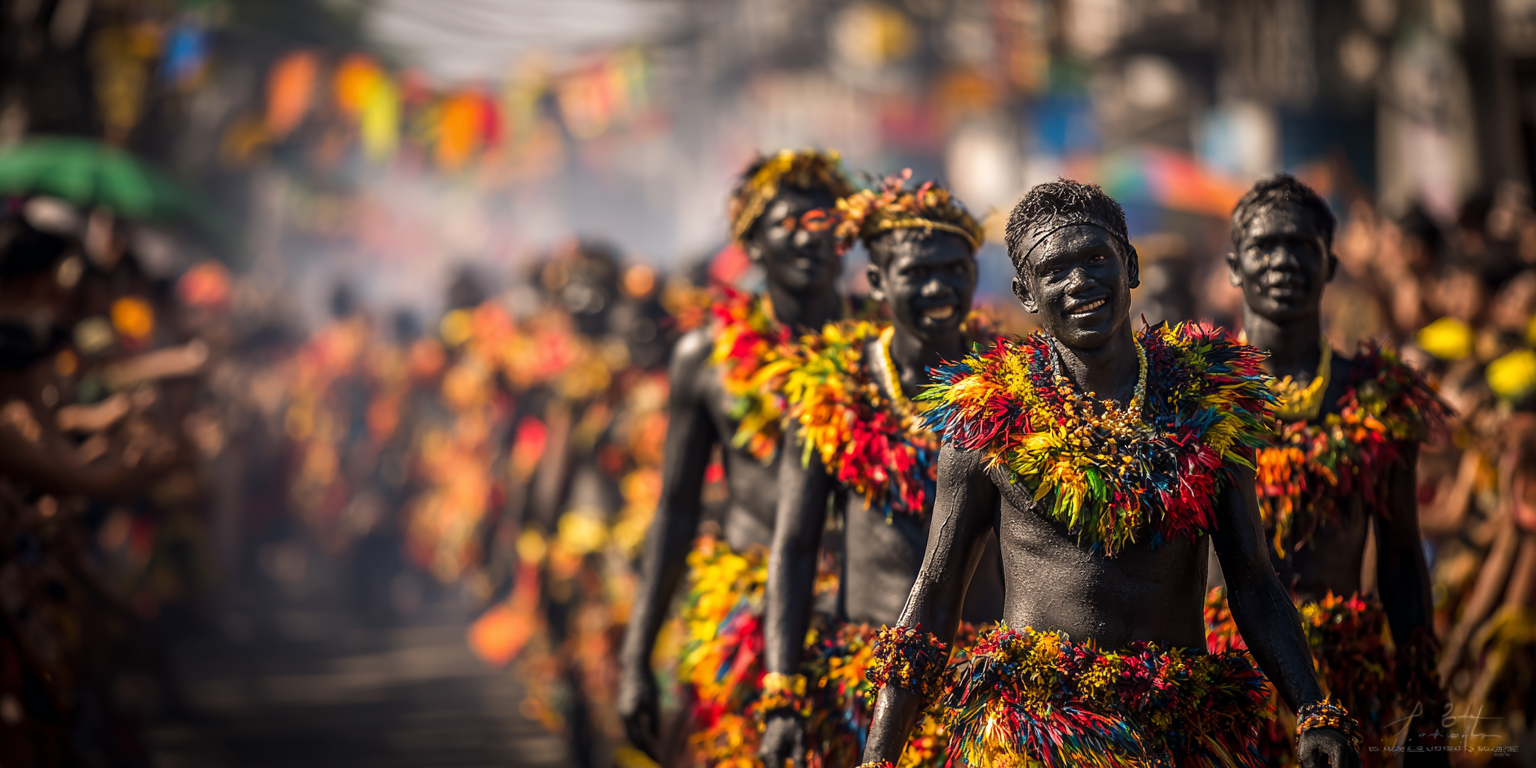
Participants darken their faces with soot or paint and wear elaborate tribal inspired costumes. The chant is “Hala Bira”, and the drums are relentless in a way that is genuinely different from the more orchestrated festivals elsewhere.
The key thing that separates Ati-Atihan from Sinulog and Dinagyang: this is a participatory festival, not a spectator one. There is no grandstand culture. You are expected to get in the street and dance, and people will pull you in.
When It Happens
Ati-Atihan runs in the third week of January, climaxing on the third Sunday, the same weekend as Sinulog in Cebu and Dinagyang in Iloilo.
The main events run Friday through Sunday. Friday and Saturday are the street dancing and tribal competitions. Sunday brings the main procession and the masquerade parade that closes the festival.
Because all three big Visayan festivals land on the same weekend, you have to choose. Flights and rooms across the whole region tighten at once.
What It Costs
The festival is free. The costs are getting there and sleeping.
Flights from Manila to Kalibo run roughly 2,500 to 7,000 PHP return, rising sharply as January approaches. Book two to three months out.
Accommodation in Kalibo during the festival runs around 2,500 to 6,000 PHP a night for something ordinary, two to three times the normal rate, often with minimum stays. Kalibo is a small town with limited inventory and it genuinely sells out.
Many visitors stay in Boracay, roughly two hours away by van and boat, and day trip in. That works, though the late night return is a slog.
Food and drink on the street is cheap, roughly 50 to 200 PHP for snacks and beer. Budget around 2,000 to 3,500 PHP a day excluding the room.
What Actually Happens Day by Day
Friday opens with the drums and the first street dancing. It builds slowly and is the easiest day to find your feet.
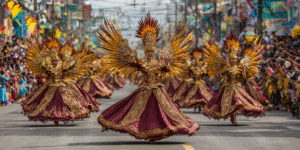
Saturday is the tribal competition, when the organised groups perform in full costume. This is the most visually impressive day and the busiest.
Sunday morning brings the procession of the Santo Nino through the town, the devotional core of the festival. The afternoon masquerade parade closes things out and runs late.
The drumming runs more or less continuously through all three days and nights in the town centre. That is not a figure of speech, and it matters for where you book.
Where to Stay in Kalibo
Close to the plaza puts you in the middle of everything and guarantees you will not sleep. If you are there to participate fully, that is the right trade.
A few streets out, roughly ten minutes’ walk, gets you some quiet without losing access. This is the sensible choice for most people.
Out toward the airport is quieter and cheaper but means tricycle rides in and out, which get difficult late at night when roads close.
Book by October. Seriously. Kalibo does not have Cebu’s volume of rooms and the good ones go early.
The Honest Downsides
It is loud, dirty and chaotic. Soot and paint get on everything and everyone, including you, whether you want it or not.
Drinking is heavy and public. It is good natured in the main, but if drunk crowds make you uncomfortable this is not your festival.
There is very little infrastructure for spectators. No grandstands to speak of, limited toilets, and nowhere quiet to sit down.
Kalibo itself is a functional provincial town without much to do outside the festival. There is no reason to arrive early beyond securing your footing.
And petty theft rises with the crowds and the drinking. Carry the minimum.
Practical Advice
Wear clothes you will throw away. This is not advice you should ignore.
Leave your phone at the hotel or bring it in a sealed bag. Take only the cash you need, in a front pocket.
Get your face painted. You will be treated as a participant rather than a tourist, which changes the whole day.
Agree a meeting point with your group. Networks fail under load and you will get separated.
Earplugs if you want to sleep at all. Water, steadily, because the heat and the drinking combine badly.
Ati-Atihan, Sinulog or Dinagyang?
All three fall on the same January weekend, so this is a real choice.
Choose Ati-Atihan if you want to participate, tolerate chaos and prefer raw to polished. It is the most fun and the least comfortable.
Choose Sinulog in Cebu if you want the biggest spectacle, the most organised event and a city with proper infrastructure behind it.
Choose Dinagyang in Iloilo if you want the highest standard of performance. It is widely considered the best choreographed of the three.
If Boracay is already on your itinerary, Ati-Atihan is the easy add, since you fly into Kalibo anyway. See things to do in Boracay and getting from Manila to Boracay for the connection.
Getting to Kalibo
Kalibo International Airport has direct flights from Manila, Cebu and a handful of regional international routes, mostly Korean and Chinese. Flights from Manila take around an hour.
The airport is roughly 15 minutes from the town centre, with tricycles at around 100 to 200 PHP and vans slightly more. During the festival, expect the last stretch into town to be closed to vehicles and to walk the final part.
From Boracay, vans run Caticlan to Kalibo in roughly 90 minutes to two hours for around 200 to 400 PHP, plus the boat from the island. Allow three hours door to door and more on festival days.
By sea, ferries connect Dumaguit and New Washington ports in Aklan with Manila and Batangas, which is slow but cheap if you have the time.
What to Eat While You Are There
Aklan food is worth paying attention to between the drumming.
Inubarang manok, chicken cooked with banana pith, is the local dish to look for. Binakoe na manok, chicken cooked in bamboo, shows up at festival time. Aklan is also known for its piyaya and for fresh seafood coming in from the coast.
Street food along the parade route is cheap and plentiful, roughly 30 to 150 PHP, and the usual advice applies: eat where the queue is longest and the turnover is fastest.
Kalibo’s public market is the best value eating in town and is a useful escape from the noise in the middle of the day.
Quick FAQ
When is Ati-Atihan Festival? The third week of January, climaxing on the third Sunday. Main events run Friday through Sunday in Kalibo, Aklan, the same weekend as Sinulog in Cebu and Dinagyang in Iloilo.
How much does it cost to attend Ati-Atihan? The festival is free. Flights from Manila to Kalibo run roughly 2,500 to 7,000 PHP return and accommodation around 2,500 to 6,000 PHP a night during the festival. Budget roughly 2,000 to 3,500 PHP a day on the ground.
Can you stay in Boracay and visit Ati-Atihan? Yes, and many people do. Kalibo is roughly two hours away by van and boat. The drawback is a long late night return after the dancing.
Is Ati-Atihan a spectator festival? No, and that is the point. There is little spectator infrastructure and people will pull you into the street. Get your face painted and join in, or choose Sinulog or Dinagyang instead.
How far ahead should you book? Flights two to three months out, accommodation by October. Kalibo is a small town with limited rooms and it genuinely sells out during the festival.
Is Ati-Atihan safe? Broadly yes, and the atmosphere is good natured, but petty theft rises with the crowds and the heavy public drinking. Carry only what you need, leave valuables behind, and agree a meeting point since networks fail.