
Boracay Beyond the Postcard: A Guide to Experiencing the Island’s Best
Did you know that Boracay welcomes over two million visitors in a typical year, yet its permanent population is just over 30,000? This incredible ratio speaks to the island’s magnetic pull. But since its celebrated rehabilitation, Boracay has transformed. It’s no longer just a party island; it’s a blueprint for sustainable tourism, offering a richer, cleaner, and more intentional travel experience. If you’re wondering what to do in Boracay, the answer is now more diverse than ever, blending relaxation with responsible fun.
White Beach and Its Distinct Stations
The heart of Boracay remains its world-famous White Beach, a stunning 4-kilometer stretch of powdery white sand. However, not all parts of this beach are created equal. Understanding the three stations is key to planning your days.
- Station 1: This is the luxury lane. Home to high-end resorts and the quietest beachfront, it’s perfect for serene morning walks and uninterrupted sunbathing. The famous Willy’s Rock, a volcanic formation with a grotto, is a landmark here.
- Station 2: The vibrant center of it all. This is where you’ll find D’Mall, an open-air shopping center, along with a dense concentration of restaurants, bars, and activity operators. It’s lively and convenient, the social hub of the island.
- Station 3: Offering a more laid-back, budget-friendly vibe, Station 3 has a mix of smaller hotels and native-style bungalows. The beach here is just as beautiful but generally less crowded than Station 2, striking a great balance between tranquility and accessibility.
Connect with the Island’s First People
For a meaningful cultural experience, consider a visit to the Ati Village. The Ati are the indigenous people of Boracay, and a visit here offers a glimpse into their history, struggles, and enduring culture. The community, located inland from White Beach, often welcomes respectful visitors. You can learn about their heritage, purchase locally made handicrafts, and support their livelihood directly. This isn’t a typical tourist attraction; it’s a chance to connect with the island’s soul and contribute to a community that has preserved its identity against the odds.
From Seafood Feasts to Local Markets
A trip to Boracay isn’t complete without a visit to the D’Talipapa Market. This is one of the most authentic things to do in Boracay for food lovers. Here’s how it works: you wander through the wet market section, haggle for the freshest catch of the day, from prawns and crabs to snapper and squid, and then take your bounty to one of the nearby “paluto” (cooking service) restaurants. For a fee of around PHP 200-400 per dish, they’ll cook your seafood exactly how you like it: steamed, grilled, or sizzling in garlic butter. Don’t miss trying the local calamansi juice or a classic halo-halo for dessert from one of the stalls nearby.
Wind and Waves on the Other Side
While White Beach is for sunbathers, Bulabog Beach, on the island’s eastern side, is for adventurers. From November to April, this beach transforms into a world-class hub for kitesurfing and windsurfing, thanks to the strong, steady winds. Even if you’re a complete beginner, numerous IKO-certified schools offer lessons (a 2-3 hour discovery course can cost around PHP 4,000). Watching the sky filled with colorful kites is a spectacle in itself and a refreshing contrast to the calm of White Beach.
Finding Your Quiet Corner
If the buzz of White Beach becomes too much, escape to Diniwid Beach. Tucked away just north of Station 1 and accessible via a short walk along a cliffside path, this small cove offers a more intimate and rugged atmosphere. The waves can be a bit stronger here, but the vibe is wonderfully relaxed. Another excellent option is Puka Beach, on the island’s northern tip. Famous for the crushed puka shells that mix in with its sand, it’s a more rustic and less developed shoreline perfect for an afternoon of quiet contemplation. An e-trike ride from D’Mall to Puka Beach will cost around PHP 200-250.
A Smarter Boracay Travel Guide
Navigating the new Boracay is straightforward, but a few tips will make your trip smoother. Upon arrival at the Caticlan port, you’ll need to pay an environmental fee (PHP 300 / ~ for foreign tourists) and a terminal fee. These funds directly support the island’s conservation efforts. Transportation on the island is now dominated by e-trikes, which are both eco-friendly and efficient. A shared ride along the main road costs as little as PHP 20, while a private charter for your group will vary by distance. Remember that single-use plastics are banned on the island, so bring a reusable water bottle and bag. The best weather is during the dry season (Amihan), from November to May, offering sunny days and calmer seas ideal for most activities.
Boracay has proven it’s more than just a beautiful beach; it’s a destination committed to preserving its beauty for generations. The best things to do in Boracay today are those that allow you to soak in its natural splendor while respecting the new rules that protect it. So, what kind of experience will you create on this reimagined island?
More Philippines Destinations to Explore
Worth adding to a longer Philippines trip:
- Top Things to Do in Bohol
- Hiking the Banaue Rice Terraces: Trails, Guides and What to Expect
- Ziplining in Dahilayan: Lines, Prices and Getting There
Continue Planning Your Boracay Trip
Here is the practical guide to pair with this, plus how to get there from Manila.
- Boracay Travel Guide: What to Know Before You Go
- How to Get from Manila to Boracay: All Options Compared
Understanding the stations on White Beach
White Beach runs roughly four kilometres down the west coast and is split into three stations. Which one you pick shapes your whole trip, so it is worth getting right.
Station 1 sits at the north end and has the widest, softest sand and the smarter resorts. It is quieter in the evening and the most expensive place to sleep, with mid range rooms often 4,000 to 8,000 pesos and the better resorts well above that.
Station 2 is the middle and the busiest. D Mall, most restaurants, most bars and most of the noise. The sand is narrower here and it gets genuinely packed at sunset. Rooms run roughly 1,800 to 5,000 pesos. Good if you want everything on your doorstep, poor if you want peace.
Station 3 is the southern end, cheaper, calmer and more local in feel. Budget rooms and hostels around 800 to 2,000 pesos, and a fifteen minute walk up the beach path gets you to the action anyway. For most travellers this is the best value.
Off White Beach, Bulabog Beach on the east side is the kitesurfing centre and not a swimming beach, while Diniwid just north of Station 1 is a small quiet cove that suits people who want to be near the action without being in it.
Getting to Boracay and what the fees actually are
Boracay has no airport of its own. You fly into Caticlan, roughly ten minutes from the jetty port, or into Kalibo, which is cheaper but around 1.5 to 2 hours away by van at roughly 200 to 400 pesos.
From Caticlan jetty you pay a stack of small fees that catch first timers out: a terminal fee of around 150 pesos, an environmental fee of around 150 pesos, and the boat fare of roughly 50 to 100 pesos. The crossing takes about 15 minutes. On the island, tricycles and e trikes cost around 50 to 150 pesos for short hops, more at night.
Budget roughly 400 to 500 pesos in fees and transfers per person each way between Caticlan airport and your hotel. It is not much, but it is not zero and it is always cash.
What Boracay costs per day
A budget day, staying in a Station 3 hostel, eating at local eateries and doing one cheap activity, comes to roughly 2,000 to 2,800 pesos. A comfortable mid range day with a decent room, restaurant meals and an activity lands around 5,000 to 8,000 pesos per person. The top end is open ended.
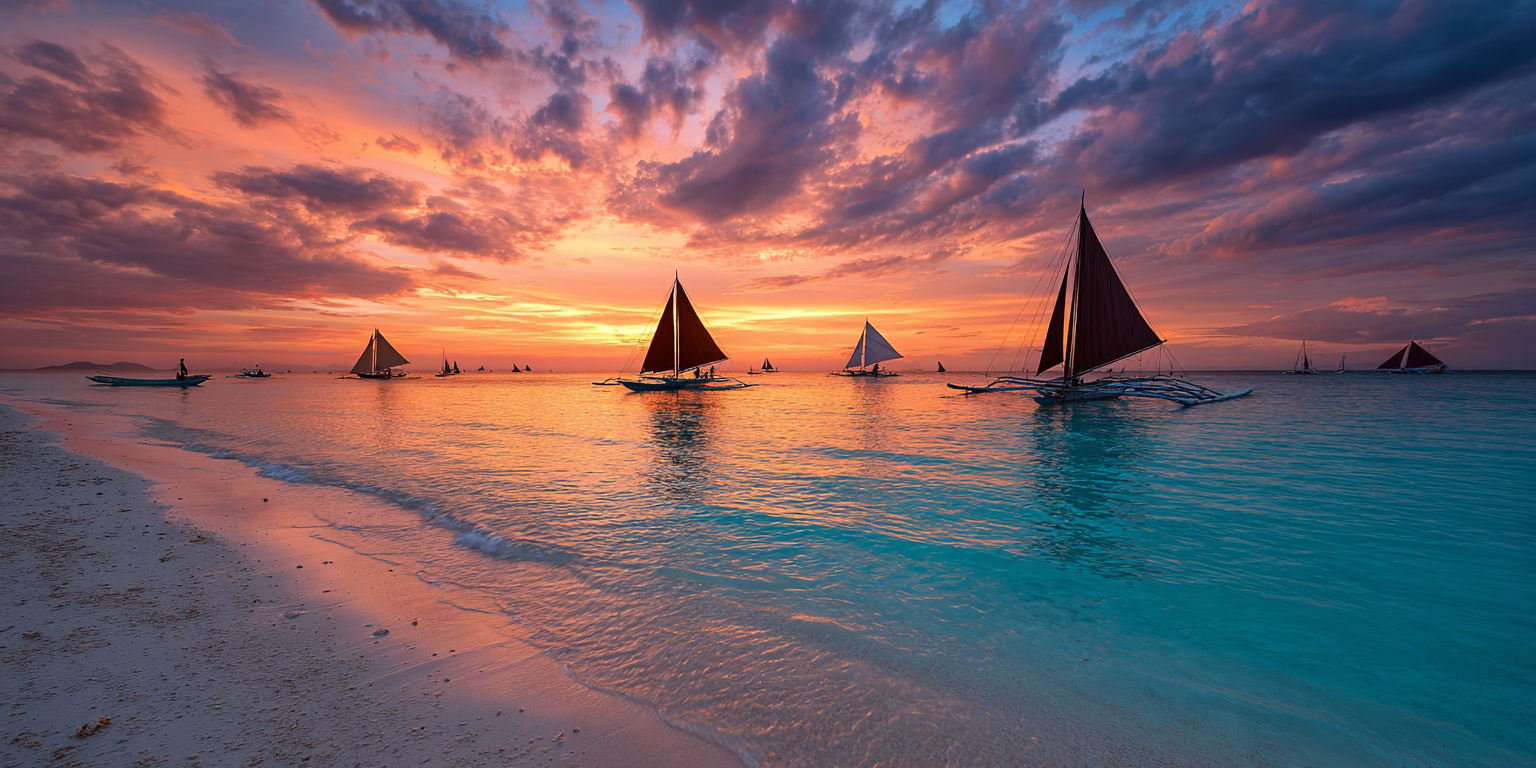
Activities are where the money goes. Paraw sailing at sunset runs roughly 1,500 to 3,000 pesos for the boat, so it is much better value split between a few people. Parasailing sits around 2,500 to 3,500 pesos, helmet diving around 1,500 to 2,000, and a discovery scuba dive around 3,500 to 4,500. The Ariel s Point day trip with cliff jumping and lunch is around 3,000 to 3,500 pesos.
What changed after the rehabilitation, and why it matters
Boracay closed for six months in 2018 and reopened under much stricter rules. It is a genuinely different island now and a lot of older advice online is simply wrong.
There are no more parties on the sand, no fire dancers on the beach, and no drinking or smoking on White Beach itself. Beach beds, masseuses and hawkers have been pushed off the sand. Single use plastics are restricted and the beach setback rules mean buildings sit further back than they used to.
Most people find the result better. The beach is cleaner and wider and the water quality improved noticeably. If you came for the wild beachfront party scene of a decade ago, it is gone, and you should plan accordingly.
Best time to visit Boracay
The wind decides everything here. From roughly November to April the amihan blows from the northeast, which leaves White Beach calm and glassy and makes Bulabog on the other side the kitesurfing hotspot. This is peak season, busiest and priciest, and the water on White Beach is at its best.
From roughly May to October the habagat reverses it. White Beach gets choppy, seaweed washes in, and the action moves to the east coast. Rates drop hard and the island is much emptier. It is not a write off, but if the calm turquoise White Beach photo is why you are coming, go in the amihan months.
Avoid Christmas, New Year, Holy Week and Chinese New Year unless you have booked well ahead. Rates roughly double and the beach path gets uncomfortable.
Beaches beyond White Beach
Puka Shell Beach at the north end is the main alternative, a long stretch of coarser crushed shell sand with very little development. It is quieter, has fewer facilities and swimming can be rougher. A tricycle from Station 1 costs around 150 to 250 pesos.
Ilig Iligan and Diniwid are small and pretty and worth an hour. Mount Luho gives the standard island viewpoint for an entrance fee of around 120 pesos, and it is fine rather than remarkable.
What to skip in Boracay
Skip the helicopter and parasailing touts on the beach path if you have not researched prices, the first quote is rarely the going rate. Skip Mount Luho if you are short on time, the view is pleasant but not worth the trip on its own.
Skip Station 2 if you value sleep. Skip booking a room described as beachfront without checking the actual location, plenty of properties on the hill side of the road use the word loosely. And skip visiting in the habagat months if calm water is the point of your trip.
Honest negative worth stating: Boracay is expensive by Philippine standards, crowded in season, and the beach path can feel like a shopping street. It is still one of the best beaches in the world, but it is not a quiet island escape and pretending otherwise sets people up for disappointment. If quiet is what you want, look at Port Barton or the smaller islands instead.
Where to stay in Boracay
Station 3 for value, Station 1 for calm and comfort, Station 2 if you want to be in the middle of everything. Diniwid or Bulabog if you want something different, the latter only if you are into kitesurfing.
Rough rates: hostel dorms around 700 to 1,200 pesos, budget private rooms 1,200 to 2,200, mid range 2,500 to 6,000, and upscale resorts from around 8,000 up. Rates in the amihan peak can be much higher again. If you are comparing Boracay against Palawan, our where to stay in Palawan guide sets out the equivalent brackets there.
Quick FAQ
How many days do you need in Boracay? Three to four nights suits most people. That gives you two full beach days, one activity day and a sunset paraw sail without running out of things to do.
Which station is best in Boracay? Station 1 for the best sand and quiet, Station 2 for restaurants and nightlife, Station 3 for value. Station 3 is the best all round choice for most travellers.
How much does Boracay cost per day? Roughly 2,000 to 2,800 pesos a day on a budget, and 5,000 to 8,000 for a comfortable mid range trip including accommodation, food and one activity.
What fees do you pay to enter Boracay? At Caticlan jetty expect a terminal fee of around 150 pesos, an environmental fee of around 150 pesos and a boat fare of roughly 50 to 100 pesos, all payable in cash.
When is the best time to visit Boracay? November to April, during the amihan wind, when White Beach is calm and clear. May to October brings choppier water and seaweed but much lower prices.
Can you still party on the beach in Boracay? Not on the sand. Since the 2018 rehabilitation, drinking, smoking and parties on White Beach itself are banned. Bars and clubs operate back from the beach instead.
Plan Your Trip to Boracay
Ready to book? Compare hotels and tours in Boracay below.
- Search Hotels in Boracay on Booking.com
- Compare Hotels in Boracay on Agoda
- Find Tours and Activities in Boracay on Klook
- Book Tours in Boracay on GetYourGuide
Booking through these links may earn us a small commission at no extra cost to you.