
If you are asking whether Mindoro is safe for tourists, the honest answer is yes, with a few caveats that have nothing to do with the things people usually worry about. Mindoro is not a conflict zone. It is not somewhere your government tells you to avoid. The realistic risks on this island are a badly timed ferry, a strong current at the wrong beach, an overpriced tricycle, and one particular bar strip that catches people off guard. None of those will ruin a trip if you know about them first.
Mindoro sits just south of Luzon, close enough to Manila that you can leave the city after breakfast and be swimming by mid afternoon. That accessibility is exactly why it gets a mixed reputation. It absorbs a lot of weekend traffic, and weekend traffic brings the usual seaside problems. Below is what actually matters, area by area, with the fees and fares you will run into.

The short answer on whether Mindoro is safe
For the areas tourists actually visit, Mindoro is about as safe as anywhere else in the Philippines that sees regular visitors. Puerto Galera, White Beach, Sabang, Calapan and Sablayan all have a visible police and tourism presence, and Oriental Mindoro currently has no travel restrictions in place across its municipalities.
What you should genuinely plan around: sea conditions and typhoon season, the tide at Sabang, cash access, and knowing which bars on the Sabang strip are ordinary bars and which are not. That last one is the single most common way visitors have a bad night here, and it is entirely avoidable.
What you can mostly stop worrying about: violent crime against tourists, which is rare, and the security stories that occasionally attach themselves to “Mindanao” and get confused with “Mindoro”. They are different islands, roughly a thousand kilometres apart. If a friend has warned you off Mindoro on the strength of a news story, check which island they actually read about.
Oriental and Occidental: why the island splits in two
Mindoro is one island but two provinces, and they feel completely different. Oriental Mindoro is the eastern side, facing Luzon, and it holds Puerto Galera and Calapan. This is the developed half, the one with the ferry traffic, the dive shops and almost all the tourist infrastructure.
Occidental Mindoro is the western side, quieter, poorer, and much harder to move around. It holds Sablayan, San Jose and the jumping off point for Apo Reef. Safety here is less about crime and more about remoteness. If something goes wrong medically on the west coast, you are a long way from a decent hospital. Plan accordingly and do not treat the two halves as interchangeable.
Our Oriental Mindoro travel guide and Occidental Mindoro travel guide break down each side in more detail.
Getting there safely: the Batangas ferry crossing
Almost everyone arrives through Batangas Port. From Manila you take a bus or van to Batangas, roughly two to three hours depending on traffic, then cross to Puerto Galera by boat.
Fastcraft services take around 1 hour 30 minutes and cost roughly 375 to 870 pesos depending on operator and seat class. RORO ferries are slower at around 2 hours but cheaper, with some operators around 300 to 425 pesos. There is a terminal fee at Batangas Port, usually around 30 pesos though some travellers report higher, and Puerto Galera charges an environmental user fee of around 120 pesos per tourist on arrival. Budget for these separately, they are collected in cash and they are not optional.
The crossing itself is the part worth thinking about. The Verde Island Passage can get genuinely rough, and small fastcraft in a swell is an unpleasant experience. If the coastguard suspends sailings, they have a good reason. Do not go looking for a private banca to take you across after an official suspension, which is how most ferry incidents in the Philippines actually happen. Wait it out.
Take the earliest crossing you reasonably can. Afternoon seas are usually worse than morning seas, and if your boat is cancelled you still have the rest of the day to sort out a plan.
Puerto Galera safety: what the tourist strip is really like
Puerto Galera is not one place. It is a municipality containing several very different beaches, and lumping them together is why people get contradictory advice about it.
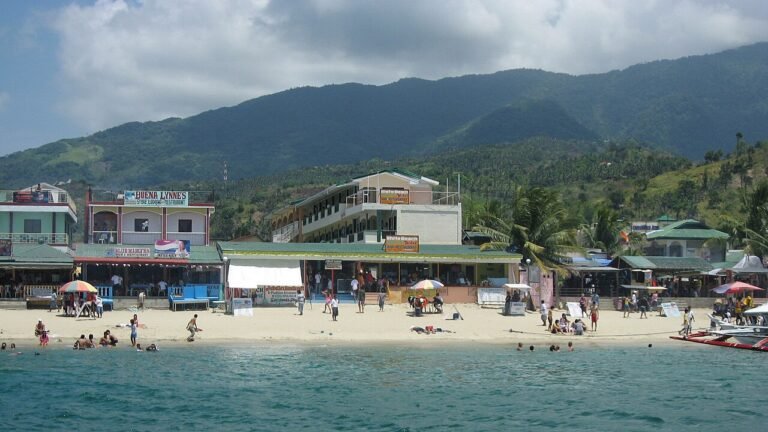
Sabang is the dive and nightlife hub. White Beach is the mainstream resort strip, loud on weekends, family oriented by day. Aninuan and Talipanan further west are quiet, low key and where you go if the other two sound exhausting. Muelle is the port area, functional rather than scenic.
All of them are walkable and generally safe in daylight. Petty theft is the realistic crime concern, mostly from unattended bags on the sand and unlocked rooms. Standard precautions cover it.
Sabang after dark, and the bar strip you should understand first
This is the part most guides skip, and it is the reason a lot of visitors leave Puerto Galera with a bad impression they did not need to have.
Sabang has two overlapping night scenes sharing the same short waterfront. One is ordinary: dive bars, restaurants, live music, people who have been underwater all day drinking beer and talking about it. The other is a hostess bar scene, the kind locally described as GRO or KTV style venues, where the business model is buying drinks for staff who sit with customers. These are legal and they are not hidden, but they are also not what a lot of arriving tourists think they are walking into.
The reason this matters for your safety is billing. In venues like these the drinks bought for staff are charged at a large multiple of the normal price, and the bill lands at the end. People who wander in without understanding the model routinely get a shock, and disputes over bills are where the genuine trouble on this strip starts.
How to tell them apart before you sit down. Ordinary bars have menus with visible prices, other customers eating food, and nobody standing outside inviting you in. Venues running the hostess model tend to have staff at the door actively pulling people in, dim interiors with a seating area rather than a bar you order at, and no posted drink prices. If someone approaches you on the street and steers you towards a specific bar, they are being paid to do that.
None of this is a reason to avoid Sabang. It is a reason to look at a place for ten seconds before you commit, ask what a beer costs before ordering, and keep a running eye on your tab anywhere that will not show you a price list. If you want a straightforward night out, White Beach and the restaurant end of Sabang are uncomplicated.
Families and anyone who would rather sidestep the whole question should base themselves at White Beach, Aninuan or Talipanan instead of central Sabang.
Water safety: tides, currents and the Sabang seawall
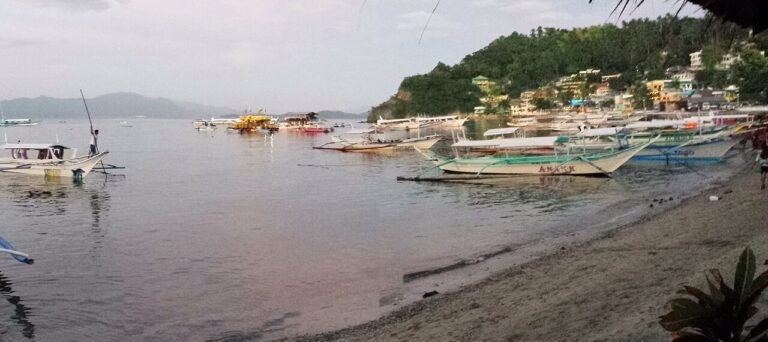
The most underrated hazard in Puerto Galera is the tide at Sabang. At high tide the water comes right up against the seawall that the bars and shops are built on. Walking back along the beach at night at high tide means wading, sometimes deeper than you expect, over uneven ground you cannot see. People turn ankles doing this, and a few have done considerably worse after a long evening. Use the road instead. It is two minutes longer and it is dry.
In the water, the currents around the headlands between Sabang and Big La Laguna are stronger than the calm surface suggests. Swim inside the marked areas near the resorts rather than striking out around a point. White Beach is generally gentler and shelves slowly, which is why families use it.
Jellyfish are not a significant problem at the main Puerto Galera beaches. Experienced divers here report rarely seeing them at Sabang, Dungon, Big and Small La Laguna or Coco Beach. That can change seasonally, so if locals say do not swim today, take the advice.
Boat traffic is the real in water risk. Sabang bay is busy with bancas and dive boats, and a swimmer’s head is very hard to see from a moving boat. Stay inside the buoys.
Diving safety in Puerto Galera
Puerto Galera is one of the better dive destinations in the country and the standard of the established shops is good. The safety questions are the ones you should ask anywhere: is the shop affiliated with a recognised training agency, when was the equipment last serviced, what is the guide to diver ratio, and what is the plan if something goes wrong.
The specific local factor is current. Sites like the Canyons and Hole in the Wall are drift dives with real current, and they are not appropriate for a nervous open water diver on their fourth dive regardless of what a shop tells you when it wants the booking. Be honest about your experience level. A shop that shrugs and books you anyway is telling you something about how it operates.
The nearest recompression chamber is not on the island. That is a reason to dive conservatively here, not a reason to avoid diving.
Is Occidental Mindoro safe? The western side
Occidental Mindoro sees a fraction of the visitors and the safety picture shifts accordingly. Crime is not the issue. Distance is.
Sablayan is the base for Apo Reef, which is one of the best dive sites in Southeast Asia and a long way from help. Trips out there are typically overnight or multi day on a boat. Check that the operator carries oxygen, has a working radio or satellite communication, and has a realistic plan for evacuating someone. Most do. Ask anyway.
Road travel between Oriental and Occidental Mindoro is slow and the mountain crossing is rough. Night driving on these roads is genuinely worth avoiding, less for security reasons than because the road surface, unlit vehicles and occasional livestock make it a bad combination after dark.
Our guide to things to do in Occidental Mindoro covers Apo Reef and the tamaraw sanctuary in more depth.
Calapan, Roxas and the ferry towns
Calapan is the capital of Oriental Mindoro and a working provincial city rather than a destination. It is safe in the ordinary sense, with the ordinary caution you would apply in any Philippine city: watch your bag at the terminal, use registered tricycles, do not walk through unlit areas late carrying obvious valuables.
Roxas on the east coast is the ferry port for Caticlan and onward Boracay traffic. It is functional and a bit chaotic around sailing times. The main hazard there is fixers at the terminal offering to arrange tickets. Buy at the counter.
Petty crime, scams and the hard sell
The most common complaint in Puerto Galera is not crime, it is persistence. Beach vendors and touts on White Beach and Sabang can be relentless, and a polite no often does not end the conversation. This is annoying rather than dangerous. A firm, friendly, repeated no works better than engaging.
Actual scams to know about. Tricycle drivers quoting a “special rate” for tourists, which is usually two or three times the real fare. Tour operators selling island hopping at the beach with no fixed office, which occasionally means no boat the next morning. And the bar billing issue covered above, which is the costliest of the three.
Book tours through your accommodation or an operator with a physical shopfront. It costs slightly more and it gives you somewhere to go if the trip does not happen.
Transport safety on the island
Tricycles handle most short trips. Around Puerto Galera expect roughly 50 to 150 pesos for a hop between beaches depending on distance, more at night. Agree the fare before you get in, every time. Jeepneys between towns are cheap, usually under 100 pesos for medium distances, and perfectly safe if slow.
Vans between Calapan and other towns are faster and more comfortable. They are also driven with more enthusiasm than caution on mountain sections. If you are prone to motion sickness, sit at the front.
Renting a motorbike is common and is the single most likely way a visitor gets hurt in Mindoro. Roads are narrow, surfaces are patchy, and many travel insurance policies will not pay out if you were riding without the correct licence. If you have never ridden before, Mindoro is not where you learn.
Bancas for island hopping should have life jackets on board. If they do not, pick a different boat. This is not an unreasonable ask and operators are used to being asked.
Health, water and medical care
Do not drink the tap water. Bottled or refilled purified water is available everywhere and costs very little, usually around 25 to 50 pesos for a large bottle. Ice in established restaurants is generally made from purified water and is fine.
Dengue is present, as it is across the Philippines, and it is a bigger practical risk than anything else on this page. Mosquito repellent in the late afternoon and early evening is worth the small effort. There is no vaccine you can rely on as a traveller, so avoiding bites is the whole strategy.
Medical facilities in Puerto Galera handle minor problems. Anything serious means Calapan, or a transfer to Manila. This is the strongest argument for travel insurance on a Mindoro trip, and for diving well within your limits.
Bring any prescription medication with you. Pharmacies in the tourist areas are limited and stock is unpredictable.
Typhoons, sea conditions and when not to go
Typhoon season runs roughly June to November, with the peak around August and September. Mindoro is not usually a direct hit target the way Samar and Leyte are, but the sea state closes ferry crossings regularly during this window.
The practical risk is not being hurt in a storm. It is being stuck. If a signal goes up and Batangas suspends sailings, you may be on the island for an extra two or three days. Do not book a Mindoro trip that ends the day before an international flight during typhoon season. Leave a buffer day, and treat that buffer as non negotiable.
December to May is the dry, reliable window. February to April is the sweet spot for sea conditions and visibility if you are diving. Our guide to the best time to visit Puerto Galera covers the seasonal detail.
Honest negative: Holy Week and long weekends turn White Beach into a crowded, loud, expensive version of itself, and boat capacity gets stretched. If you want quiet, avoid Philippine public holidays entirely.
Money, ATMs and why cash matters here
This is a genuine practical safety issue in Puerto Galera. There are very few ATMs, they are frequently offline or out of cash, and many shops and restaurants do not take cards. Arriving on a Friday evening with no pesos and an empty ATM is a real scenario.
Bring enough cash from Manila or Batangas to cover at least your first few days, plus the environmental fee and terminal fees. Split it and do not carry the whole amount around. Most accommodation has a safe, and using it is sensible.
Larger resorts take cards. Small guesthouses, tricycles, sari sari stores, most restaurants and all the fees do not.
Solo travellers, women and families
Solo travel in Mindoro is straightforward. Filipinos are welcoming, English is widely spoken, and the tourist areas are used to independent visitors.
For solo women, the main friction is attention rather than threat, and it is concentrated in the Sabang bar strip after dark. Basing yourself at White Beach, Aninuan or Talipanan removes most of it. The usual precautions apply: watch your drink, tell someone where you are going, use registered transport at night rather than a stranger’s motorbike.
Families do well at White Beach, Aninuan and Talipanan. The water is calmer, the atmosphere is ordinary seaside rather than nightlife, and there is enough food and accommodation choice. Central Sabang is not where you want a family base.
Where to stay for the safest, easiest trip
Budget, roughly 800 to 1,500 pesos a night. Simple fan or aircon rooms at White Beach and Aninuan, and backpacker places behind the Sabang strip. Check the room locks and whether there is a safe.
Mid range, roughly 2,000 to 4,000 pesos a night. Small resorts with pools at White Beach, Aninuan and Big La Laguna. This bracket buys you a quieter setting and staff who will arrange transport and tours for you, which solves several of the problems on this page at once.
Upper, roughly 5,000 pesos and up. A handful of larger resorts around Coco Beach and the western bays, generally with their own boat transfers. If you want to skip the tricycle and tout experience entirely, this is how.
For a fuller breakdown see our guide to things to do in Puerto Galera.
What it actually costs to do Mindoro safely
A day at White Beach on a budget: accommodation around 1,000 pesos, food around 600 pesos across three meals, tricycles around 200 pesos, water and incidentals around 150 pesos. Call it roughly 1,950 pesos a day per person, less if sharing a room.
A weekend from Manila, mid range, per person: bus and ferry both ways around 1,400 pesos, environmental and terminal fees around 180 pesos, two nights at roughly 2,500 pesos a night shared works out around 2,500 pesos, food and drink around 2,000 pesos, one dive trip or island hopping tour around 2,500 pesos. Roughly 8,600 pesos for the weekend, before souvenirs.
The safety relevant line in that budget is the tour. Paying 2,500 pesos through your resort rather than 1,800 pesos to someone on the sand is buying accountability, and it is the single best value upgrade on the list.
What to skip in Mindoro
Skip White Beach on a Philippine long weekend unless crowds are the point. Skip any bar on the Sabang strip that will not show you a drink price. Skip motorbike rental if you are not an experienced rider. Skip the last ferry of the day in bad weather, and skip anyone offering a private boat crossing after sailings have been suspended.
Skip Puerto Galera altogether if what you want is a pristine, quiet, undeveloped island. It is not that, and pretending otherwise is how people arrive disappointed. It is a busy, convenient, occasionally scruffy resort town with excellent diving attached. Occidental Mindoro is closer to the quiet version, at the cost of much harder travel.
Nearby Islands That Pair Well With Mindoro
Mindoro sits in the middle of a cluster of islands that see a fraction of its traffic, and if you are already coming through Batangas port the connections are easy. Marinduque is the quiet one immediately east, best known for the Moriones Festival at Easter and otherwise almost empty. Romblon to the southeast has the marble quarries and some of the cleanest water in the country, reachable by ferry from Roxas in Oriental Mindoro. Both carry the same practical caveat as Mindoro itself: the ferries are the weak link, so build in buffer days rather than tight connections.
If your question was specifically about the dive and party end of the island, the detailed version is in our companion piece on whether Puerto Galera is safe for tourists, which goes further into the Sabang strip, the dive operator standards and the current situation at White Beach.
Quick FAQ
Is Mindoro safe for tourists right now? Yes. Oriental Mindoro has no travel restrictions in place and all municipalities are open to visitors. The main tourist areas of Puerto Galera have a visible police and tourism presence.
Is Puerto Galera safe at night? Generally yes, in the sense that violent crime against tourists is rare. The two things to manage are the Sabang bar strip, where unclear billing causes most disputes, and walking the beach at high tide, which you should not do. Use the road.
Is Mindoro the same as Mindanao? No, and this confusion causes a lot of unnecessary worry. They are separate islands roughly a thousand kilometres apart with completely different security situations. Advisories about parts of Mindanao do not apply to Mindoro.
Do I need cash in Puerto Galera? Yes, and more than you think. ATMs are few and often offline, and many places do not take cards. Bring pesos from Manila or Batangas, including around 120 pesos for the environmental fee and around 30 pesos for the Batangas terminal fee.
Is the ferry to Puerto Galera safe? The scheduled operators are fine and the crossing takes around 1 hour 30 minutes by fastcraft. The rule is simple: if sailings are suspended for weather, wait. Never take a private boat across after a suspension.
Is Mindoro safe for solo female travellers? Yes, with the usual precautions. The main friction is attention around the Sabang nightlife strip after dark. Staying at White Beach, Aninuan or Talipanan avoids most of it.