
Batad draws most of the attention when travelers plan a trip to Ifugao, and our dedicated Batad article covers that village in full. But Ifugao province holds several other rice terrace clusters, a wartime shrine, and living cultural traditions spread across towns most visitors never reach. This guide covers what is worth seeing beyond Batad, from Kiangan to Mayoyao.
Nagacadan Rice Terraces in Kiangan
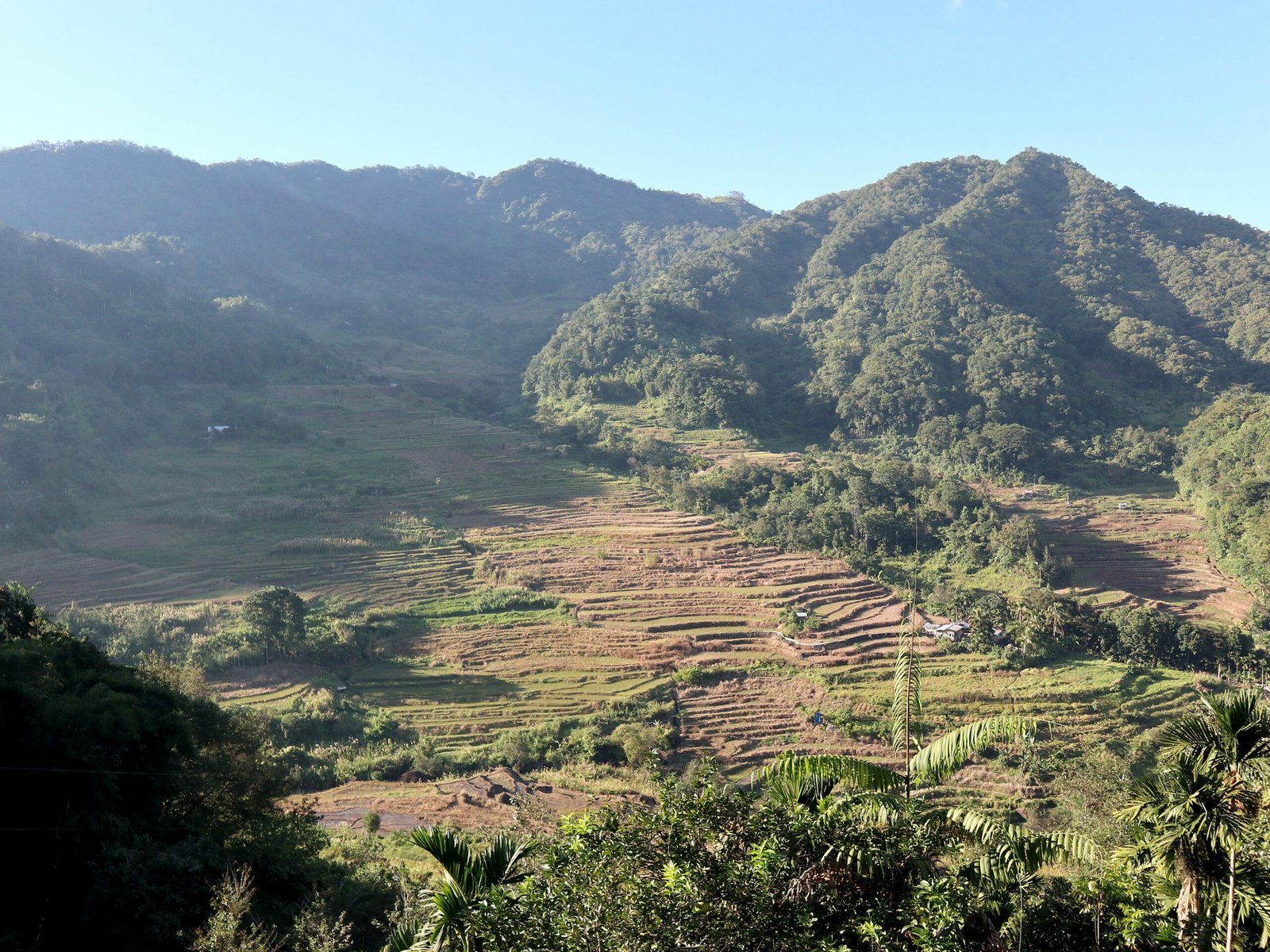
Kiangan sits about 25 minutes by shared tricycle from Lagawe, which is itself roughly 30 to 40 minutes from Banaue. Its standout site is the Nagacadan Rice Terraces in Barangay Nagacadan, famous for being split by a river into two ascending, mirror image amphitheaters of stone walled paddies, a double amphitheater look that sets it apart from Batads single bowl shape. UNESCO listed since 1995 and covering about 150 hectares, Nagacadan is also home to local farmers associations running Rice Cycle Tours, which let visitors join in weeding, harvesting or rice cake making depending on the season, a more hands on experience than simply viewing the terraces from above.
The Kiangan National Shrine
Also in Kiangan, at Barangay Linda, the Kiangan National Shrine, sometimes called the Ifugao War Memorial Shrine, is a pyramid shaped concrete monument built in the form of an oversized Ifugao house. It marks the September 1945 endgame of General Tomoyuki Yamashitas campaign, when USAFIP-NL guerrillas, many of them Igorot fighters, cornered him near Kiangan before he was flown to Baguio to formally sign surrender documents at Camp John Hay. Historians still debate the precise details of what happened on Kiangan soil, but the shrine commemorates the event and adds a layer of wartime history to a Kiangan visit. The surrounding countryside also holds notable rock formations, including Imbuliklik Rock and Dumaling Rock near Barangay Duit, worth a stop if you have extra time.
Hapao Rice Terraces and Bogyah Hot Spring in Hungduan
Hungduan, about an hour by jeepney from Banaue with jeeps typically running in the early afternoon, holds the Hapao Rice Terraces, also called Hapao-Baang-Nungulan or Ampacao, another UNESCO listed, amphitheater shaped cluster estimated to be over 2,000 years old. The slopes here are wider and gentler than Batads, making them easier to walk through and drawing far fewer visitors. Nearby, Bogyah Hot Spring sits between Hapao and Baang, where a natural spring running between 39 and 41 degrees Celsius flows alongside the cold Hapao River, separated only by a stone wall, giving travelers a rare chance to soak in the region after a day of walking the terraces.
Mayoyao: The Least Visited Terraces
Mayoyao sits roughly 50 kilometers from Banaue but takes three to four hours to reach over rough dirt roads, with a round trip tricycle costing around 2,500 pesos. It is the least visited of Ifugaos major terrace clusters, spanning 25 sub-clusters across 10,360 hectares. Its signature look sets it apart from Banaue and Batad: traditional bale and alang houses built directly within and among the terraces themselves, giving the area a lived in, almost village-in-the-fields feel rather than the more open viewpoints found elsewhere. That same remoteness has kept it unusually well preserved, appealing to travelers who want to see Ifugao terraces without any crowds at all.
The Hudhud Chants
The Hudhud, a UNESCO Intangible Cultural Heritage epic inscribed in 2008, is chanted mainly by elder women during rice sowing, harvest, wakes and reburials. Travelers who time a visit to planting or harvest season have the best chance of hearing it performed, though it is a living tradition tied to specific agricultural and ceremonial moments rather than a scheduled tourist show.
Ifugao Wood Carving
Bul-ul, the carved rice god figures central to Ifugao tradition, are produced across the province, with Kiangan and Lagawe favoring a squatting style figure and Banaue favoring a standing style. The Hapao and Hungduan area is considered something of a carving origin point, and travelers interested in the craft can often find carvers at work in these towns alongside the rice terrace visits.
Getting Around Ifugao
Banaue remains the practical jump off point for the whole province, with Lagawe, Kiangan, Hungduan and Mayoyao branching off from there by tricycle or jeepney. Dry season, from November to May, matters here as much as it does around Banaue itself, arguably more given the rougher, unpaved routes leading to Hungduan and especially Mayoyao, where wet season travel can add significant time and difficulty to an already long trip.
Plan Your Trip to Ifugao
Ready to book? Compare hotels and tours in Ifugao below.
- Search Hotels in Ifugao on Booking.com
- Compare Hotels in Ifugao on Agoda
- Find Tours and Activities in Ifugao on Klook
- Book Tours in Ifugao on GetYourGuide
Booking through these links may earn us a small commission at no extra cost to you.
More Ifugao Guides
Planning the rest of your trip? Check out our full travel guide for logistics, costs and practical tips.
Quick FAQ
How is Nagacadan different from Batad?
Nagacadan is split by a river into two mirror image amphitheaters, a double amphitheater shape, while Batad has a single bowl shaped cluster of terraces, making the two visually distinct despite both being UNESCO listed.
Is Mayoyao worth the long drive from Banaue?
For travelers who want to see Ifugao terraces with essentially no crowds and a genuinely lived in feel, yes, though the three to four hour drive over rough roads means it works best for those with extra time and a taste for remote destinations.
Can I swim at Bogyah Hot Spring in Hungduan?
Yes. The spring runs between 39 and 41 degrees Celsius and sits right alongside the cold Hapao River, separated by a stone wall, giving visitors the option to move between hot and cold water.
When is the best time to hear the Hudhud chants?
The Hudhud is performed by elder women during rice sowing, harvest, wakes and reburials, so travelers hoping to hear it should time their visit around the planting or harvest season rather than expecting a scheduled performance.
Do I need to go through Banaue to reach Kiangan, Hungduan or Mayoyao?
Banaue is the most practical jump off point for the province, with onward tricycle or jeepney connections to Lagawe, Kiangan, Hungduan and Mayoyao, though travel times and road conditions vary significantly between destinations.