
Kalinga sits in the Cordillera region north of Mountain Province, and for most travelers a single name draws them there: Whang-od, the tattoo artist whose village of Buscalan has become one of the most talked about pilgrimage sites in Philippine travel. But the province holds more than one hilltop tattoo studio. Whitewater rapids on the Chico River, a mountain shaped like a sleeping woman, and rice terraces that see a fraction of the visitors Banaue gets round out a trip here. This guide covers what to see once you have made the trek up to Tinglayan and beyond.
Buscalan Village and Whang-od
Buscalan village, in Tinglayan municipality, is Kalingas biggest draw by far. From the jump off point at Bugnay, reached by jeepney or van from Tabuk City in roughly one to one and a half hours, visitors face a steep concrete and dirt trail of 30 minutes to an hour, crossing streams and passing rice terraces on the way up. Whang-od Oggay is widely regarded as the last living mambabatok, or traditional hand tap tattooist, of the Butbut Kalinga people, and her name alone has turned this once quiet mountain village into a genuine destination. Given her age, she now mostly applies her signature three dot tattoo rather than full designs, while her grandnieces Grace Palicas and Ilyang Wigan, trained as her true apprentices, handle the larger and more intricate traditional tattoos using the same pambatok technique: a bamboo stick tipped with a pomelo or calamansi thorn, tapping a soot and water pigment into the skin. There are no appointments. A sign up list forms each morning around 7 in the morning, handled first come, first served, and waits can run long during peak weekends and holidays, so travelers should plan to arrive early and expect to spend at least a night in the village.
Whitewater Rafting on the Chico River
The Chico River, the longest in the region, offers some of the best whitewater rafting in the Philippines. The Ullalim Run, from the Pasil tributary down to Tabuk, is the beginner friendly stretch, running mostly Class III rapids suited to first time rafters. The more advanced Mataguan Run, from Tinglayan to Pasil, mixes Class III and IV rapids through narrow limestone gorges and canyons, and can spike to Class V or an unraftable Class VI during the rainy season, so timing matters for anyone planning a trip around the river.
Sleeping Beauty Mountain and Mount Binuluan
In Tinglayan, Sleeping Beauty Mountain, also called Mount Patukan or Mantingoy and standing at 1,906 meters, takes its name from a reclining woman silhouette visible from certain angles. Its trails were originally cut for hunting rather than leisure hiking, which makes for a genuinely rugged climb, rewarded with sweeping views over the Chico River valley. Nearby, Mount Binuluan, part of the Ambalatungan Range at around 2,329 meters, offers a milder to moderate trail through pine forest leading to a summit with fumarole fields, solfataras and hot springs, a more approachable option for hikers who want geothermal features without the harder scramble.
Tabuk City: The Gateway
Tabuk City functions mainly as the provinces transport and commercial hub rather than a tourist destination in its own right, and most travelers pass through on the way to Tinglayan or Buscalan. It does hold a couple of worthwhile stops, including the century old Patiking Tunnel and Bangabanga Falls, useful if you have a few hours to spare before or after the trip into the mountains.
Rice Terraces and Hanging Bridges Around Tinglayan
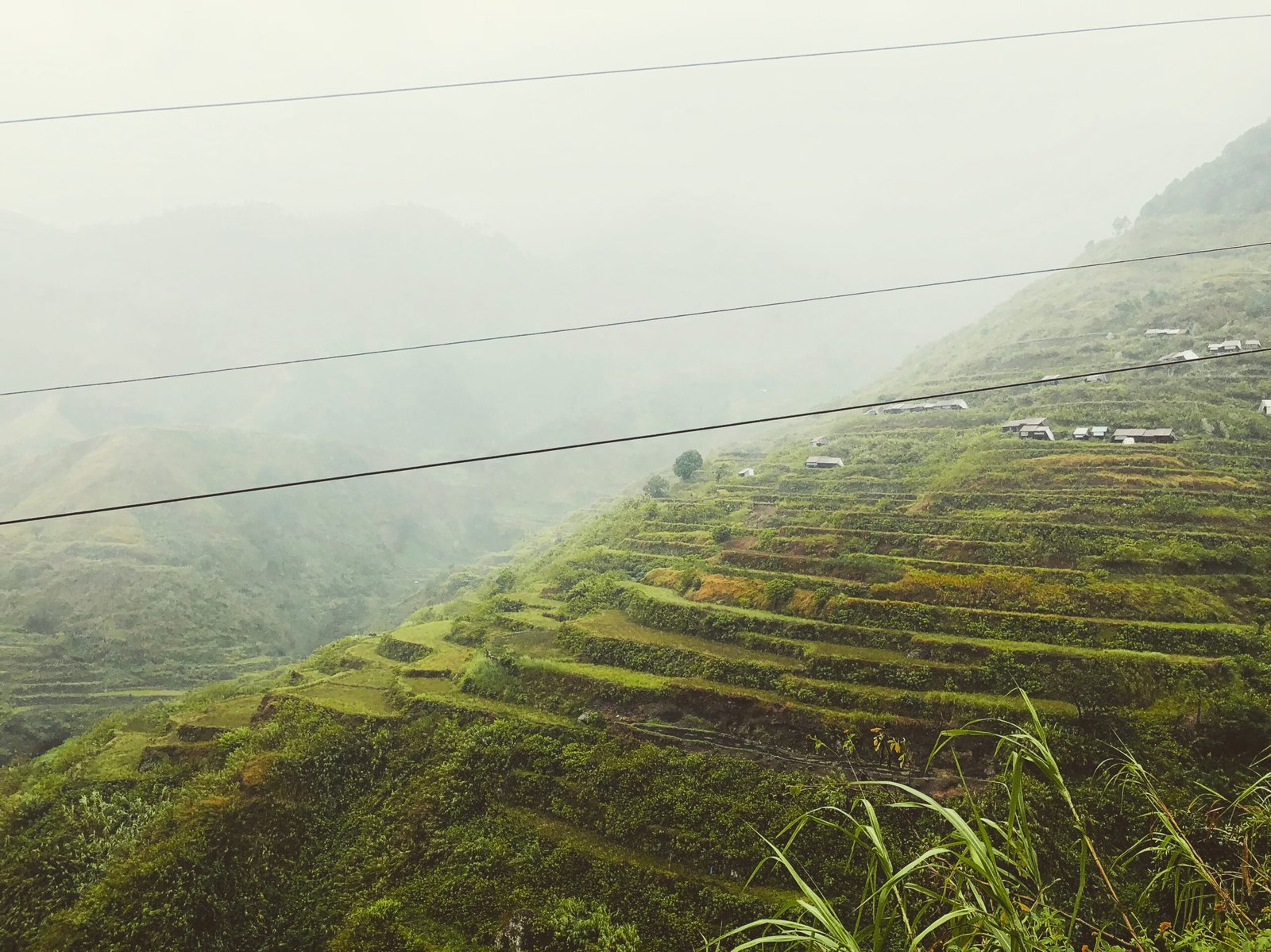
Beyond Buscalan, the Tinglayan, Lubo and Mangali rice terraces see a fraction of the visitors that Banaue and Batad draw further south, and the Sungang viewpoint overlooking Tulgaos terraces offers a quieter spot to take them in. A hanging bridge connects Bugnay to the national highway, adding a scenic stop on the way in or out of the trekking area. Hot springs also exist at Kabunian, in Galdang and Maglucsad, and at Maconacon, giving travelers a place to unwind after a day of trekking or rafting.
Getting to Kalinga
From Manila, Victory Liner runs a direct bus to Tabuk from Cubao or Kamias, taking roughly 10 to 12 hours. From Baguio, buses via Dangwa, GL or the Bontoc route reach Tabuk in about 9 to 12 hours, often running overnight. From Tabuk, onward travel to Bugnay and the Buscalan trailhead adds another one to one and a half hours by jeepney or van, followed by the trek itself. Dry season, from November to April, is the best time to visit, since trails around Buscalan and Sleeping Beauty Mountain become dangerously slippery during the June to September rains, and the Chico Rivers rapids can become too dangerous to run.
Plan Your Trip to Kalinga
Ready to book? Compare hotels and tours in Kalinga below.
- Search Hotels in Kalinga on Booking.com
- Compare Hotels in Kalinga on Agoda
- Find Tours and Activities in Kalinga on Klook
- Book Tours in Kalinga on GetYourGuide
Booking through these links may earn us a small commission at no extra cost to you.
More Kalinga Guides
Planning the rest of your trip? Check out our full travel guide for logistics, costs and practical tips.
How the Buscalan Tattoo Queue Actually Works
This is the part almost every guide glosses over, and it is the main reason people leave disappointed. Whang od is well into her hundreds and no longer tattoos all day every day. On most days she does a small number of her signature three dot mark, and the fuller designs are done by her grandnieces Grace and Ilyang, who she trained and who use the same hand tapped technique with a thorn and soot.
You register on arrival in the village, you are given a number, and you wait. On a busy weekend that can mean several hours, and the queue sometimes does not clear. Weekdays are dramatically better than weekends. If a specific artist matters to you, say so at registration rather than assuming. Nobody can promise you a tattoo from Whang od specifically, and any operator who does is overselling.
Tattoo prices are set by design rather than negotiated, commonly starting around 500 PHP for the three dots and rising with size and complexity. Bring cash in small notes, because there is no ATM anywhere near the village.
Getting to Buscalan, Step by Step
From Bontoc or Tabuk, take a jeepney or van along the Chico River road and get off at Buscalan junction, commonly called Bugnay junction. Fares from Bontoc run around 150 to 250 PHP and the ride takes roughly two hours. From Tabuk allow around three hours.
From the junction it is a walk of roughly forty minutes to an hour and a half up to the village, depending on which trail is in use and your fitness. It is a genuine uphill hike on an uneven path, not a stroll, and it is miserable in rain. Registered guides wait at the junction and the guide fee is a set rate, commonly around 500 to 800 PHP per group, plus a village entrance fee of roughly 100 to 200 PHP per person. Porters are available at around 300 to 500 PHP if you are carrying a heavy pack.
Where to Stay in Buscalan and Tinglayan
Buscalan has no hotels. You stay in a homestay, which means a mat on the floor of a family home, a shared bathroom, cold water and no wifi. It costs around 300 to 500 PHP per person per night, and meals cooked by the family run around 150 to 250 PHP each. This is not a hardship if you go in expecting it, and it is the single most memorable part of the trip for most people. It is a poor choice if you need privacy or comfort.
Tinglayan, down on the main road, has a handful of simple inns at around 500 to 1,000 PHP with actual beds and, sometimes, hot water. Tabuk City, the provincial capital, has proper hotels at around 1,000 to 2,500 PHP and is the place to clean up before or after.
Etiquette in Buscalan
Buscalan is a small working village, not an attraction, and the volume of visitors has changed it considerably. A few things matter. Ask before photographing people, especially elders, and accept no as an answer. Do not photograph inside homes without being invited. Bring your rubbish back out with you, because waste disposal in the village is a real problem that visitors created.
Buy from the village rather than bringing everything in, since the income is the point. Small useful gifts for your host family are appreciated far more than sweets for children, which local guides will tell you plainly they would rather you did not hand out.
What a Kalinga Trip Costs
Assuming you come from Bontoc, a two night trip works out roughly as follows. Transport in and out around 300 to 500 PHP. Guide and entrance fees around 700 to 1,000 PHP if you are in a small group. Two nights homestay around 600 to 1,000 PHP. Meals around 900 to 1,500 PHP. A tattoo from around 500 PHP upward.
All in, most people spend somewhere around 3,500 to 6,000 PHP per person for two nights, which makes Kalinga one of the better value trips in the country. Whitewater rafting on the Chico River is the one thing that changes the arithmetic, typically running several thousand pesos per person depending on the section and group size.
Best Time to Visit Kalinga
The dry months from roughly November to April are the practical window. The trail to Buscalan turns to slick mud in heavy rain, the mountain roads are landslide prone, and the Chico River runs too high to raft safely at the peak of the wet season, which is broadly July to September.
December to February is cold at night, genuinely so, and homestays have thin blankets. Bring a fleece and a hat. Rafting is usually at its best in the shoulder months when the river has water but is not in flood.
What to Skip and Some Honest Warnings
Skip the one day Buscalan trip. Operators sell it and it is a bad experience: a long drive, a hard hike, a rushed queue and a drive back in the dark. Two nights is the minimum that makes sense.
Be realistic about the tattoo. Many visitors travel for two days, queue for four hours and get three dots from an artist who is not Whang od, and then feel let down. If the tattoo is the entire reason for the trip, your expectations are set up badly. Go for the village, the terraces and the walk, and treat the tattoo as a bonus.
One more thing worth saying plainly: Kalinga had a reputation for tribal conflict decades ago and that reputation lingers far longer than the reality. Visitors travelling with registered guides on the usual routes have a very ordinary time. The real risks here are the road, the weather and the hike, not people. Most visitors arrive from Sagada and Bontoc in Mountain Province, and many carry on south to Batad or west into Abra, so Kalinga slots neatly into a wider Cordillera loop rather than a trip of its own.
Quick FAQ
Do I need to book an appointment to get a tattoo from Whang-od or her apprentices?
No. A sign up list forms each morning around 7 a.m. in Buscalan, handled first come, first served, and waits can be long on weekends and holidays, so arriving early and staying at least one night improves your chances.
How difficult is the trek to Buscalan?
The trek from the Bugnay jump off point takes roughly 30 minutes to an hour on a steep concrete and dirt path with stream crossings, making it manageable for most reasonably fit travelers without requiring technical trekking experience.
Is Chico River rafting suitable for beginners?
Yes, on the Ullalim Run from the Pasil tributary to Tabuk, which runs mostly Class III rapids. The more advanced Mataguan Run mixes Class III and IV rapids and is better suited to experienced rafters.
What is the best time of year to visit Kalinga?
Dry season, from November to April, offers the safest trail conditions for trekking and the most manageable river conditions for rafting, since the June to September rains can make trails slippery and rapids too dangerous to run.
How do I get from Manila to Kalinga?
Victory Liner runs a direct bus from Cubao or Kamias to Tabuk City, taking roughly 10 to 12 hours, with onward jeepney or van travel needed to reach Bugnay and the Buscalan trailhead.