
Working out where to stay in Manila is genuinely harder than it looks, and most travellers get it wrong the first time. The problem is that “Manila” on a booking site can mean sixteen different cities stitched together, and a hotel that looks central on the map can be ninety minutes from where you actually want to be. Get the area right and Manila is a fun, cheap, food obsessed city. Get it wrong and you will spend your trip sitting in traffic wondering why anyone recommended this place.
This guide breaks down the areas that are worth your money, roughly what a bed costs in each, and, just as importantly, which streets to steer clear of. All prices are in Philippine pesos and are rough guides from mid 2026. Rates move a lot with season, and December through February is the expensive stretch.
Where to Stay in Manila: The Short Answer
If you do not want to read three thousand words, here is the compressed version.
First time in the Philippines, one or two nights before a flight south: stay in Makati. It is safe, walkable by Manila standards, has the best food per square kilometre, and getting to the airport is manageable.
You want clean, modern and predictable: Bonifacio Global City, usually just called BGC. It barely feels like Manila, which is either the point or the problem depending on what you came for.
You are on a tight budget and want to see the historic city: Malate or Ermita. Cheap, central, close to Intramuros and Rizal Park, and noticeably scruffier than the other two.
You have an early morning domestic flight, perhaps on to Coron: Pasay or the Bay Area, near the airport terminals.
You are staying a week or more and want to live like a local: Quezon City or Ortigas.
First, Understand That Manila Is Not One City
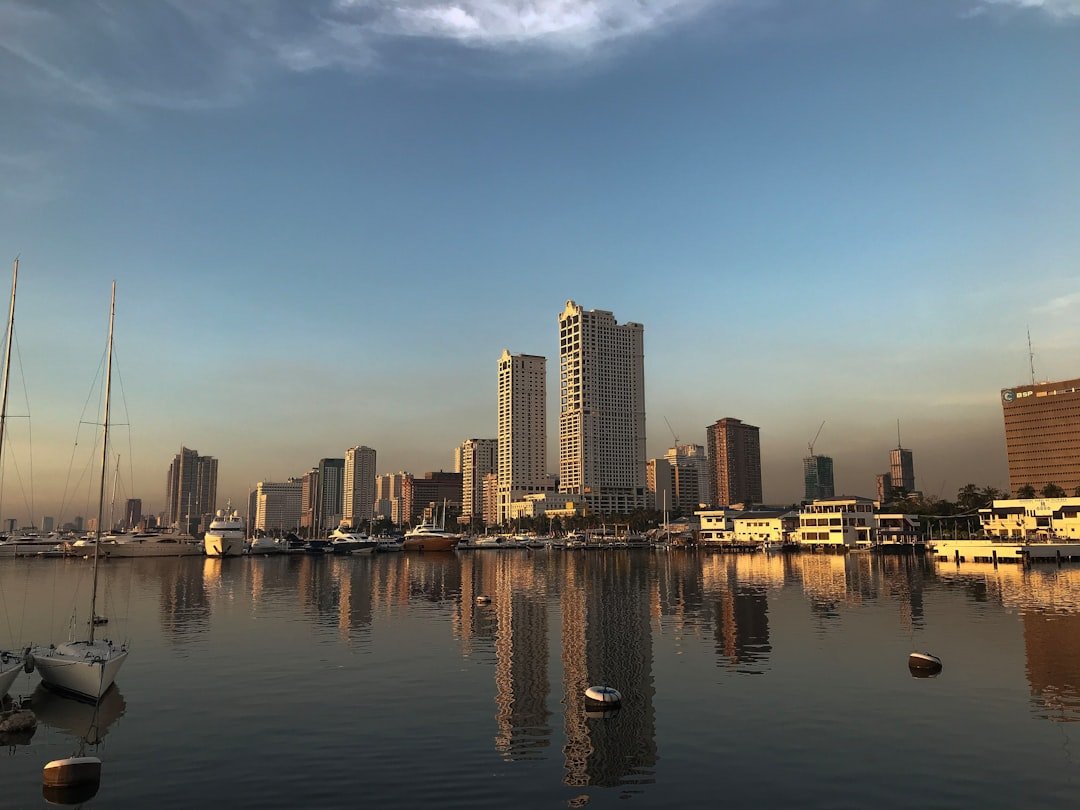
This trips up almost everyone. The City of Manila proper is one of sixteen cities that make up Metro Manila, and it is not the one with the skyscrapers you see in photos. Those are Makati, BGC in Taguig, and Ortigas in Pasig. When a hotel calls itself “Manila”, check which city it is actually in before you book.
Distances are short and journeys are long. Makati to Intramuros is roughly seven kilometres. In light traffic that is twenty minutes. At six in the evening on a Friday it can be an hour and a half. Manila traffic is not a mild inconvenience you can plan around, it is the single biggest factor in whether you enjoy your stay, and it is why the area you pick matters more here than in most cities.
The practical rule: pick one base, and plan your days around that base. Trying to “see all of Manila” from one hotel by bouncing across the metro will burn most of your trip in a car.
Makati: The Safe Default for First Timers
If someone with limited time asked me for one recommendation, it would be Makati, and specifically the Legazpi Village or Salcedo Village side rather than the far edges.
Makati is the country’s financial district and it shows. The pavements are wide and continuous, which is rarer in Manila than you would hope. Greenbelt and Glorietta malls sit in the middle of it with air conditioning, cinemas, decent supermarkets and a huge range of restaurants. Security guards are on every corner, which some travellers find unnerving and most find reassuring after a day in rougher parts of the metro.
Food is the real reason to stay here. Salcedo Saturday Market runs weekly mornings in Salcedo Village and is one of the better food markets in the country, with a lot of regional Filipino cooking you will not easily find elsewhere. Legazpi Sunday Market does something similar the following day.
Roughly what you will pay: hostel dorm beds start around 600 to 900 PHP a night. Solid mid range hotels and serviced apartments run around 2,500 to 5,000 PHP. The international business hotels start around 7,000 PHP and climb steeply.
The honest downside: Makati is expensive by Philippine standards and it is not especially atmospheric. You could be in the business district of any Southeast Asian capital. If you came looking for character, this is not where you find it.
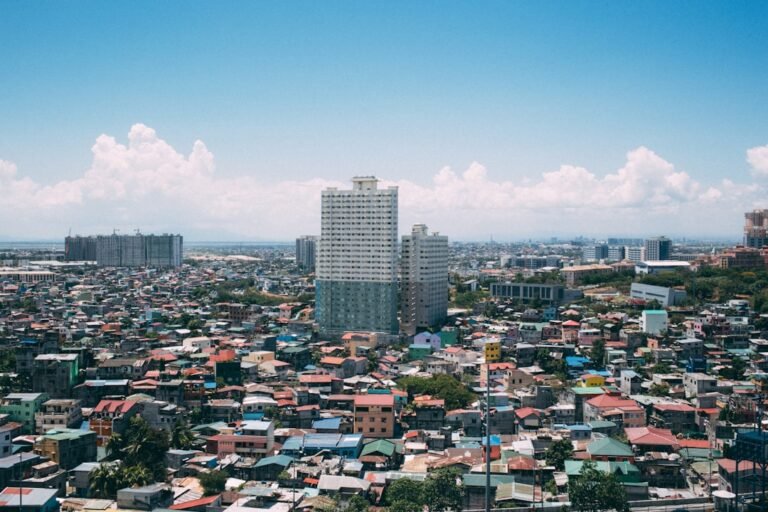
Bonifacio Global City: Clean, Modern, Slightly Sterile
BGC is what happens when a former military base gets redeveloped with actual planning. Wide streets, proper pedestrian crossings, public art, grass, and a genuinely walkable grid. After a few days elsewhere in Manila, arriving in BGC feels like stepping into a different country.
It has the best concentration of international restaurants in the metro, a good cinema, and the Mind Museum if you are travelling with kids. High Street is the main strip and it is pleasant to walk in the evening, which is not something you can say about many Manila streets.
Roughly what you will pay: there is very little true budget accommodation. Expect around 3,500 to 6,000 PHP for mid range, and 8,000 PHP and up for the well known hotels. A handful of hostels exist on the fringes around 800 to 1,200 PHP.
The honest downside: BGC is expensive and it is not the Philippines. It is a very comfortable bubble. If you have three days in the country and you spend them in BGC, you have not really been here. It also has almost no street food scene, which for some people is the whole point of Manila.
Poblacion: Manila’s Late Night Quarter, With a Caveat
Poblacion is the old heart of Makati and over the last decade it has become the metro’s most interesting nightlife and small restaurant district. Rooftop bars, natural wine places, ramen counters, speakeasies behind unmarked doors. It is genuinely good and it is where a lot of younger travellers now base themselves. Accommodation is cheaper than the rest of Makati, roughly 1,200 to 3,000 PHP for a decent room, with hostels around 600 PHP.
Here is the caveat, and it matters if you are booking blind from a photo. P. Burgos Street runs through Poblacion and it is Manila’s best known red light strip. It is a hostess bar and KTV district, where venues bill for a companion’s time and drinks rather than functioning as ordinary bars. Parts of Pasay and Quezon City have similar clusters. Booking sites do not flag any of this, and a cheap hotel with good reviews can sit directly on it.
You do not need to avoid Poblacion. The good restaurant and bar scene is mostly a few streets away, and the two worlds sit side by side without much friction. But if you are travelling with family, or you simply do not want to walk past touts every evening, look at the street address before you book and check where it sits relative to P. Burgos. How you spot these venues: darkened windows, a doorman actively soliciting people walking past, no visible menu or pricing, and a name including “KTV” or “club” without any food offering. If a stranger on the street offers to take you somewhere, that is a commission arrangement and the bill will reflect it.
Malate and Ermita: Cheap, Central and Rough Around the Edges
These two neighbouring districts in the City of Manila proper are where budget travellers have stayed for decades, and they remain the cheapest central option.
The appeal is location. You can walk to Intramuros, Rizal Park, the National Museum complex and Manila Bay. The museums are free and are genuinely among the best things to do in the city. Manila Bay sunsets from the Baywalk are famous for a reason.
Roughly what you will pay: dorm beds from around 400 to 700 PHP. Basic private rooms from around 700 to 1,200 PHP. Reasonable mid range hotels around 1,800 to 3,500 PHP. This is the best value in central Manila by a wide margin.
The honest downside: Malate and Ermita are visibly poorer and less maintained than Makati. Pavements are broken or blocked, there is street hustling, and a fair number of the cheap hotels along the Mabini stretch have an hourly rate business alongside the tourist one. Read recent reviews carefully rather than relying on photos. At night stick to the busier, better lit streets. This is not a dangerous area for tourists in any dramatic sense, but it demands more attention than Makati does.
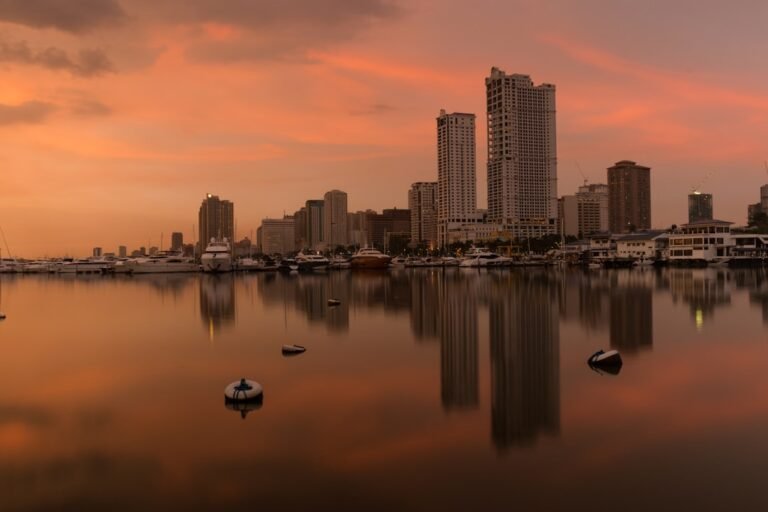
Intramuros: Sleeping Inside the Old Walls
Intramuros is the walled Spanish colonial core, and it is the most historically interesting square kilometre in the country. Fort Santiago, San Agustin Church, the cobbled streets, Casa Manila. Entrance to Fort Santiago is around 75 PHP, San Agustin Church museum around 200 PHP.
There are only a handful of places to actually sleep inside the walls, mostly small heritage hotels and a couple of hostels, roughly 1,500 to 4,000 PHP. Staying inside means you get the district early in the morning and in the evening when the day trippers have gone, which is when it is at its best.
The honest downside: Intramuros empties out at night. Restaurant options after dark are thin, and you will likely end up taking a car to Malate or Makati for dinner. It is a wonderful place to spend a day and a slightly lonely place to spend three nights.
Ortigas Center: The Business Alternative
Ortigas sits between Makati and Quezon City and functions as a second business district. It is less polished than BGC and less expensive than Makati, with several large malls including Megamall, one of the biggest in Asia.
Rooms run roughly 2,000 to 4,500 PHP for mid range. It is a sensible base if your reason for being in Manila is work, or if you want mall and city convenience without Makati prices. It is a poor base for sightseeing, since the historic sites are a long drive west.
Pasay and the Bay Area: Airport Adjacent
Pasay covers the area around Ninoy Aquino International Airport and the reclaimed Bay Area, home to the Mall of Asia and the large casino resorts.
If you have a domestic flight leaving before about nine in the morning, staying here is the sensible choice. Getting from Makati to the terminals at rush hour can take an hour, and Manila airport is not a place you want to arrive at flustered.
Roughly what you will pay: airport transit hotels from around 1,500 PHP. Mall of Asia area mid range around 2,500 to 5,000 PHP. The casino resorts start high.
The honest downside: the Bay Area is a strange, half built stretch of reclaimed land with very little street life and almost nothing to walk to. Pasay near the terminals is loud and functional. Stay one night, not five.
Quezon City: Where Manila Actually Lives
Quezon City is the most populous city in the metro and almost no tourists stay there, which is exactly why some people should. It is where you find the university belt around UP Diliman and Ateneo, the Maginhawa Street food strip, live music venues, and prices that have not been adjusted for foreigners.
Rooms and apartments run roughly 1,200 to 3,000 PHP, and monthly rentals are far cheaper than Makati. If you are staying two weeks or more, or working remotely, it is worth a serious look.
The honest downside: it is a long way from the historic sites and the airport, and it is very spread out. Without a sense of the local transport it can feel impenetrable for a short visit.
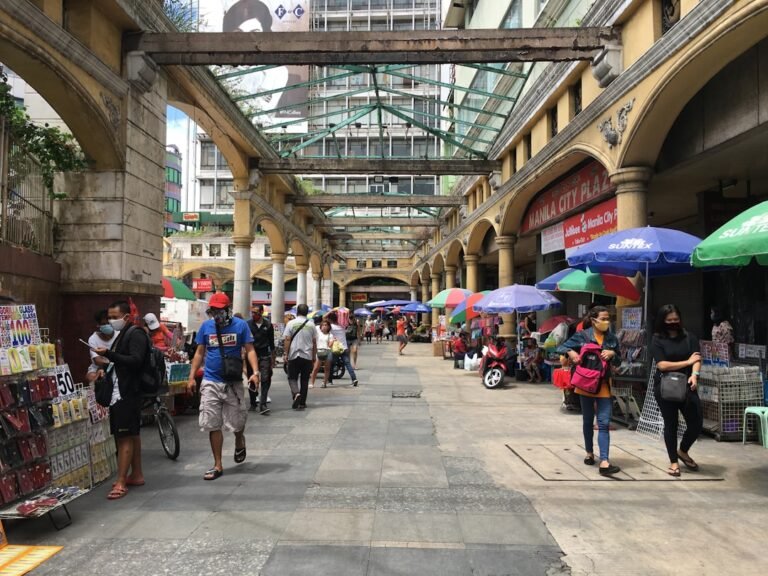
What Manila Accommodation Actually Costs: Three Brackets
Backpacker, roughly 400 to 900 PHP a night. A dorm bed, air conditioning, shared bathroom, lockers and usually a 24 hour desk. Malate has the cheapest, Poblacion and Makati the best quality for the money. At the very bottom of this range you are getting a fan room in an old building, so read reviews from the last six months rather than the last three years.
Mid range, roughly 2,000 to 5,000 PHP a night. This is the sweet spot in Manila and the range covers a lot of ground: business hotels, serviced apartments, condo units let out on booking platforms. Around 3,000 PHP in Makati or Ortigas gets you a genuinely comfortable room with a pool and a gym. Condo units are often better value than hotels at this price and give you a kitchen, though check whether the building actually permits short lets.
Upper end, roughly 7,000 PHP and above. The international chains in Makati, BGC and the Bay Area. Manila’s high end hotels are good value compared to Bangkok or Singapore, and if you are going to splash out anywhere in the Philippines this is a reasonable place to do it, since the alternative in the islands is usually a resort at three times the price.
What a Day and a Weekend in Manila Really Cost
A rough budget day, staying in a Malate dorm: bed around 500 PHP, street food and carinderia meals around 400 PHP, museum entries around 150 PHP, transport around 300 PHP. Call it roughly 1,350 PHP a day.
A comfortable mid range day, staying in Makati: room around 3,000 PHP, restaurant meals around 1,500 PHP, attractions around 400 PHP, ride hailing around 600 PHP. Call it roughly 5,500 PHP a day for one person, less per head if you are two sharing the room.
A full weekend, two nights and two and a half days, mid range for two people sharing: roughly 16,000 to 20,000 PHP all in, excluding flights. On a budget the same weekend for two is achievable at around 7,000 to 9,000 PHP.
Getting Between Areas: Traffic Is the Real Cost
Grab is the dominant ride hailing app and it is what most visitors use. A Makati to Intramuros ride runs roughly 250 to 450 PHP depending on traffic and surge. Airport to Makati is roughly 300 to 600 PHP. Have the app installed before you land.
Metered taxis exist and are cheaper on paper, but meter refusal and fixed price quoting to foreigners are common enough that Grab is usually worth the difference.
The rail lines, LRT 1, LRT 2 and MRT 3, cost roughly 15 to 35 PHP a journey and completely bypass the traffic. They are hot, crowded and do not go everywhere, but for a Makati to Quezon City run at five in the evening the MRT will beat a car by a wide margin. Buy a Beep card if you are staying more than a couple of days.
Jeepneys cost around 13 PHP for short hops and are the cheapest way around, though the routes are unmarked in any way a visitor can decode. Worth doing once for the experience, not worth relying on.
Where Not to Stay, and What to Skip
Some honest negatives, because the guides that pretend Manila is uncomplicated are not doing you a favour.
Do not book on price alone along Mabini Street in Malate. Several of the cheapest listings there run a short stay business and the atmosphere reflects it.
Do not stay in Caloocan, Tondo or Navotas. These are dense, poor districts with very little tourist infrastructure. There is nothing for a visitor there and the accommodation that exists is not aimed at you.
Do not stay near the airport for a whole trip. It solves one morning and ruins four days.
Skip Manila Ocean Park. It is expensive at around 900 PHP and up for the combination tickets, and it is a small, tired aquarium. The National Museum of Natural History across town is free and far better.
Skip the “Manila Bay white sand beach”. The crushed dolomite stretch near Roxas Boulevard gets a lot of social media attention and it is not a beach in any usable sense. You cannot swim, the water quality is poor, and it is a photo op with a queue.
Be realistic about Rizal Park at midday. It is large, open and completely unshaded. Go early morning or late afternoon.
Booking Tips That Actually Save Money in Manila
Condo units in Makati and BGC are frequently 30 to 40 percent cheaper than a comparable hotel room and come with a kitchen and laundry. The trade off is no daily housekeeping and occasionally a slow check in process, since you are meeting an individual owner rather than a front desk.
Book Makati and BGC further ahead than you would elsewhere in the Philippines. These are business districts and weekday rates are driven by corporate demand, so midweek can cost more than the weekend, the opposite of the pattern in the islands.
December to February is peak and prices rise noticeably, particularly around Christmas and New Year when the metro also empties out as residents travel to the provinces. June to October is the wet season, rates soften, and the flooding risk in the low lying parts of Malate and Ermita is real. If you are visiting in August or September, a slightly higher floor is worth paying for.
Always check the exact street address on a map before confirming, not just the district name. This one habit prevents most Manila accommodation regrets.
How Long to Stay in Manila
Two nights is enough for most people. That gives you one full day for Intramuros, Rizal Park and the National Museum complex, an evening for food in Poblacion or Salcedo, and a buffer morning for your onward flight.
Three or four nights makes sense if you want to add a day trip, to Tagaytay for the volcano views or to Corregidor Island in Manila Bay, or if you simply enjoy big chaotic cities and want to eat your way through this one.
A week is too long unless you are working, visiting people, or have a specific reason. Manila rewards a short focused stay far more than a long unstructured one. The islands are what you came for, and if Palawan is next then where to stay in Palawan works through the same question for Coron and El Nido.
Quick FAQ
Which area is best for a first time visitor to Manila? Makati, and specifically Legazpi Village or Salcedo Village. It is the safest, most walkable and best connected area, with the widest range of food and accommodation at every price point.
Is Makati or BGC better? Makati if you want food, character and easier access to the rest of the metro. BGC if you want clean, modern, walkable and predictable, and you do not mind paying more for it. BGC is better with children, Makati is better for a short trip.
How much does a hotel in Manila cost per night? Roughly 400 to 900 PHP for a hostel dorm, roughly 2,000 to 5,000 PHP for a comfortable mid range room, and roughly 7,000 PHP and up for an international chain hotel. Malate and Ermita are the cheapest central areas, BGC the most expensive.
Is Malate safe to stay in? Yes for most travellers, with normal city caution. It is scruffier and less maintained than Makati, there is street hustling, and some budget hotels along Mabini run an hourly business. Stick to busy well lit streets at night and read recent reviews before booking.
Should I stay near Manila airport? Only if you have a flight before about nine in the morning. Pasay and the Bay Area have very little street life and almost nothing to walk to, so use them as a one night convenience rather than a base.
How many nights do I need in Manila? Two is enough for the historic core, the museums and one good food evening. Three or four if you want a day trip to Tagaytay or Corregidor. Longer than that only makes sense if you are working or visiting people.
Wondering about safety before you book a neighbourhood? Our guide to whether Manila is safe for tourists covers which districts are fine, which to avoid after dark, and the scams to expect.