Filipinos will warn you about Siquijor. It’s the island of witches and healers, they’ll say, half joking and half not. Here’s the funny part: that reputation is exactly why Siquijor is still wonderful. The superstition kept the crowds away, so you get the clearest water in the Visayas, waterfalls with rope swings, and quiet coastal roads mostly to yourself. It feels like the Philippines did twenty years ago.
1. Swing into Cambugahay Falls

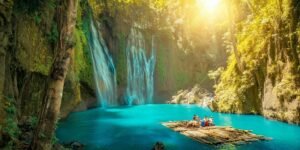
This is the postcard moment. Three tiers of milky blue lagoons near Lazi, with bamboo rafts and Tarzan swings on the bottom tier. If you go before 9 in the morning, there’s a good chance you’ll have the place to yourself. Entrance is around PHP 50, and the swing guys charge about PHP 50 to 100 for unlimited jumps. One tip from experience: wear sandals you can swim in, because the 130 steps down get slippery.
2. Catch sunset at Paliton Beach

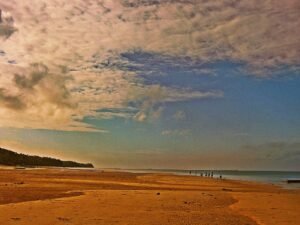
People call Paliton the little Boracay, which undersells it. It’s a short strip of white sand in San Juan with palm trees leaning over shallow, glassy water, and it faces west. That makes it the island’s sunset spot. A few vendors sell drinks but there are no resorts on the sand itself, so bring water and just stay for the show.
3. Jump off the cliffs at Salagdoong Beach

Over on the east side, past a strange and beautiful drive through a man-made molave forest, Salagdoong has two concrete platforms (roughly 7 and 10 meters) above deep aquamarine water. You pay around PHP 50 to get in plus a small vehicle fee. Not a jumper? Fair enough. The twin coves below are lovely for a normal, dignified swim.
4. Visit the Old Enchanted Balete Tree
A balete tree said to be over 400 years old stands in Campalanas with a spring pool at its base. Dip your feet in and hundreds of tiny fish will nibble at them while locals cheerfully insist the tree is home to spirits. It costs about PHP 20, takes fifteen minutes, and you’ll think about it for days. It’s right on the coastal loop between San Juan and Lazi.
5. Step inside Lazi Church and Convent

San Isidro Labrador Church, built in 1884, faces one of the oldest and largest convents in the Philippines across a sleepy plaza. The convent’s creaking hardwood floors and breezy corridors are worth the small donation on their own. The whole complex is a declared National Cultural Treasure, and you’ll likely share it with nobody but a caretaker.
6. Snorkel Tubod Marine Sanctuary
Right off the beach in San Juan, Tubod is a protected reef where clownfish, coral heads and the occasional turtle hang out a few fin kicks from shore. Entrance with snorkel gear runs around PHP 100 to 150. Go in the morning when the water is calm and clear.
7. Ride the coastal loop on a scooter
The 72 kilometer road around the island is flat, scenic and nearly empty. Honestly, it might be the most enjoyable motorbike loop in the country. Rentals go for roughly PHP 350 to 500 a day at the ports or through your guesthouse. Fill the tank in Siquijor town or Lazi since stations thin out elsewhere, wear the helmet, and give yourself 3 to 4 hours with stops.
8. Climb Mt. Bandilaan at the island’s heart
Siquijor’s highest point sits around 550 meters, with a viewing deck a short forest walk from the road. On a clear day you can pick out Bohol, Cebu, Negros and even Mindanao. During Holy Week the mountain becomes the center of the island’s healing festival, when traditional healers gather to brew their year’s supply of herbal medicine.
9. Meet a traditional healer
The mananambal of Siquijor are a living tradition, not a show for tourists. Some welcome respectful visitors for a bolo-bolo cleansing ritual. Ask your guesthouse for an introduction instead of showing up unannounced, and bring a small donation. Believe what you like; it’s a genuine window into the island’s soul either way.
10. Watch fireflies on the Cangmunag River
After dark you can paddle a quiet stretch of mangrove river where fireflies pulse in the trees like slow fairy lights. Tours cost around PHP 300 to 500 per person and are best on moonless nights. Book a day ahead through your accommodation.
How to get to Siquijor
The easy way in is through Dumaguete. Fast ferries (OceanJet, Montenegro, Aleson) cross to Siquijor town or Larena in 50 to 90 minutes, with fares from about PHP 160 to 400 depending on the boat. From Cebu, OceanJet runs a route via Tagbilaran in Bohol several times a week. Coming from Bohol? The same line makes Siquijor an easy add-on. Plenty of travelers pair it with Cebu or a side trip to Malapascua for a two week Visayas loop.
Where to base yourself
Stay in San Juan if you want beaches, sunsets and most of the restaurants. Siquijor town is handiest for the ferry, and Lazi puts you near the waterfalls in real quiet. Budget rooms start around PHP 800 to 1,200 a night, while beachfront resorts in San Juan run PHP 2,500 to 5,000 in the December to May high season.
Continue Planning Your Siquijor Trip
Siquijor pairs naturally with Bohol and Cebu. Here is how to get there.
- How to Get from Bohol to Siquijor: All Options Compared
- How to Get from Cebu to Siquijor: All Options Compared
Plan Your Trip to Siquijor
Ready to book? Compare hotels and tours in Siquijor below.
- Search Hotels in Siquijor on Booking.com
- Compare Hotels in Siquijor on Agoda
- Find Tours and Activities in Siquijor on Klook
- Book Tours in Siquijor on GetYourGuide
Booking through these links may earn us a small commission at no extra cost to you.
Siquijor Tourist Attractions: Entrance Fees at a Glance
Siquijor is cheap, but the small fees add up across a day and it helps to know them before you set off. All figures are approximate and the island adjusts them occasionally.
Cambugahay Falls: entrance around 50 to 100 pesos. The rope swing is roughly 50 pesos for unlimited goes, and parking a scooter is around 10 to 20 pesos. Open roughly 7am to 5pm and busiest from about 10am to 3pm.
Salagdoong Beach: entrance around 50 pesos, parking around 20 pesos. The cliff jumping platforms and the vine swing are included. Roughly 8am to 5pm.
Lugnason Falls: around 30 to 50 pesos, plus a small optional guide tip.
Tubod Marine Sanctuary: around 50 pesos entrance and roughly 100 to 150 pesos to rent snorkel gear.
Old Enchanted Balete Tree: around 20 to 30 pesos, which includes sitting with your feet in the fish pool.
Lazi Church and Convent: the church is free, the convent museum is around 30 to 50 pesos.
Mt. Bandilaan: free, though a habal habal up and back is around 300 to 500 pesos.
Island wide: Siquijor introduced a tourism ecological fee, roughly 50 pesos per adult, collected when you leave the island at the port. Keep small notes for it.
Siquijor Falls: Which Ones Are Actually Worth It
People search for Siquijor falls and waterfalls in Siquijor constantly, and the honest ranking matters because they are not equal.
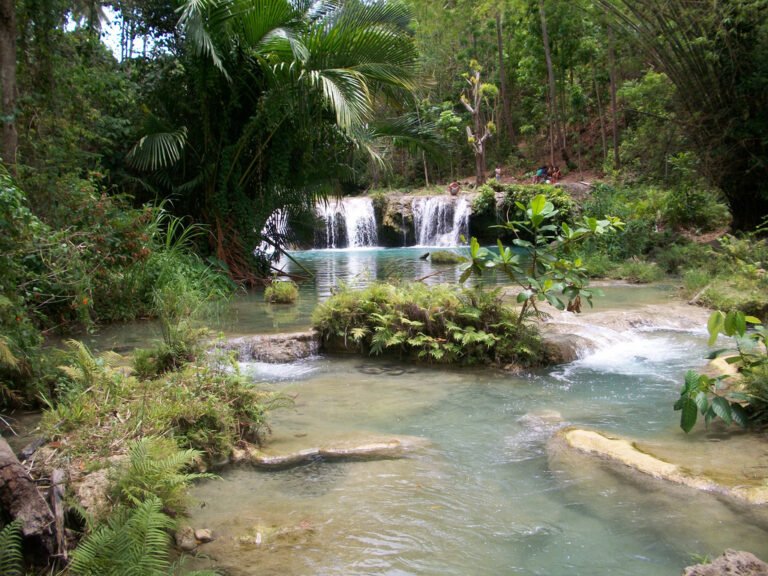
Cambugahay is the famous one, three tiers of turquoise water with rope swings. It deserves the attention, and it is also genuinely crowded from mid morning. Arrive before 9am or after 3.30pm and it is a different place.
Lugnason Falls near San Juan is smaller, quieter, and much more pleasant to actually swim in. Most visitors skip it, which is exactly why you should not.
Cascadas de Siquijor is a private, landscaped falls area with pools and a cafe. Entrance around 100 to 150 pesos. Polished rather than wild, and fine if you want somewhere comfortable to spend an afternoon.
Kawasan Falls in Siquijor is not the famous Cebu one and is much more modest. Manage expectations.
How to Get to Siquijor: Ferries and Fares
From Dumaguete, the standard route. Fast craft take around 40 minutes, with roughly 600 pesos for tourist class and around 900 to 950 pesos for business on the main operators. Cheaper fast craft run from about 450 pesos. The Montenegro RORO takes around two hours for roughly 230 to 300 pesos and is the budget option. There are many daily departures, roughly 5.30am to 9pm.
From Cebu, direct fast craft run but not daily, so most people route through Dumaguete or Bohol. Our full comparison of how to get from Cebu to Siquijor covers every option and timing.
From Bohol, fast craft from Tagbilaran run a few times a week, around 1,000 to 1,400 pesos and roughly two hours.
Book the return in advance during Holy Week, Christmas and the long weekends, because boats do sell out.
Getting Around the Island
Siquijor is about 72 kilometres around and the coastal loop is the whole point. A scooter rents for roughly 400 to 500 pesos a day, 350 if you take it for several days, and fuel for the full loop is around 150 to 250 pesos. Bring an international driving permit, wear a helmet, and be aware that the police do run checkpoints.
If you do not ride, a habal habal driver for a full day of sightseeing costs around 800 to 1,200 pesos, and a tricycle for the same around 1,500 to 2,000 pesos. Both are straightforward to arrange through your accommodation.
Where to Stay in Siquijor and What It Costs
Budget, roughly 700 to 1,400 pesos a night: beach hostels and simple fan or aircon bungalows, concentrated in San Juan. Dorm beds run around 500 to 800 pesos.
Mid range, roughly 2,000 to 4,000 pesos: small beachfront resorts with a pool, mostly along the San Juan and Siquijor town coast. This is the sweet spot on the island and where most travellers end up.
Upper end, roughly 5,000 to 10,000 pesos: a handful of boutique properties with proper design, good food and sunset frontage. Siquijor has no large luxury chains, and that is part of its appeal.
San Juan is the right base for most people: sunset side, most of the restaurants, central for the loop. Siquijor town is convenient for the port and little else. Maria and Lazi are quiet and beautiful and a long way from dinner options.
What a Siquijor Trip Actually Costs
Budget day: around 1,800 to 2,500 pesos. Hostel bed, scooter share, two or three attractions, local food.
Mid range day: around 4,000 to 6,000 pesos with a nice room, your own scooter, restaurant meals and a dive or a boat trip.
Three nights for two, mid range: roughly 20,000 to 28,000 pesos including ferries from Dumaguete, accommodation, scooter, all fees and food.
Food is inexpensive. Local eateries run around 120 to 200 pesos a meal, and the traveller restaurants in San Juan around 300 to 500 pesos.
Best Time to Visit and What to Skip
February through May is the driest and the sea is calmest for ferries and diving. June through November brings rain and the occasional cancelled crossing, though Siquijor sits outside the worst of the typhoon track. Holy Week is packed. The Healing Festival in Holy Week is genuinely interesting if you want to see the folk healing tradition rather than the tourist version of it.
Honest negatives. Siquijor’s beaches are pretty but the sand at San Juan is coarser than Boracay or Bantayan and there is a lot of seagrass close in, which disappoints people expecting postcard swimming. Cambugahay in the middle of the day is a queue for a rope swing, not a serene waterfall. Salagdoong’s setting is lovely and the concrete development around it is not. The nightlife is essentially a handful of bars, so if you want a scene, this is the wrong island. And the mystical reputation is mostly marketing now, so do not come expecting shamanism on every corner.
Nearby, Bohol and Panglao pair naturally with Siquijor on a Visayas loop, and Moalboal in Cebu is the usual next stop for divers.
Quick FAQ
How many days do you need in Siquijor? Two full days covers the highlights. Three lets you slow down to island pace, which is rather the point.
Is Siquijor safe? Very. It’s one of the most laid back islands in the Philippines. The biggest dangers are sunburn and slippery waterfall steps.
Are there ATMs and phone signal? ATMs exist in Siquijor town and Larena but they do run dry, so bring cash from Dumaguete. Globe and Smart signal is decent along the coast.
When is the best time to visit? December to May for dry weather and calm seas. Holy Week is fascinating because of the healing festival, but rooms book out early.